
Methodology
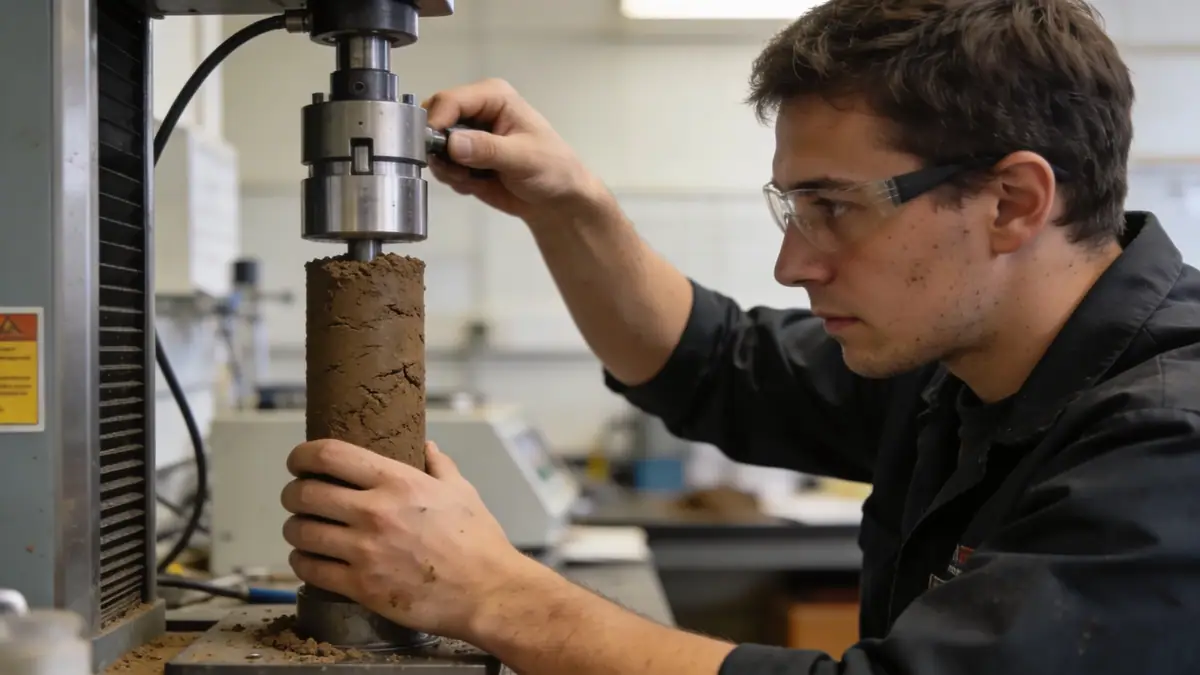
Our methodology for standard penetration test in Worcester follows ASTM D1586, with sampling intervals at 1.0–1.5 m depth increments. We deploy a 63.5 kg hammer dropped 760 mm to drive a split-barrel sampler, recording blow counts per 150 mm penetration to derive N-values. Corrections for overburden and energy efficiency yield N60 values for design. For continuous profiling, we also offer cone penetration test (cpt) and dynamic probing methods, all calibrated to local conditions.
Reference Technical Parameters
| Parameter | Reference Value |
|---|---|
| Predominant soil type | Glacial till and outwash sands/gravels |
| Maximum seismic acceleration (PGA) | 0.2–0.3 g (ASCE 7-16) |
| Typical groundwater level | 3–8 m below surface |
| Bedrock depth | Variable; 5–30 m, shallow in western hills |
| Typical N60 range | 10–40 blows/ft in till; 5–20 in alluvium |
Local Considerations — Worcester
Worcester's geology is dominated by glacial till and outwash deposits from the Wisconsin glaciation, with bedrock (mostly granite and gneiss) at variable depths. The western hills show shallow rock, while the eastern lowlands have deeper soils and higher water tables. Seismic hazard per ASCE 7-16 places Worcester in Site Class C or D, with PGA up to 0.3 g. Our dpsh dynamic probing helps map these transitions efficiently. Typical projects include residential foundations and commercial developments requiring detailed soil profiles.
Request a Quote
Our team reviews your project and issues an initial report at no cost.
Or write us directly at [email protected]
Services in Worcester
Applicable Standards
- ASTM D1586
- ASCE 7-16
- Massachusetts State Building Code (9th Edition)
- IBC 2021
- OSHA 29 CFR 1926 Subpart P
Frequently Asked Questions
What are the typical soil conditions encountered during standard penetration tests in Worcester?
Worcester soils generally consist of glacial till (silty sand with gravel) and outwash deposits. N60 values typically range from 10 to 40 blows/ft in till and 5 to 20 in alluvial zones. Groundwater is encountered at depths of 3 to 8 meters.
How does seismic design affect standard penetration testing requirements in Worcester?
Worcester falls under Seismic Design Category B or C per ASCE 7-16, with PGA up to 0.3 g. SPT data are essential for determining Site Class (C or D) and evaluating liquefaction potential in saturated sands, which influences foundation design.
Are geotechnical investigations mandatory for construction projects in Worcester?
Yes, the Massachusetts State Building Code requires a geotechnical report for most structures, including SPT borings. Our standard penetration tests comply with ASTM D1586 to meet code requirements for foundation design and seismic analysis.