
Methodology
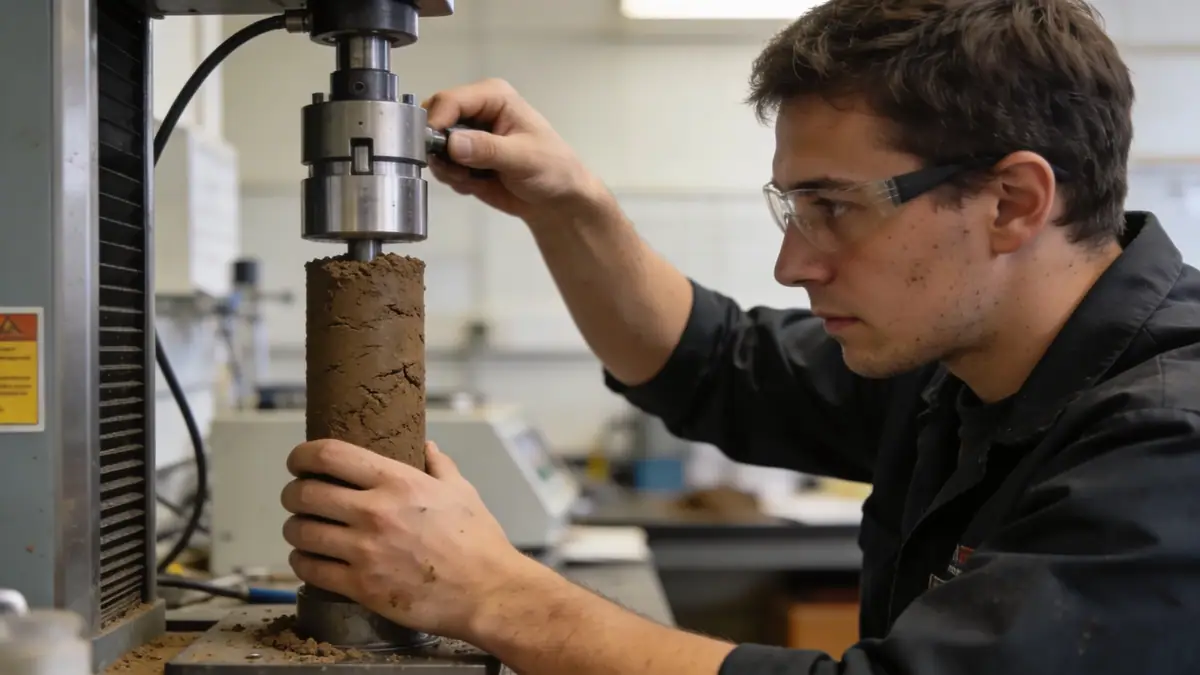
Our methodology for the Standard Penetration Test strictly follows ASTM D1586, employing a 63.5 kg hammer dropped from 760 mm to drive a split-spoon sampler. We record blow counts per 150 mm interval, with the N-value defined as the sum of the last two 150 mm increments. Our rigs are equipped with automatic hammers to ensure consistent energy delivery, typically 60% to 80% efficiency. We perform SPT at intervals of 1.5 m to 3.0 m, with continuous sampling in critical strata. In addition to SPT, we offer complementary techniques such as the Cone Penetration Test (CPT), which provides continuous stratigraphic profiling, and DPSH Dynamic Probing for deep, coarse-grained deposits. All data is processed using industry-standard software for correlation with soil parameters like friction angle and undrained shear strength, supporting both shallow and deep foundation designs.
Reference Technical Parameters
| Parameter | Reference Value |
|---|---|
| SPT N-value range (blows/300 mm) | 4–50 (typical); >50 for refusal |
| Typical boring depth (m) | 15–30 (up to 60 with specialized equipment) |
| Hammer energy efficiency (%) | 60–80 (automatic hammer) |
| Sampling interval (m) | 1.5–3.0 (continuous in critical zones) |
| Soil types encountered | Sand, silt, clay, gravel, glacial till, weathered rock |
Local Considerations — USA
The United States presents a wide range of geotechnical challenges, from the seismic zones of the West Coast to the expansive soils of the Gulf Coast. Our firm adapts the Standard Penetration Test to these conditions, using correlations specific to each region. In areas with high seismic hazard, such as California, we emphasize SPT for liquefaction assessment per ASCE 7. In the Midwest, glacial deposits require careful interpretation of N-values for bearing capacity. We maintain a national database of soil profiles, enabling rapid correlation with local conditions. Our teams are familiar with state-specific regulations, and we coordinate with local geotechnical engineers to ensure compliance with building codes. This localized approach ensures reliable data for foundation design across all major urban centers, including our operations in cities like Akron.
Request a Quote
Our team reviews your project and issues an initial report at no cost.
Or write us directly at [email protected]
Applicable Standards
- ASTM D1586
- ASCE 7
- IBC (International Building Code)
- OSHA 29 CFR 1926
Frequently Asked Questions
What is the Standard Penetration Test and how is it performed?
The Standard Penetration Test (SPT) is an in-situ test that measures soil resistance to penetration using a split-spoon sampler driven by a 63.5 kg hammer falling 760 mm. The N-value, recorded in blows per 300 mm, indicates soil density or consistency. The test follows ASTM D1586 and is performed in boreholes at regular intervals.
How does the SPT data support foundation design?
SPT N-values correlate with soil strength parameters such as friction angle and undrained shear strength, used in bearing capacity calculations. For seismic design, N-values help assess liquefaction potential per ASCE 7. The data also aids in estimating settlement and selecting foundation type (shallow vs. deep).
What are the limitations of the Standard Penetration Test?
Limitations include disturbance in sensitive clays, inability to penetrate gravel or rock, and variability due to hammer energy. Corrections for overburden pressure and hammer efficiency are applied. In soft soils, alternative methods like CPT may be preferred for continuous profiling.