Methodology
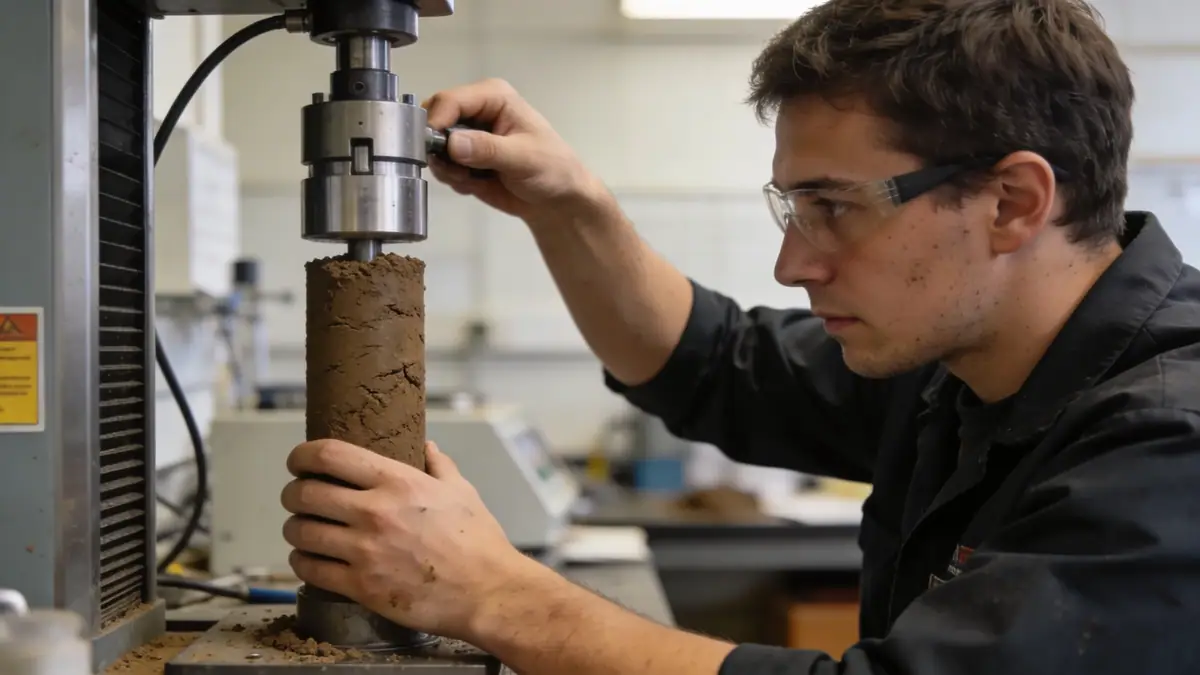
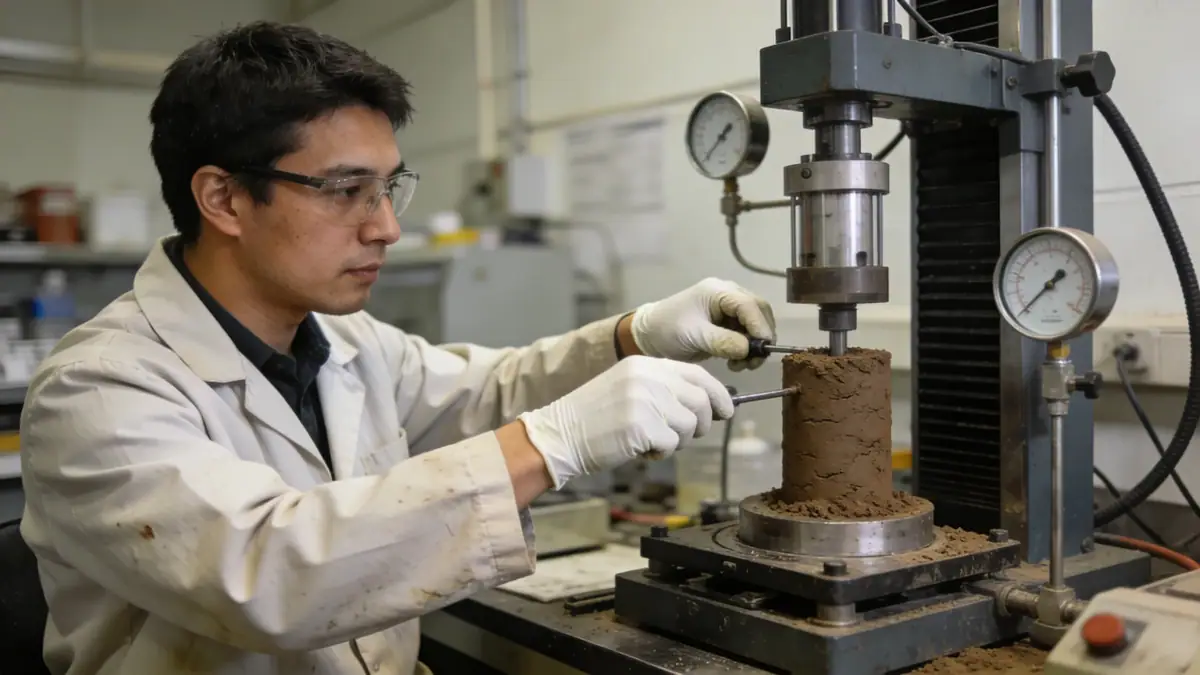
The Cone Penetration Test (CPT) is performed in accordance with ASTM D5778-20. Our team uses a 20-ton hydraulic rig to advance a 35.7-mm-diameter cone with a 60° apex angle at a rate of 20 mm/s. Continuous measurements of cone tip resistance (qt), sleeve friction (fs), and pore pressure (u2) are recorded at 2-cm intervals. The maximum penetration depth is typically 30 m, but can be extended to 50 m in favorable soil conditions. Data processing includes correction for pore pressure effects and normalization for overburden stress. The procedure yields high-resolution soil behavior type (SBT) charts and derived parameters such as undrained shear strength (Su) and friction angle (φ'). For comparison of dynamic methods, our team also offers DPSH Dynamic Probing for shallow investigations.
Reference Technical Parameters
| Parameter | Reference Value |
|---|---|
| Cone Tip Resistance (qt) | 0.5 – 50 MPa |
| Sleeve Friction (fs) | 10 – 400 kPa |
| Pore Pressure (u2) | 0 – 3 MPa |
| Penetration Rate | 20 mm/s ± 5% |
| Depth Range | Up to 50 m |
Local Considerations — USA
Soil conditions across the United States vary significantly, requiring adaptation of CPT procedures. In coastal regions like Houston and Miami, soft clays and high water tables necessitate pore pressure dissipation tests. In seismic zones such as Los Angeles and San Francisco, CPT data is used to evaluate liquefaction potential per ASCE 7-22. In arid areas like Phoenix and Las Vegas, cemented soils and gravel layers may require pre-drilling or use of a larger cone. Our firm tailors the testing program to local geology, having completed projects in Akron, Albuquerque, Allentown, Anaheim, Anchorage, and Arlington. We also provide specialized services for brownfield sites in older industrial cities such as Detroit and Cleveland.
Request a Quote
Our team reviews your project and issues an initial report at no cost.
Or write us directly at [email protected]
Applicable Standards
- ASTM D5778-20
- ASTM D3441
- ASCE 7-22
- Eurocode 7 (EN 1997-2)
Frequently Asked Questions
What is the difference between CPT and SPT?
CPT provides continuous, high-resolution data on soil stratigraphy and strength parameters, while SPT yields discrete blow counts and soil samples. CPT is faster and more repeatable, but SPT is required for liquefaction assessment in some codes. Both methods complement each other for comprehensive site characterization.
What soil types are suitable for CPT?
CPT is ideal for soft to medium stiff clays, silts, sands, and some gravels. Very dense gravels, cemented soils, or bedrock may prevent full penetration. In such cases, pre-drilling or alternative methods like DPL Light Dynamic Probing may be used. Our team evaluates site conditions to determine feasibility.
How long does a typical CPT investigation take?
A 20-meter CPT sounding typically takes 30–60 minutes, including setup and data acquisition. Multiple soundings per site can be completed in a single day. The total project timeline depends on the number of tests, site access, and reporting requirements. Our team provides efficient scheduling.
How much does Cone Penetration Test (CPT) cost in the USA?
The cost for a Cone Penetration Test (CPT) in the USA typically ranges from $3,150 to $5,250 per sounding, depending on depth, site accessibility, number of tests, and reporting needs. This is a reference range for 2026; actual pricing varies. We recommend requesting a specific quote for your project.