
Methodology
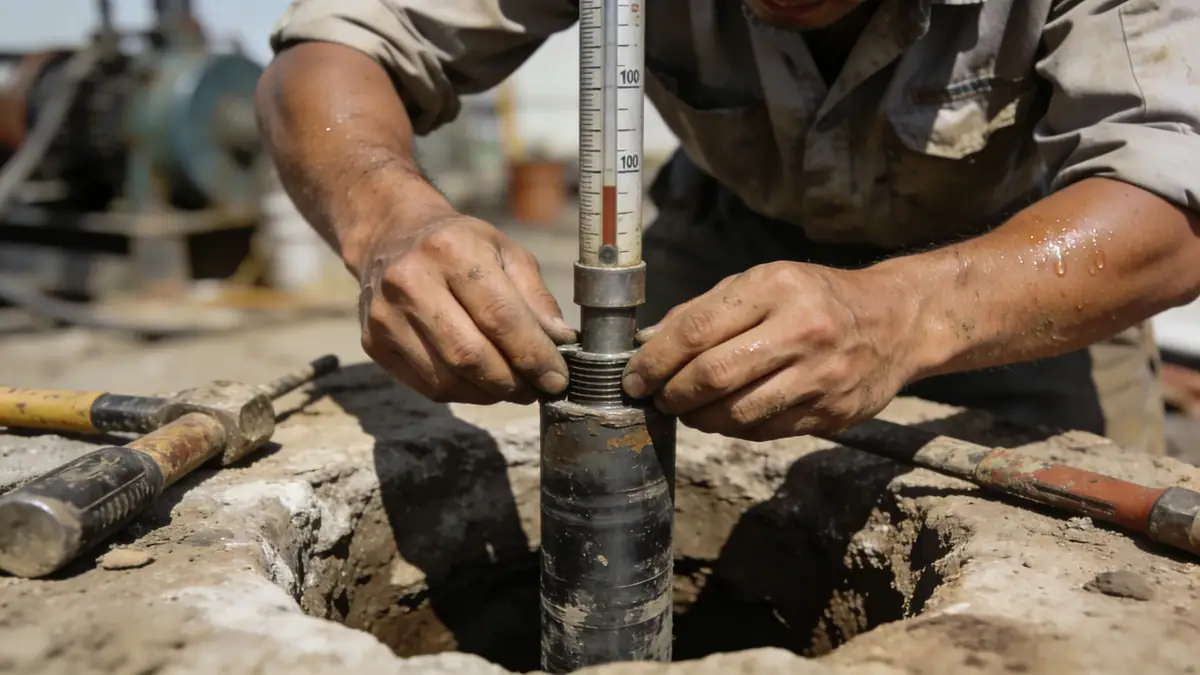
Our field methodology for standard penetration tests in Winston Salem follows ASTM D1586, with split-spoon sampling at 1.5-meter intervals to characterize soil strata. We use a safety hammer with automatic trip release to ensure consistent energy delivery. Each borehole is advanced to depths sufficient to penetrate bearing strata, typically 10–15 meters for low-rise structures and up to 25 meters for heavier loads. In situ N-values are corrected for overburden pressure and hammer efficiency to obtain N60, which correlates with relative density and shear strength. All samples are logged visually and transported to our laboratory for moisture content and classification tests. For cohesive soils, we also perform pocket penetrometer and torvane measurements. Our approach ensures compliance with local building codes and provides robust data for geotechnical analysis.
Reference Technical Parameters
| Parameter | Reference Value |
|---|---|
| Predominant soil type | Sandy silt and clayey sand (Piedmont residuum) |
| Maximum seismic acceleration (PGA) | 0.12g (ASCE 7-16, Site Class C) |
| Typical groundwater level | 3–8 meters below ground surface |
| Bedrock depth | 5–20 meters (weathered to competent gneiss) |
| Typical N60 range | 10–35 blows per 300 mm |
Local Considerations — Winston Salem
Winston Salem lies within the Piedmont physiographic province, characterized by residual soils over weathered crystalline bedrock. The typical soil profile includes a surficial zone of silty sand or sandy silt, underlain by saprolite and partially weathered rock. Groundwater is generally encountered at depths of 3 to 8 meters, with seasonal fluctuations. Seismic design follows ASCE 7-16, with a PGA of 0.12g for Site Class C. In the downtown area, fill and previous construction can complicate subsurface conditions, requiring careful SPT spacing. For projects near the Yadkin River, alluvial deposits may be present. Our team has extensive experience interpreting these local conditions to provide reliable N60 data. For operations in nearby regions, see our standard penetration test en Atlanta services.
Request a Quote
Our team reviews your project and issues an initial report at no cost.
Or write us directly at [email protected]
Services in Winston Salem
Applicable Standards
- ASTM D1586
- ASCE 7-16
- IBC 2021
- North Carolina State Building Code
Frequently Asked Questions
What soil types are commonly encountered during standard penetration tests in Winston Salem?
The Piedmont region yields residual soils such as silty sands, clayey sands, and sandy silts over a weathered bedrock profile. These soils exhibit variable density and cohesion, which SPT N-values help quantify for design.
Does the local seismic code require SPT data for all structures in Winston Salem?
Yes, for most new buildings and additions, the North Carolina Building Code mandates site-specific geotechnical investigation, including SPT borings, to determine seismic site class and liquefaction potential, especially in areas with deep soil profiles.
How deep should SPT borings be in typical Winston Salem projects?
Depth depends on structure load and soil conditions. For low-rise buildings, 10 to 15 meters is typical to reach competent bearing strata. For heavier structures or where bedrock is deeper, borings may extend to 25 meters or until refusal.