Methodology
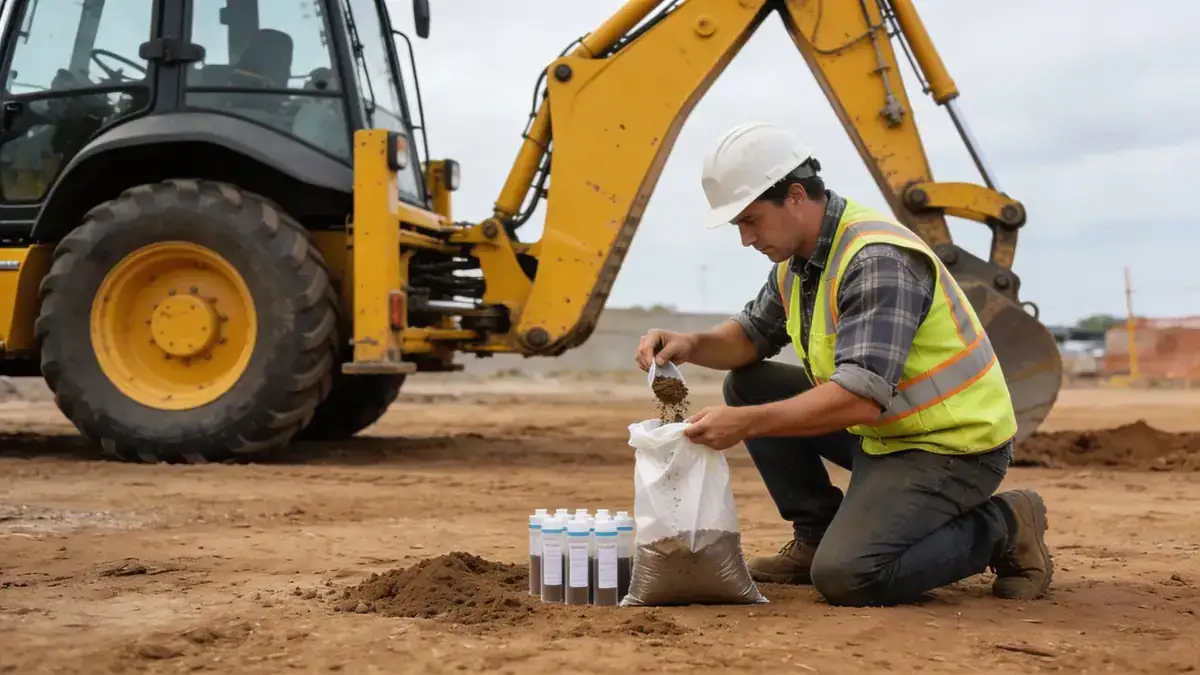
Our methodology for standard penetration testing in Visalia follows ASTM D1586 protocols, using a 63.5 kg hammer dropped 760 mm to drive a split-spoon sampler. We record blow counts (N-values) at 1.5 m intervals to depths up to 30 m, depending on project requirements. The collected data is correlated with soil classification and relative density, enabling our team to provide reliable geotechnical parameters for foundation design. For further details, see our standard penetration test (spt) page.
Reference Technical Parameters
| Parameter | Reference Value |
|---|---|
| Predominant soil type | Silty sand and clay (alluvial deposits) |
| Maximum seismic acceleration (PGA) | 0.4g (per ASCE 7 seismic zone) |
| Typical groundwater level | 3–6 m below ground surface |
| Bedrock depth | Variable, often >30 m |
| Typical N60 range | 5–30 blows/ft (loose to medium dense) |
Local Considerations — Visalia
Visalia lies on the San Joaquin Valley floor, characterized by deep alluvial deposits of silty sands and clays. Groundwater levels fluctuate seasonally, typically 3–6 m deep, requiring dewatering considerations for excavations. Seismic hazard is significant due to proximity to active faults; per ASCE 7, the PGA reaches 0.4g, necessitating liquefaction assessments. Older neighborhoods near downtown may have undocumented fills, while new developments on the outskirts often encounter stiff soils. Our team has extensive experience in these conditions, leveraging cone penetration test (cpt) for continuous profiling in sensitive areas. For broader context, our standard penetration test en Los Angeles operations provide regional insight.
Request a Quote
Our team reviews your project and issues an initial report at no cost.
Or write us directly at [email protected]
Services in Visalia
Applicable Standards
- ASTM D1586
- ASCE 7
- California Building Code (CBC)
- International Building Code (IBC)
Frequently Asked Questions
What soil types are commonly found in Visalia?
Visalia's alluvial soils consist primarily of silty sands and clays, often interbedded with gravel layers. These deposits can be loose to medium dense, requiring careful evaluation of bearing capacity and liquefaction potential.
How does seismic activity affect standard penetration testing in Visalia?
Visalia is in a high seismic zone (PGA 0.4g). SPT data is critical for assessing liquefaction susceptibility and dynamic soil properties, as per ASCE 7 and CBC requirements for foundation design.
Are geotechnical investigations mandatory for construction in Visalia?
Yes, for most commercial and multi-family residential projects. The California Building Code requires subsurface investigations to determine soil strength, groundwater conditions, and seismic hazards, with SPT being a primary method.