Methodology

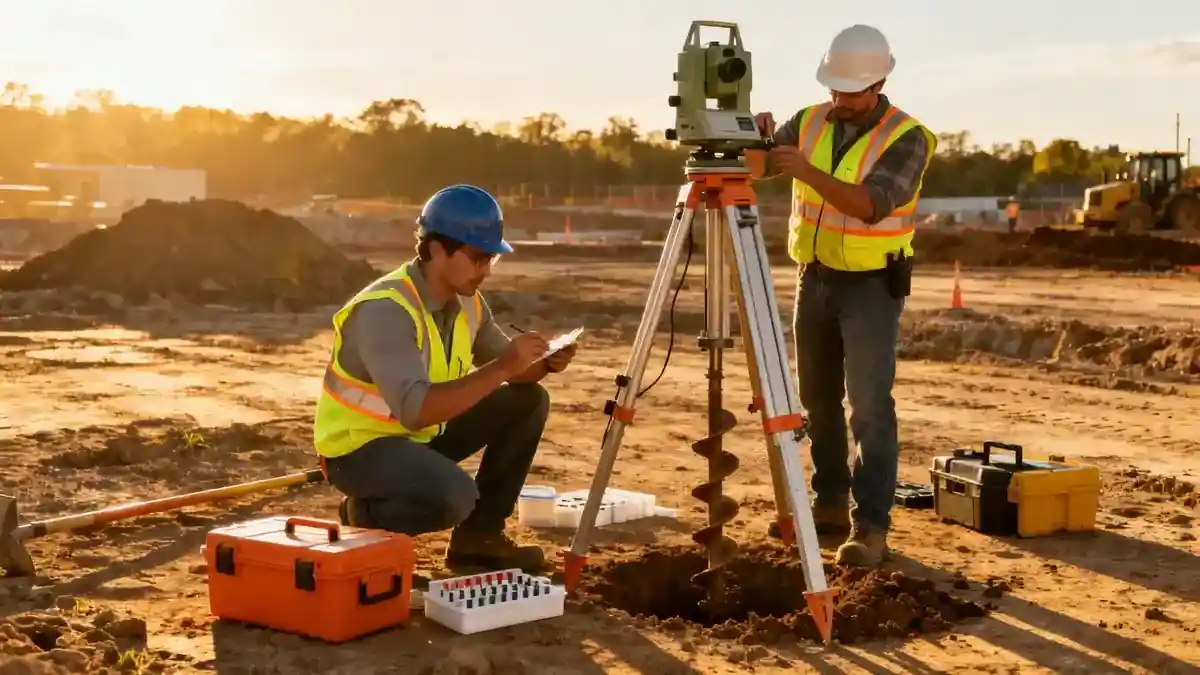
Our methodology for standard penetration testing in Virginia Beach follows ASTM D1586, with split-spoon sampling at 1.5-meter intervals to capture soil stratification. We use a 63.5 kg hammer with a 76 cm drop to drive the sampler, recording blow counts (N-value) for each 15 cm increment. The N60 value is corrected for energy efficiency and overburden pressure. In coastal zones, we adjust for groundwater effects to prevent underestimation of soil strength. Our team also integrates cone penetration test (cpt) data where continuous profiling is needed, providing a comprehensive subsurface model for Virginia Beach projects.
Reference Technical Parameters
| Parameter | Reference Value |
|---|---|
| Predominant Soil Type | Sand, silty sand, and clay |
| Maximum Seismic Acceleration (PGA) | 0.15g to 0.20g (ASCE 7-16) |
| Typical Groundwater Level | 1.5 to 4.0 meters below ground surface |
| Bedrock Depth | Variable, typically 10 to 30 meters |
| Typical N60 Range | 5 to 30 blows per 0.3 meter |
Local Considerations — Virginia Beach
Virginia Beach lies within the Atlantic Coastal Plain, underlain by unconsolidated sediments of sand, silt, and clay. The water table is shallow, often within 1.5 meters, requiring careful dewatering for excavations. Seismic hazard is moderate, with peak ground accelerations up to 0.20g per ASCE 7. Northern areas near the Chesapeake Bay feature soft marine clays, while southern zones have denser sands. Our team has extensive experience with these conditions, including projects at the Oceanfront and Sandbridge. For regional operations, we coordinate with our standard penetration test en Philadelphia hub for consistent standards across the Mid-Atlantic.
Request a Quote
Our team reviews your project and issues an initial report at no cost.
Or write us directly at [email protected]
Services in Virginia Beach
Applicable Standards
- ASTM D1586
- ASCE 7-16
- IBC 2021
- Virginia Uniform Statewide Building Code (USBC)
Frequently Asked Questions
What soil types are commonly found in Virginia Beach?
Virginia Beach predominantly features sands, silty sands, and clays from the Coastal Plain. The water table is shallow, influencing soil behavior. Our standard penetration testing identifies these layers accurately for foundation design.
Is seismic testing required for projects in Virginia Beach?
Yes, per ASCE 7 and the Virginia USBC, seismic site classification is mandatory. Standard penetration tests provide the N-values needed to determine site class (A through F) and design response spectra. Our firm routinely performs these assessments.
Are geotechnical investigations mandatory for construction in Virginia Beach?
While not always legally required for all projects, most local building departments recommend or require subsurface investigations. Lenders and insurers often mandate standard penetration tests for risk assessment. Our team provides compliant reports.