Methodology
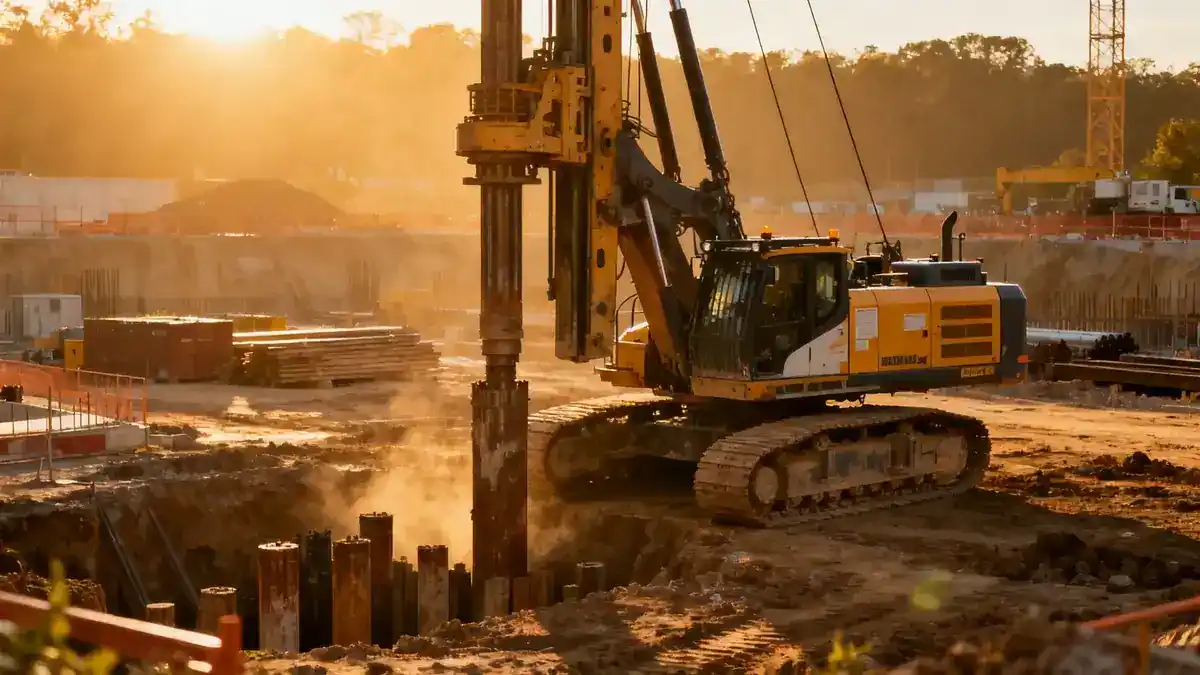
Our methodology for standard penetration test in Surprise Arizona follows ASTM D1586, with sampling intervals every 1.0–1.5 m to capture soil variability. We deploy automatic hammers and calibrated equipment to ensure consistent energy delivery. For deeper profiles, we integrate standard penetration test (spt) with continuous sampling techniques. Our process includes real-time data logging and field verification of blow counts, providing reliable N60 values for geotechnical analysis. This systematic approach supports robust foundation recommendations tailored to Surprise's alluvial deposits.
Reference Technical Parameters
| Parameter | Reference Value |
|---|---|
| Predominant soil type | Silty sand and gravel (alluvial fan deposits) |
| Maximum seismic acceleration (PGA) | 0.20–0.30 g (per ASCE 7-16) |
| Typical groundwater level | 10–25 m below surface |
| Bedrock depth | 30–60 m (granitic/metamorphic basement) |
| Typical N60 range | 10–30 blows/0.3 m (sandy layers) |
Local Considerations — Surprise Arizona
Surprise's geology consists of alluvial fan deposits from the White Tank Mountains, with interbedded silty sands, gravels, and occasional clay layers. Groundwater is deep (10–25 m), reducing liquefaction risk but requiring careful dewatering for deep excavations. Seismic hazard is moderate (PGA 0.20–0.30 g) per ASCE 7-16, with fault sources from the nearby San Andreas system. Older neighborhoods may have undocumented fill; new developments often require SPT to verify bearing capacity. Our experience includes projects near the Surprise Recreation Campus and Sun City Grand, where variable compaction affects foundation design. For broader regional context, we collaborate with our team in Phoenix to leverage extensive local data.
Request a Quote
Our team reviews your project and issues an initial report at no cost.
Or write us directly at [email protected]
Services in Surprise Arizona
Applicable Standards
- ASTM D1586
- ASCE 7-16
- IBC 2021
- Surprise Municipal Code (Chapter 15)
Frequently Asked Questions
What soil conditions are typical in Surprise Arizona for SPT?
Surprise predominantly features alluvial silty sands and gravels with varying compaction. N60 values typically range from 10 to 30 blows/0.3 m in sandy layers, with occasional clay interbeds. Groundwater is generally deep, reducing saturation effects during testing.
Does Surprise Arizona have specific seismic requirements for geotechnical studies?
Yes, according to ASCE 7-16, Surprise lies in Seismic Design Category C or D, with PGA values of 0.20–0.30 g. The city's proximity to active faults necessitates site-specific response analysis, often relying on SPT N60 values to assess liquefaction potential and site class.
Are standard penetration tests mandatory for building permits in Surprise Arizona?
For commercial structures and multi-story residential buildings, the Surprise Municipal Code requires a geotechnical investigation including SPT. Single-family homes on undisturbed sites may be exempt, but many lenders and engineers still recommend testing to validate soil bearing capacity.