Methodology

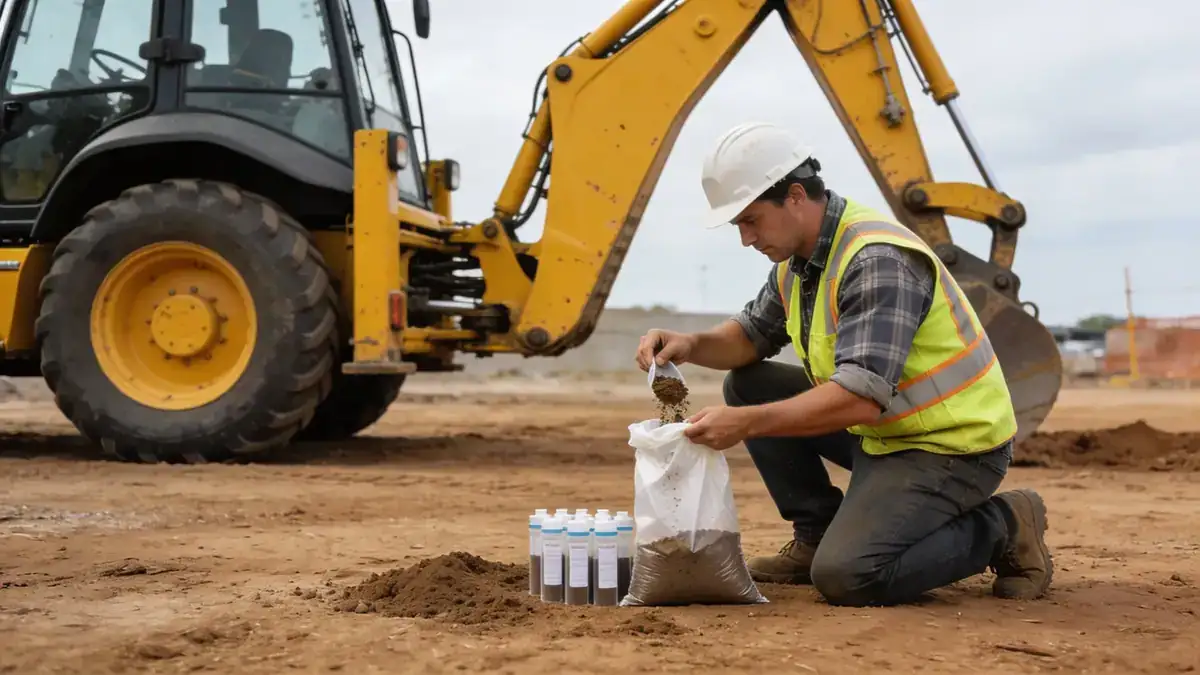
Our methodology for standard penetration testing in Savannah Georgia follows ASTM D1586, with continuous sampling at 1.5-meter intervals to depths of up to 30 meters depending on project requirements. We integrate standard penetration test (spt) data with advanced laboratory testing to characterize soil behavior under both static and seismic loading. For projects requiring detailed stratigraphic profiling, we complement SPT with cone penetration test (cpt) to capture continuous resistance records. This combined approach ensures comprehensive coverage of Savannah's variable subsurface conditions, from loose sands to stiff clays.
Reference Technical Parameters
| Parameter | Reference Value |
|---|---|
| Predominant soil type | Silty sand (SM) and poorly graded sand (SP) |
| Maximum seismic acceleration (PGA) | 0.12g (ASCE 7-16 Site Class D) |
| Typical groundwater level | 1.5–3.0 m below ground surface |
| Bedrock depth | Greater than 30 m (deep coastal plain) |
| Typical N60 range | 5–30 blows/0.3 m |
Local Considerations — Savannah Georgia
Savannah Georgia's coastal plain geology features thick sequences of unconsolidated sands, silts, and clays deposited by ancient river systems. The shallow water table (1.5–3 m) often requires dewatering or casing during drilling. Seismic hazard is moderate, with PGA values around 0.12g per ASCE 7-16, necessitating liquefaction assessments in loose saturated sands. Our team has extensive experience in both the historic district, where sensitive structures demand minimal vibration, and the port area, where deep foundations are common. For projects requiring additional insight, we direct clients to our standard penetration test en Atlanta hub for regional comparisons.
Request a Quote
Our team reviews your project and issues an initial report at no cost.
Or write us directly at [email protected]
Services in Savannah Georgia
Applicable Standards
- ASTM D1586
- ASCE 7-16
- IBC 2021
- Georgia State Minimum Standard Codes
- ASTM D2487 (Unified Soil Classification)
Frequently Asked Questions
What are the typical soil conditions encountered in Savannah Georgia?
Soils in Savannah Georgia predominantly consist of silty sands (SM) and poorly graded sands (SP) with occasional clay layers. Groundwater is typically shallow, between 1.5 and 3.0 meters depth. Standard penetration testing helps identify loose zones that may require densification or deep foundations.
Is seismic design required for projects in Savannah Georgia?
Yes, per ASCE 7-16, Savannah Georgia falls into Seismic Design Category B with a PGA of 0.12g. While not as high as western states, liquefaction potential in loose saturated sands must be evaluated for critical structures, making standard penetration test data essential.
When is a standard penetration test mandatory in Savannah Georgia?
The City of Savannah and Chatham County typically require geotechnical investigations for new buildings over three stories, structures with significant loads, or any project in areas with known poor soil conditions. The standard penetration test is the primary method for obtaining soil strength and density parameters.