
Methodology
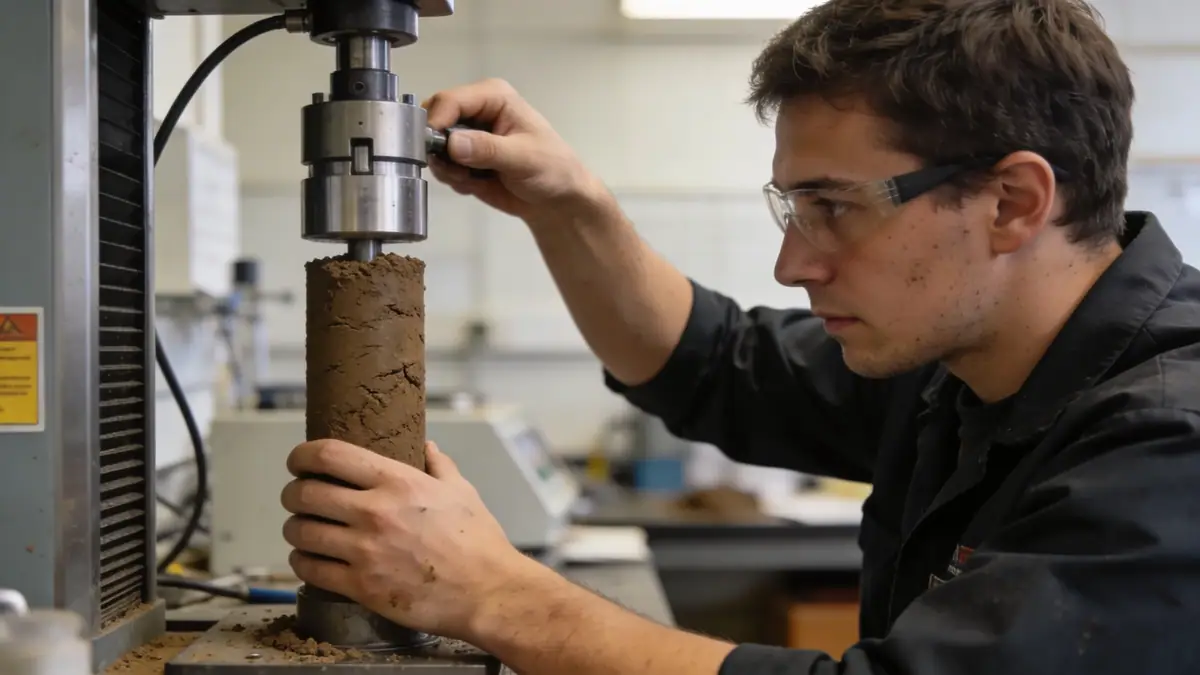
Our methodology for standard penetration test in Santa Rosa follows ASTM D1586, with a calibrated 63.5 kg hammer dropping 0.76 m to drive a split-spoon sampler. We record blow counts per 0.15 m interval and compute N60 values corrected for hammer efficiency and rod length. For liquefaction assessment, we also perform cone penetration test (cpt) soundings to obtain continuous tip resistance and pore pressure data. Tests are typically terminated at refusal (50 blows per 0.15 m) or at depths of 15–30 m, depending on project requirements. All data is processed in accordance with local building codes and ASCE 7-22 seismic provisions.
Reference Technical Parameters
| Parameter | Reference Value |
|---|---|
| Predominant soil type | Silty sand (SM) and clayey sand (SC) |
| Maximum seismic acceleration (PGA) | 0.40–0.50 g (ASCE 7-22, Site Class D) |
| Typical groundwater level | 1.5–3.0 m below surface |
| Bedrock depth | 10–25 m (Franciscan Complex) |
| Typical N60 range | 5–35 blows/0.30 m |
Local Considerations — Santa Rosa
Santa Rosa's geology is dominated by Quaternary alluvial deposits underlain by the Franciscan Complex. Shallow groundwater (1.5–3.0 m) and high seismic hazard (PGA up to 0.50 g) necessitate rigorous liquefaction and settlement analyses. Our team has extensive experience across diverse neighborhoods, from downtown fill soils to hillside colluvium. For projects requiring deeper investigation, we coordinate with our standard penetration test (spt) specialists to optimize borehole spacing and depth. We also reference the Sonoma County grading and building ordinances, which mandate site-specific geotechnical reports for most developments. Our local knowledge ensures compliance with both state and municipal requirements.
Request a Quote
Our team reviews your project and issues an initial report at no cost.
Or write us directly at [email protected]
Services in Santa Rosa
Applicable Standards
- ASTM D1586
- ASCE 7-22
- California Building Code (CBC 2022)
- Sonoma County Grading Ordinance
Frequently Asked Questions
What soil types are typically encountered in Santa Rosa?
Santa Rosa soils are primarily alluvial silty sands and clayey sands, with occasional gravel layers near the Russian River. Under these deposits, the Franciscan Complex bedrock (sandstone, shale, and serpentinite) is found at depths of 10–25 m. These conditions necessitate careful SPT testing to evaluate density and liquefaction potential.
Is a standard penetration test required for building permits in Santa Rosa?
Yes, most new construction and significant additions in Santa Rosa require a geotechnical investigation per the California Building Code. The Sonoma County grading ordinance also mandates subsurface exploration, typically including SPT borings, to characterize soil strength, groundwater, and seismic hazards such as liquefaction and lateral spreading.
How does seismic hazard affect SPT testing in Santa Rosa?
Santa Rosa is in Seismic Zone 4 with a PGA of 0.40–0.50 g. Site-specific SPT data is critical for determining Site Class (typically D or E) and evaluating liquefaction susceptibility using simplified procedures (e.g., Youd et al. 2001). Our SPT program is designed to capture soil variability at depths up to 30 m to meet ASCE 7-22 requirements.