Methodology

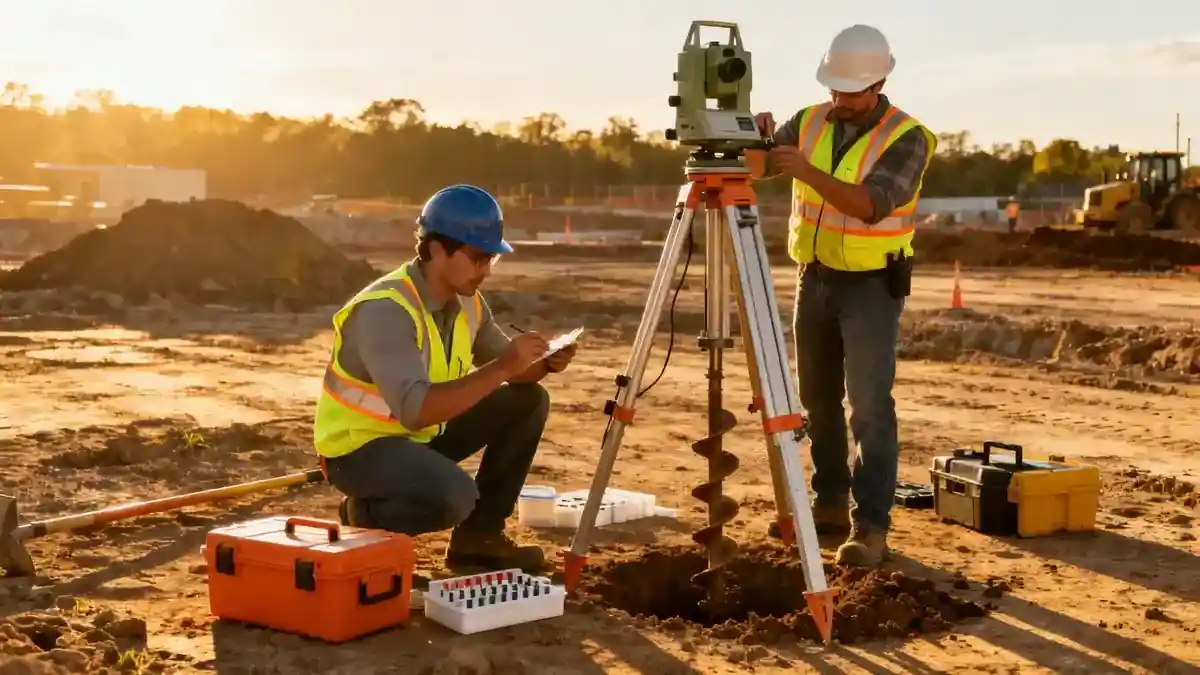
Our methodology for standard penetration test in San Diego follows ASTM D1586, with split-spoon sampling at 1.5 m intervals to depths of 15–30 m depending on project scale. We assess soil density, shear strength, and liquefaction potential, correlating N-values with local geologies. For detailed profiling, we integrate cone penetration test (cpt) methods, ensuring comprehensive subsurface characterization.
Reference Technical Parameters
| Parameter | Reference Value |
|---|---|
| Predominant soil type | Sand, silty sand, claystone |
| Maximum seismic acceleration (PGA) | 0.4g–0.6g (seismic zone 4) |
| Typical groundwater level | 3–10 m below grade |
| Bedrock depth | 10–30 m (variable) |
| Typical N60 range | 5–30 blows/ft (sand) |
Local Considerations — San Diego
San Diego's geology includes Quaternary alluvium and marine terraces, with shallow groundwater in coastal areas and deeper bedrock inland. Seismic hazard is high (0.4g PGA), requiring liquefaction assessment per ASCE 7. In neighborhoods like La Jolla, collapsible soils demand careful evaluation; downtown fill areas require compaction testing. We address these conditions with dpsh dynamic probing for rapid profiling. For broader context, our team in standard penetration test en Los Angeles supports regional projects.
Request a Quote
Our team reviews your project and issues an initial report at no cost.
Or write us directly at [email protected]
Services in San Diego
Applicable Standards
- ASTM D1586
- ASCE 7
- California Building Code (CBC)
- San Diego Municipal Code
Frequently Asked Questions
What soil types are common in San Diego for SPT?
San Diego features sands, silty sands, and claystone. Coastal areas have loose sands with low N-values, while inland regions contain dense sands and stiff clays. Understanding these variations is critical for foundation design.
How does seismic hazard affect SPT requirements in San Diego?
San Diego lies in seismic zone 4 (PGA up to 0.6g). SPT data is essential for evaluating liquefaction potential and site class per ASCE 7. Our tests provide N-values for cyclic resistance ratio calculations.
Is SPT mandatory for construction in San Diego?
For most commercial and multi-story residential projects, yes. The California Building Code requires geotechnical investigations, often including SPT, to characterize soil and seismic site class. Exceptions exist for small structures.