Methodology

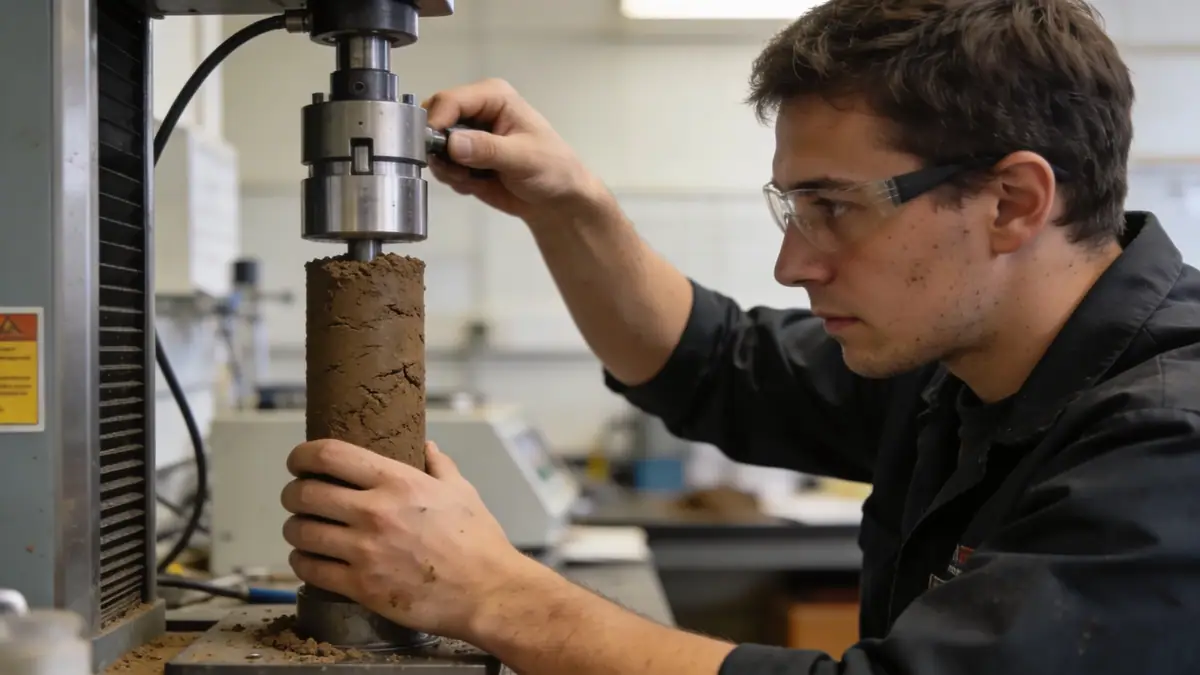
Our team executes standard penetration tests (SPT) in San Antonio following ASTM D1586, with sampling intervals of 1.0 to 1.5 meters. We deploy automatic hammers and calibrated equipment to ensure consistent energy transfer. Field data includes blow counts, soil recovery, and groundwater observations. Samples are classified using the Unified Soil Classification System (USCS). For comprehensive site characterization, we integrate SPT with other methods such as cone penetration test (cpt) to capture continuous stratigraphic profiles. Our methodology aligns with local building codes and project-specific requirements, delivering reliable parameters for geotechnical design.
Reference Technical Parameters
| Parameter | Reference Value |
|---|---|
| Predominant soil type | Clay and limestone residual soil (CH, CL, and GC) |
| Maximum seismic acceleration (PGA) | 0.1g to 0.15g per ASCE 7-16 |
| Typical groundwater level | 3 to 10 meters below ground surface |
| Bedrock depth | 5 to 20 meters (Edwards Limestone) |
| Typical N60 range | 10 to 40 blows/0.3m in clay; >50 in weathered rock |
Local Considerations — San Antonio
San Antonio's subsurface is heavily influenced by the Balcones Fault Zone, creating abrupt transitions between clay and limestone. Our team addresses karst features, such as solution cavities and fractures, which can impact foundation stability. Groundwater levels fluctuate seasonally, affecting excavation and dewatering. We adapt our standard penetration testing approach to capture these variations, ensuring data reliability. For projects in the Hill Country or downtown areas, we recommend combining SPT with rock coring. Our experience includes work near the Edwards Aquifer recharge zone, requiring careful environmental considerations. For regional support, our standard penetration test en Houston services complement San Antonio operations.
Request a Quote
Our team reviews your project and issues an initial report at no cost.
Or write us directly at [email protected]
Services in San Antonio
Applicable Standards
- ASTM D1586
- ASCE 7-16
- International Building Code (IBC) 2021
- City of San Antonio Unified Development Code (UDC)
Frequently Asked Questions
What soil types are commonly found in San Antonio?
San Antonio's soils are predominantly clays (CH, CL) and limestone residual soils (GC). The Edwards Limestone bedrock is shallow in many areas, with variable depth. Karst features like cavities are common, requiring careful subsurface investigation.
What seismic design criteria apply in San Antonio?
San Antonio falls under Seismic Design Category B or C per ASCE 7-16, with peak ground accelerations of 0.1g to 0.15g. Site-specific soil amplification factors (Fa, Fv) are determined from SPT N-values to adjust design response spectra.
Are geotechnical studies mandatory for construction in San Antonio?
Yes, the City of San Antonio UDC requires geotechnical investigations for most structures. Standard penetration testing is the primary method to determine soil bearing capacity, settlement, and seismic site class, ensuring compliance with building codes.