Methodology

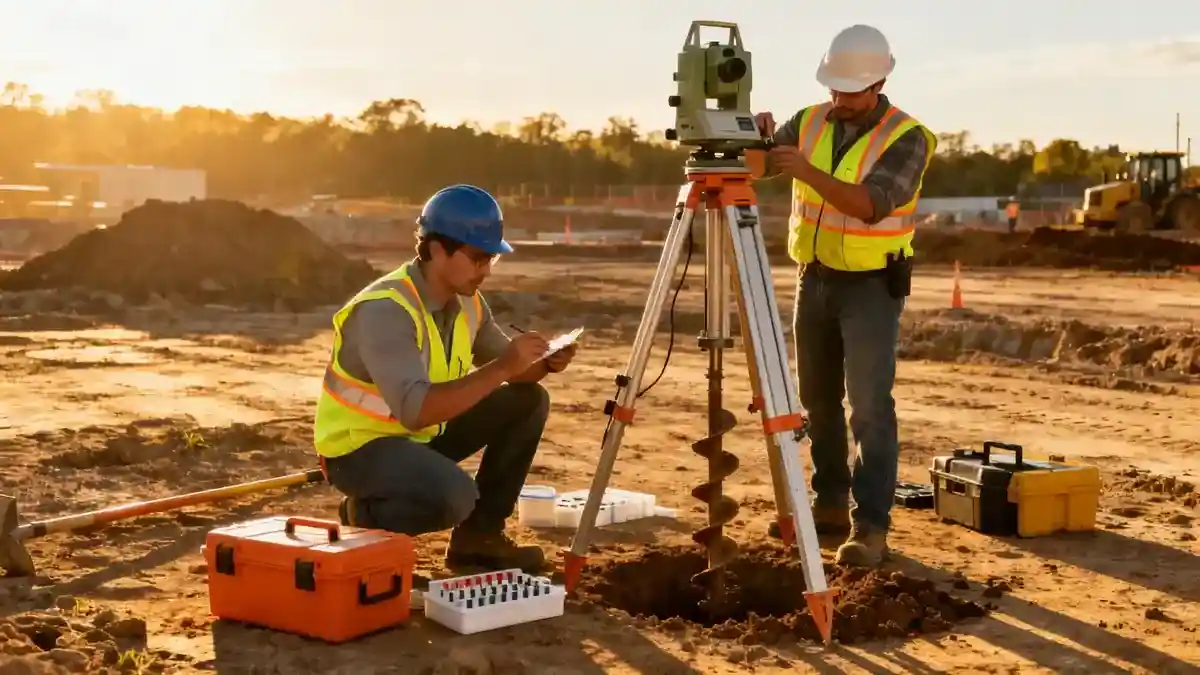
Our standard penetration test methodology in Roseville California follows ASTM D1586, employing a 63.5 kg hammer dropped 760 mm to drive a 50 mm split-barrel sampler. The N-value, corrected for rod length, borehole diameter, and overburden pressure (N60), is recorded at 1.5 m intervals or at every change in stratum. We utilize automatic hammers to ensure consistent energy transfer, essential for correlating with soil strength and liquefaction potential. For continuous profiling, we complement SPT with cone penetration test (cpt) in cohesive or sandy layers, allowing detailed stratigraphic interpretation. Our team maintains strict quality control, verifying blow counts and sampling depths on site to meet project-specific requirements in Roseville California.
Reference Technical Parameters
| Parameter | Reference Value |
|---|---|
| Predominant soil type | Alluvial sands, gravels, and silty clays (SM, SP, CL) |
| Maximum seismic acceleration (PGA) | 0.5g (MCE, Site Class D, ASCE 7-16) |
| Typical groundwater level | 15 to 30 ft below ground surface |
| Bedrock depth | Variable, 50 to 200 ft (metamorphic bedrock) |
| Typical N60 range | 10 to 40 blows/ft (fine sands to dense gravels) |
Local Considerations — Roseville California
Roseville California's geology presents specific challenges for standard penetration test operations. The alluvial fan deposits from the Sierra Nevada result in laterally variable soil types, requiring careful spacing of boreholes to capture stratigraphic changes. Seismic site class D or C under ASCE 7-16 necessitates N60 corrections for liquefaction assessment, particularly near Dry Creek and Pleasant Grove Creek. Local ordinances mandate geotechnical investigations for all new construction in seismic hazard zones. Our team coordinates with city planning departments to ensure drilling permits and traffic control plans are in place. For regional context, our standard penetration test en Los Angeles hub provides additional insights into California's diverse subsurface conditions.
Request a Quote
Our team reviews your project and issues an initial report at no cost.
Or write us directly at [email protected]
Services in Roseville California
Applicable Standards
- ASTM D1586 (Standard Test Method for Standard Penetration Test)
- ASCE 7-16 (Minimum Design Loads and Associated Criteria for Buildings and Other Structures)
- California Building Code (CBC) 2022, Chapter 18 (Soils and Foundations)
- ASTM D2488 (Description and Identification of Soils)
- OSHA 29 CFR 1926 Subpart P (Excavations)
Frequently Asked Questions
What are the typical soil conditions encountered in Roseville California during standard penetration test drilling?
Roseville California's alluvial soils consist of interbedded sands, gravels, and silty clays. N60 values range from 10 to 40 blows/ft, with loose sands in upper layers and denser materials at depth. Groundwater is typically encountered between 15 and 30 feet, which may require casing or drilling mud for borehole stability.
How does seismic design for Roseville California affect standard penetration test requirements?
Roseville California is in Seismic Zone 4 with PGA up to 0.6g. ASCE 7-16 requires site-specific seismic response analysis. Standard penetration test N-values are used to classify site class and evaluate liquefaction potential. Corrected N60 values are essential for determining soil behavior under cyclic loading.
Are geotechnical investigations mandatory for construction projects in Roseville California?
Yes, the California Building Code requires a geotechnical report for most new structures, including residential, commercial, and public works. The report must include standard penetration test data to characterize subsurface conditions and provide foundation recommendations. Local amendments may impose additional requirements near floodplains or fault zones.