Methodology

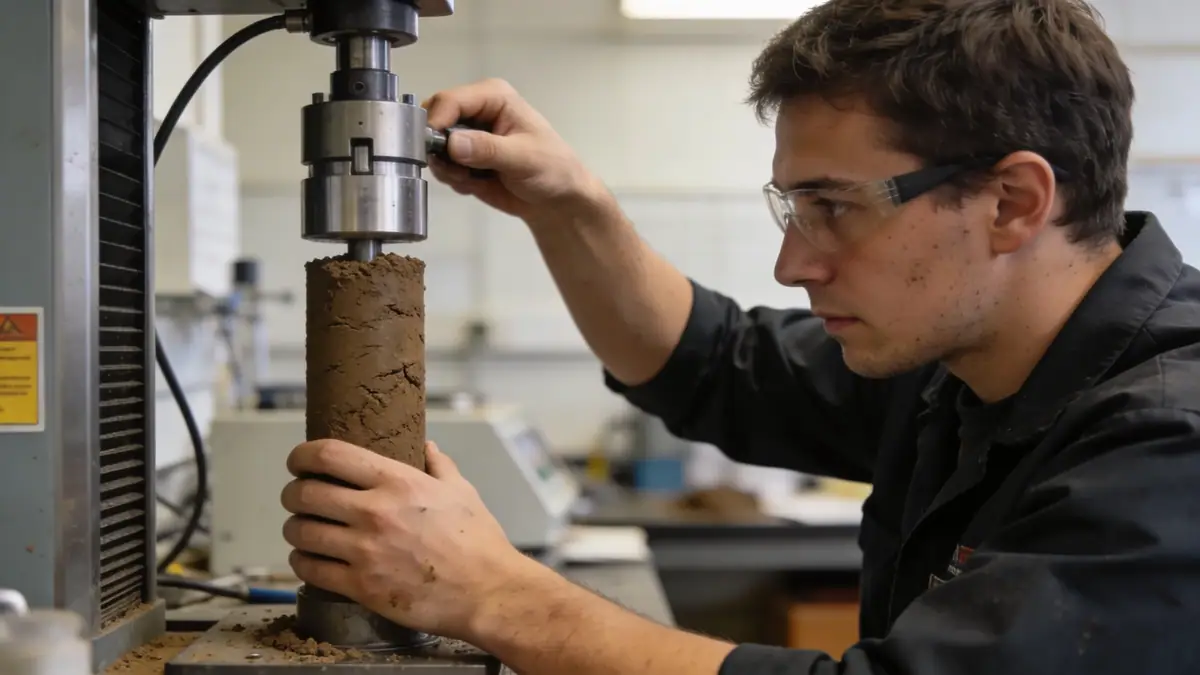
Our methodology for standard penetration test (SPT) in Riverside follows ASTM D1586 procedures, using a 63.5 kg hammer with 76 cm drop to drive a split-barrel sampler. We record blow counts per 15 cm intervals to determine N-values. Boreholes are advanced with continuous sampling to capture stratigraphic changes typical of Riverside's floodplain deposits. The standard penetration test (spt) is complemented by laboratory testing on recovered samples for moisture content, grain size, and Atterberg limits. Our team ensures proper seating of the sampler and records groundwater levels during drilling to assess liquefaction potential.
Reference Technical Parameters
| Parameter | Reference Value |
|---|---|
| Predominant soil type | Silty sand (SM) to poorly graded sand (SP) with gravel layers |
| Maximum seismic acceleration (PGA) | 0.4–0.6 g (ASCE 7 seismic design category D/E) |
| Typical groundwater level | 3–8 m below surface, variable with season and proximity to Santa Ana River |
| Bedrock depth | >30 m (deep alluvial basin) |
| Typical N60 range | 10–30 blows/30 cm in sands; 5–15 in silts |
Local Considerations — Riverside
Riverside sits on Quaternary alluvial deposits from the Santa Ana River, with interbedded sands, silts, and clays. The area is seismically active due to the San Jacinto and San Andreas faults, requiring site-specific response analysis per ASCE 7. Groundwater levels fluctuate seasonally; shallow water tables near the river may necessitate dewatering. Older alluvial terraces on the east side exhibit denser soils with higher N-values, while recent floodplains have loose sands prone to liquefaction. Our firm integrates local geologic maps and previous boring logs to optimize SPT programs. For deeper investigations, we recommend cone penetration test (cpt) to capture continuous stratigraphy.
Request a Quote
Our team reviews your project and issues an initial report at no cost.
Or write us directly at [email protected]
Services in Riverside
Applicable Standards
- ASTM D1586 – Standard Test Method for Standard Penetration Test (SPT)
- ASCE 7 – Minimum Design Loads and Associated Criteria for Buildings
- California Building Code (CBC) – Seismic provisions
- ASTM D2487 – Classification of Soils for Engineering Purposes
Frequently Asked Questions
What soil types are commonly encountered in Riverside during SPT?
Riverside's subsurface consists primarily of alluvial sands, silts, and gravels deposited by the Santa Ana River. The soil profile is heterogeneous, with layers of silty sand (SM), poorly graded sand (SP), and occasional clay lenses. SPT N-values typically range from 10 to 30 in sands, indicating medium dense conditions, but loose zones may be present near the river.
How does seismic design in Riverside affect SPT requirements?
Riverside lies in a high seismic region with PGA up to 0.6g. ASCE 7 requires site-specific soil response analysis for Seismic Design Categories D and E. SPT provides essential N-values for evaluating liquefaction potential using simplified procedures (e.g., Youd et al., 2001). Deep borings (≥30 m) are often needed to characterize the soil column for site class determination.
Is a standard penetration test mandatory for residential construction in Riverside?
While not always mandatory, the California Building Code requires geotechnical investigations for most structures. For residential projects in Riverside, especially those in liquefaction-prone areas near the Santa Ana River or on alluvial fans, a geotechnical report with SPT data is typically required by local building departments to ensure adequate foundation design.