Methodology

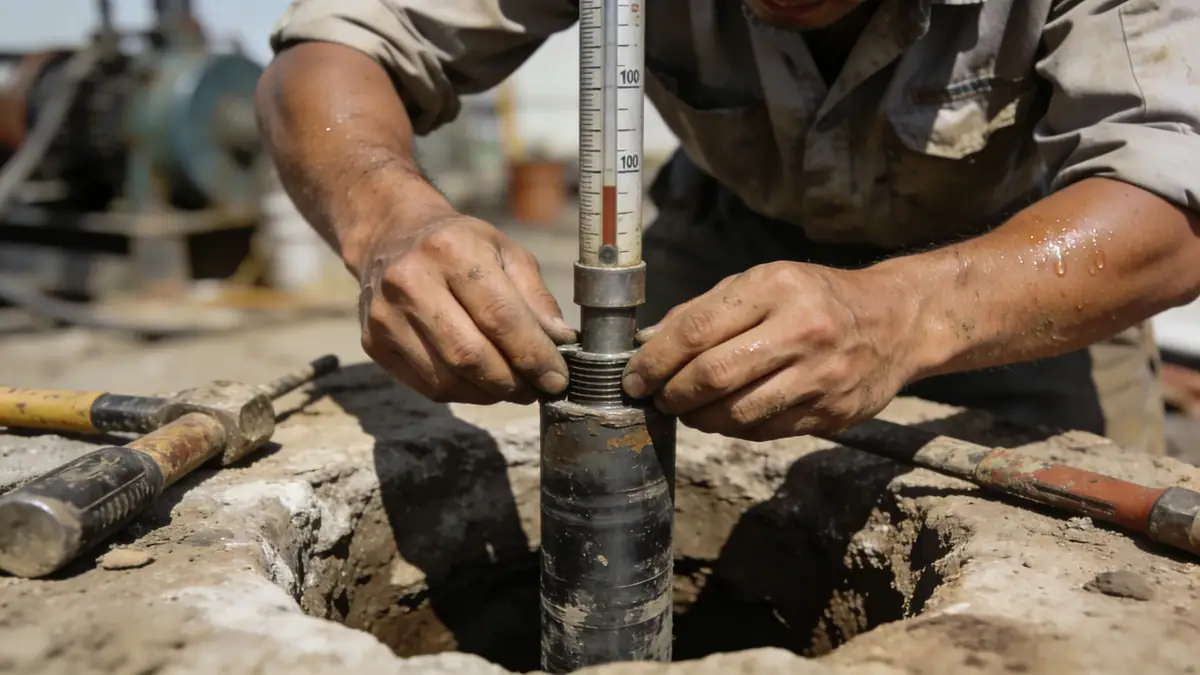
Our methodology for standard penetration test in Richmond Virginia follows ASTM D1586, employing a 63.5 kg hammer dropping 760 mm to drive a split-spoon sampler. We record blow counts per 150 mm increment to determine N-values, which are corrected for overburden and hammer efficiency to obtain N60. Testing intervals are typically 1.5 m, with continuous sampling in critical zones. Our field procedures incorporate torque measurements and soil classification per USCS. For projects requiring advanced characterization, we integrate standard penetration test (SPT) with geophysical methods to assess liquefaction potential per ASCE 7-16. Our team maintains calibrated equipment and rigorous quality assurance protocols to ensure accurate and reproducible results across Richmond's diverse subsurface conditions.
Reference Technical Parameters
| Parameter | Reference Value |
|---|---|
| Predominant soil type | Alluvial sands and silts, with residual clay and weathered bedrock |
| Maximum seismic acceleration (PGA) | 0.18g (ASCE 7-16, Site Class D) |
| Typical groundwater level | 3–6 m below grade, variable with season and proximity to James River |
| Bedrock depth | 10–25 m (Piedmont crystalline bedrock) |
| Typical N60 range | 5–30 blows/300 mm for shallow soils; >50 in dense sands or weathered rock |
Local Considerations — Richmond Virginia
Richmond's subsurface is shaped by the Fall Line transition from Coastal Plain sediments to Piedmont bedrock. In downtown and along the James River, alluvial sands and silts dominate, with groundwater typically encountered at 3–6 m depth. Seismic site classification per ASCE 7-16 often results in Site Class D due to soft soil profiles. Our team has extensive experience with standard penetration test (spt) in historic districts like Church Hill, where fill and variable organic layers require careful evaluation. For projects in the West End, residual clays over weathered granite present distinct challenges. We also recommend cone penetration test (cpt) for continuous profiling in soft ground. Our hub for regional operations is based in Philadelphia; visit our standard penetration test en Philadelphia page for broader context.
Request a Quote
Our team reviews your project and issues an initial report at no cost.
Or write us directly at [email protected]
Services in Richmond Virginia
Applicable Standards
- ASTM D1586
- ASCE 7-16
- IBC 2021
- Virginia Uniform Statewide Building Code (USBC)
- ASTM D2487 (USCS)
Frequently Asked Questions
What are the typical soil conditions encountered during standard penetration test in Richmond Virginia?
Richmond soils vary from alluvial sands and silts near the James River to residual clays and weathered bedrock in the Piedmont. Groundwater is commonly shallow, and soft compressible layers may be present in historic fill areas. SPT N60 values typically range from 5 to 30 in native soils, with higher values in dense sands or rock.
What seismic design considerations apply to Richmond Virginia for standard penetration test?
Per ASCE 7-16, Richmond is in Seismic Design Category B or C, with a maximum considered earthquake (MCE) PGA of 0.18g for Site Class D. Site-specific SPT data is used to determine site class and evaluate liquefaction potential in saturated sandy soils, which is critical for foundation design.
Is a standard penetration test required for building permits in Richmond Virginia?
The Virginia USBC requires geotechnical investigations for most structures, with SPT being the preferred method for subsurface exploration. Local jurisdictions may mandate SPT for buildings with seismic or settlement concerns. Our team assists in meeting code requirements through comprehensive soil testing.