
Methodology
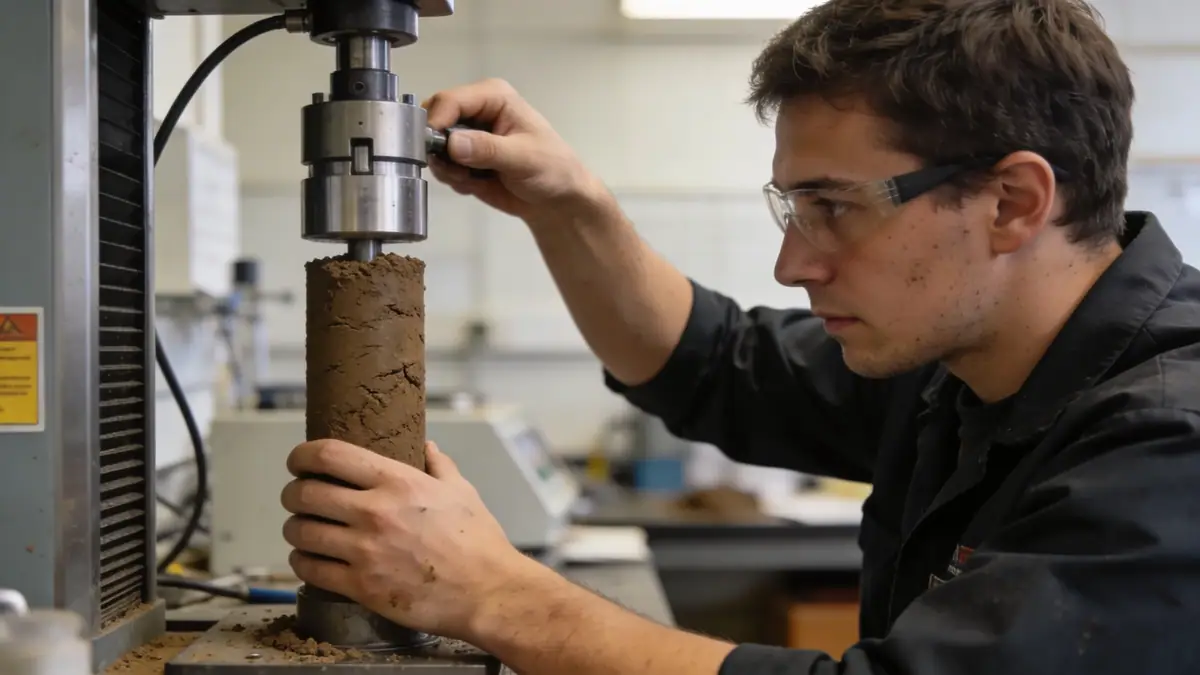
Our methodology for standard penetration test in Portland Oregon follows ASTM D1586, utilizing a 63.5 kg hammer dropped 760 mm to drive a split-barrel sampler. We record blow counts (N-value) at 1.5 m intervals to 30 m depth, with continuous sampling in variable strata. Soil samples are logged and classified per ASTM D2487. Energy efficiency is calibrated to 60% using a safety hammer. Data correction for overburden pressure (N60) is applied for liquefaction analysis per ASCE 7. Our field team coordinates with local permitting authorities. For complementary techniques, we integrate cone penetration test (cpt) to validate SPT results in soft soils.
Reference Technical Parameters
| Parameter | Reference Value |
|---|---|
| Predominant soil type | Silty sand (SM) and sandy silt (ML) with gravel lenses |
| Maximum seismic acceleration (PGA) | 0.20–0.40 g per ASCE 7-16 |
| Typical groundwater level | 1.5–4.5 m below ground surface |
| Bedrock depth | 15–60 m (Columbia River Basalt Group) |
| Typical N60 range | 5–25 blows/0.3 m for alluvial soils |
Local Considerations — Portland Oregon
Portland's subsurface is dominated by Missoula Flood deposits—silty sands and clays with variable gravel layers—underlain by the Columbia River Basalt Group. The shallow water table (1.5–4.5 m) requires dewatering for deep borings. Seismic site classification per ASCE 7 typically ranges from D to E, necessitating liquefaction assessment. In the West Hills, colluvial soils over basalt pose drilling challenges; in the Columbia River corridor, soft alluvium requires continuous sampling. Our team frequently supports projects near the Willamette River, where groundwater fluctuations impact foundation design. For regional comparisons, we refer to our standard penetration test en Seattle hub for analogous conditions.
Request a Quote
Our team reviews your project and issues an initial report at no cost.
Or write us directly at [email protected]
Services in Portland Oregon
Applicable Standards
- ASTM D1586
- ASCE 7-16
- Oregon Structural Specialty Code (OSSC)
- IBC 2021
Frequently Asked Questions
What soil types are commonly encountered in Portland Oregon?
Portland soils are primarily Missoula Flood deposits: silty sands, sandy silts, and gravelly layers. In the West Hills, colluvium and basalt are present; along rivers, soft alluvium and organic soils occur. Standard penetration test results help classify these materials for foundation design.
How does seismic design affect standard penetration test requirements in Portland?
Portland lies in Seismic Design Category D/E per ASCE 7, requiring site-specific liquefaction analysis. SPT N-values are used to calculate cyclic resistance ratios. ASTM D1586 procedures with energy correction (N60) are mandated for accurate assessment of liquefaction potential.
Is a standard penetration test mandatory for building permits in Portland Oregon?
For most commercial and multi-family projects, the Oregon Structural Specialty Code requires a geotechnical investigation including SPT borings. Single-family homes may be exempt, but site-specific data is recommended due to variable soil conditions and seismic hazards.