
Methodology
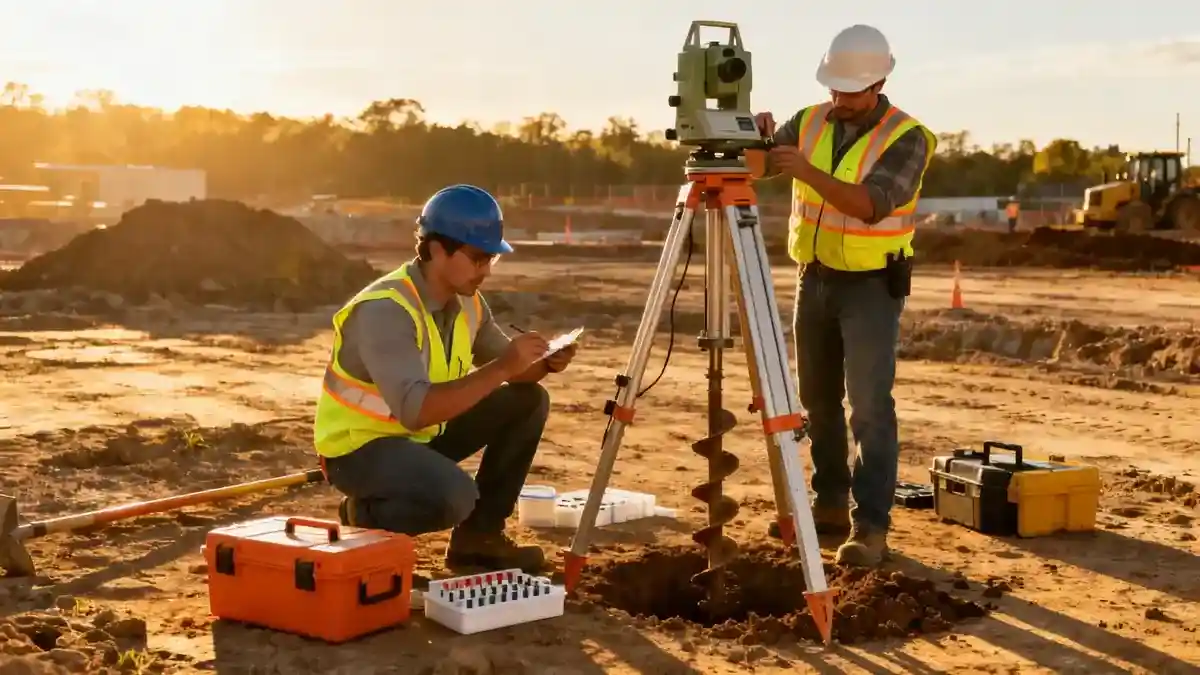
Our methodology in Orange California follows ASTM D1586 for standard penetration tests (SPT), using safety hammers and automatic trip mechanisms to ensure energy efficiency. We conduct borings to depths of up to 30 meters, with sampling intervals every 1.5 meters, to capture stratigraphic variability. The standard penetration test (spt) data is complemented by cone penetration tests (CPT) for continuous profiling in soft soils. All fieldwork adheres to OSHA safety standards and local permitting requirements. Our geotechnical laboratory performs index testing, including grain size distribution and Atterberg limits, to classify soils per the Unified Soil Classification System (USCS).
Reference Technical Parameters
| Parameter | Reference Value |
|---|---|
| Predominant soil type | Alluvial sands, silts, and clays (SM, ML, CL) |
| Maximum seismic acceleration (PGA) | 0.4g to 0.6g (ASCE 7-16, Site Class D) |
| Typical groundwater level | 3 to 6 meters below ground surface |
| Bedrock depth | Variable, typically >30 meters |
| Typical N60 range | 5 to 40 blows per foot |
Local Considerations — Orange California
Orange California lies within the Los Angeles Basin, underlain by deep alluvial deposits from the Santa Ana River. The soil profile often includes loose sands and soft clays prone to liquefaction during seismic events. Groundwater levels fluctuate seasonally, requiring careful dewatering considerations. The city’s proximity to the Newport-Inglewood Fault zone imposes strict seismic design criteria. Our team addresses these challenges through site-specific testing, including cone penetration test (cpt) for detailed stratigraphy. Local codes mandate geotechnical investigations for all new construction, with emphasis on settlement and lateral spreading analysis. We coordinate with Orange County building departments to ensure compliance with Chapter 18 of the California Building Code.
Request a Quote
Our team reviews your project and issues an initial report at no cost.
Or write us directly at [email protected]
Services in Orange California
Applicable Standards
- ASTM D1586
- ASCE 7-16
- California Building Code (CBC) Chapter 18
- Orange County Grading and Excavation Code
Frequently Asked Questions
What soil conditions are typical in Orange California for SPT testing?
Orange California’s alluvial soils include interbedded sands, silts, and clays with varying densities. SPT N60 values range from 5 to 40 blows per foot, reflecting loose to dense granular layers and soft to stiff cohesive soils. Groundwater is typically encountered at depths of 3 to 6 meters.
How does seismic design in Orange California affect SPT requirements?
Orange California lies in Seismic Design Category D or E per ASCE 7-16, with PGA up to 0.6g. SPT data is critical for liquefaction potential evaluation, site class determination, and foundation design. The California Building Code requires site-specific geotechnical investigations for most structures.
Is a geotechnical investigation mandatory for construction in Orange California?
Yes, the California Building Code and Orange County ordinances require geotechnical investigations for new buildings, additions, and grading permits. Standard penetration tests are commonly used to characterize subsurface conditions and provide design parameters for foundations and earthworks.