
Methodology
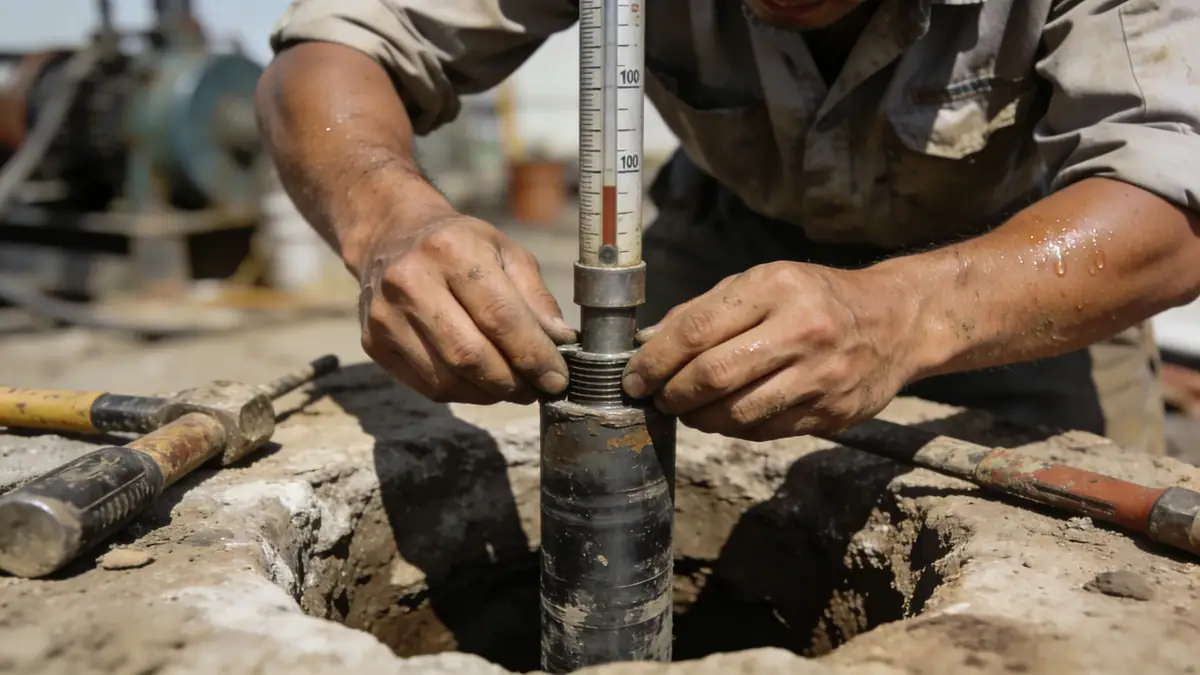
Our standard penetration testing methodology in North Las Vegas follows ASTM D1586, with sampling intervals typically every 1.5 m or at change of strata. We deploy a 63.5 kg hammer dropped 0.76 m to drive a split-spoon sampler, recording blow counts per 0.3 m increments (N-value). For cohesive soils, we also collect undisturbed samples for laboratory testing. Our standard penetration test (spt) procedures are augmented by cone penetration testing (CPT) where continuous profiling is required. All equipment is calibrated annually, and field data is reviewed by senior geotechnical engineers to ensure quality and consistency.
Reference Technical Parameters
| Parameter | Reference Value |
|---|---|
| Predominant soil type | Alluvial sands, silts, and clays with gravel layers |
| Maximum seismic acceleration (PGA) | 0.3g (ASCE 7-16, Site Class D) |
| Typical groundwater level | 3–8 m below grade |
| Bedrock depth | >30 m (deep alluvial basin) |
| Typical N60 range | 5–30 blows/0.3 m (variable) |
Local Considerations — North Las Vegas
North Las Vegas sits on deep alluvial deposits from the Las Vegas Valley, with soils ranging from loose sands to stiff clays. Shallow groundwater is common in the western areas, requiring dewatering considerations. Seismic design follows ASCE 7-16 with Site Class D default, and peak ground acceleration up to 0.3g. Older neighborhoods near downtown may have undocumented fill, while new master-planned communities require thorough SPT investigation. Our team references the Clark County building code and regional seismic hazard maps. For broader regional context, our main hub provides standard penetration test en Los Angeles coverage. We also offer cone penetration test (cpt) services for continuous profiling in thick alluvium.
Request a Quote
Our team reviews your project and issues an initial report at no cost.
Or write us directly at [email protected]
Services in North Las Vegas
Applicable Standards
- ASTM D1586 – Standard Test Method for Standard Penetration Test (SPT)
- ASCE 7-16 – Minimum Design Loads and Associated Criteria for Buildings
- IBC 2018 – International Building Code (adopted by Clark County)
Frequently Asked Questions
What soil conditions are typical for SPT in North Las Vegas?
North Las Vegas soils are predominantly alluvial sands, silts, and clays, often with gravel lenses. Standard penetration test (SPT) N-values typically range from 5 to 30 blows per 0.3 m, reflecting medium dense to stiff conditions. Shallow groundwater can affect blow counts in fine-grained soils.
What seismic code applies to standard penetration testing in North Las Vegas?
The International Building Code (IBC) 2018, as adopted by Clark County, governs seismic design. ASCE 7-16 defines site class based on SPT N-values: typically Site Class D for North Las Vegas. Peak ground acceleration (PGA) for the area is 0.3g, requiring seismic site response analysis for critical structures.
Is SPT mandatory for residential construction in North Las Vegas?
While not universally required for single-family homes, most subdivisions and custom homes undergo SPT to verify soil bearing capacity and seismic site class. Local building officials often request geotechnical reports for permit approval, especially in areas with suspected variable fill or high groundwater.