
Methodology
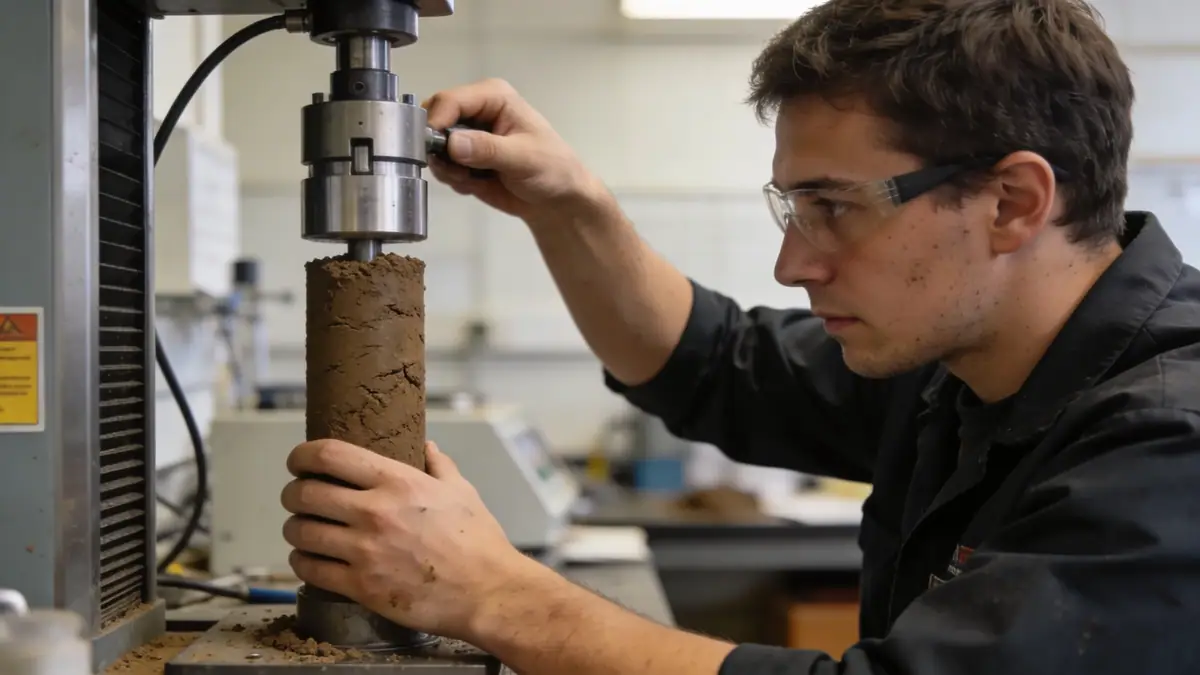
Our methodology for standard penetration test in Newark follows ASTM D1586, utilizing a 63.5 kg hammer dropped 760 mm to drive a split-spoon sampler. We record blow counts per 150 mm interval to determine N-values, corrected for overburden and energy efficiency (N60). Sampling intervals are typically 1.5 m, with continuous sampling in critical zones. Soil classification and recovery are documented for each test. For advanced profiling, we complement SPT with cone penetration test (cpt) to obtain continuous stratigraphic data. All fieldwork is supervised by experienced geotechnical engineers, and data is analyzed to assess bearing capacity, settlement, and liquefaction susceptibility per ASCE 7-16 seismic criteria.
Reference Technical Parameters
| Parameter | Reference Value |
|---|---|
| Predominant soil type | Glacial till, sand, silt, and clay deposits |
| Maximum seismic acceleration (PGA) | 0.2g (ASCE 7-16, Site Class D) |
| Typical groundwater level | 3 to 6 m below ground surface |
| Bedrock depth | 15 to 30 m (Newark Basin sedimentary rock) |
| Typical N60 range | 5 to 30 blows/300 mm (variable) |
Local Considerations — Newark
Newark's subsurface is dominated by glacial deposits overlying the Newark Basin's sedimentary rock (sandstone, shale). The water table is shallow (3-6 m), requiring dewatering considerations for deep excavations. Seismic hazard is moderate (PGA 0.2g per ASCE 7-16), with liquefaction potential in loose sands. Urban fill and buried utilities are common in industrial areas. Our team has extensive experience with these conditions, having executed numerous investigations for high-rise buildings and infrastructure. For projects requiring dynamic soil characterization, we recommend dpsh dynamic probing to assess compaction and stiffness. Our hub in standard penetration test en New York provides additional regional support.
Request a Quote
Our team reviews your project and issues an initial report at no cost.
Or write us directly at [email protected]
Services in Newark
Applicable Standards
- ASTM D1586
- ASCE 7-16
- IBC 2021
- Newark Municipal Code (Chapter 33: Buildings)
Frequently Asked Questions
What soil types are commonly encountered in Newark?
Newark's soils are primarily glacial till, sand, silt, and clay, with variable density and consistency. The underlying bedrock is sedimentary rock of the Newark Basin. These conditions influence foundation design and require thorough SPT testing to determine bearing capacity and settlement.
Is seismic analysis required for standard penetration test in Newark?
Yes, Newark is in a moderate seismic zone (PGA 0.2g per ASCE 7-16). SPT data is essential for evaluating liquefaction potential and site classification. Our reports include seismic parameters such as site class and amplification factors to comply with local building codes.
Are geotechnical investigations mandatory for construction in Newark?
Yes, the Newark Municipal Code requires geotechnical investigations for most new buildings and major renovations. SPT is a standard method to obtain subsurface data. Our firm assists clients in meeting these requirements with comprehensive reports accepted by local authorities.