
Methodology
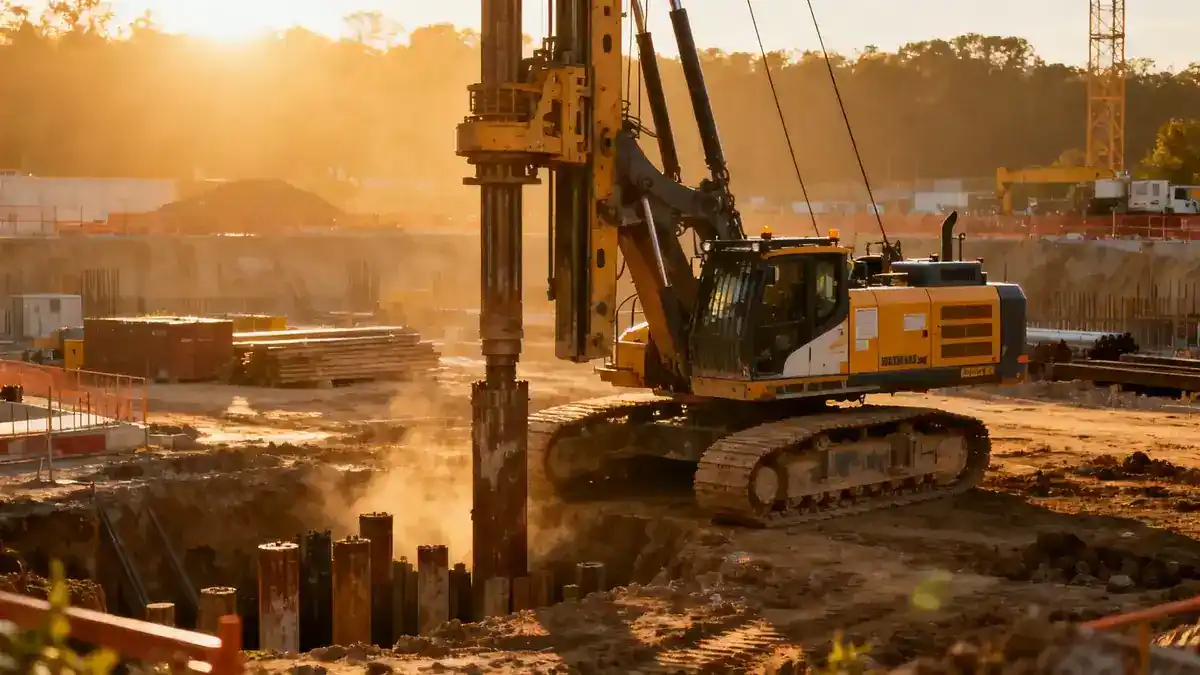
Our methodology for standard penetration testing in Nashville follows ASTM D1586, with continuous sampling at 1.5-meter intervals to capture the variability of alluvial and residual soils. We employ automatic trip hammers to ensure consistent energy delivery, recording N-values corrected for rod length and borehole diameter. For sites near the Cumberland River, we use casing advancement to prevent borehole collapse in saturated sands. Our equipment is calibrated annually to maintain accuracy, and we provide detailed logs with N60 values for direct use in bearing capacity and settlement calculations. This approach is complemented by our standard penetration test (spt) services, which integrate seamlessly with laboratory testing for comprehensive site characterization.
Reference Technical Parameters
| Parameter | Reference Value |
|---|---|
| Predominant soil type | Silty clay and clayey silt (CL-ML) over limestone bedrock |
| Maximum seismic acceleration (PGA) | 0.2g to 0.3g (ASCE 7-16, Site Class C-D) |
| Typical groundwater level | 2 to 6 meters below ground surface |
| Bedrock depth | 5 to 20 meters (limestone with solution cavities) |
| Typical N60 range | 4 to 15 blows per foot in overburden; >50 in weathered rock |
Local Considerations — Nashville
Nashville's geology is dominated by the Nashville Basin, underlain by Ordovician limestone and dolomite. Overburden soils consist of residual clays and alluvial deposits along the Cumberland River, with varying thickness and plasticity. The high water table in low-lying areas can complicate excavation and necessitate dewatering. Seismic hazard is moderate, with peak ground accelerations up to 0.3g per ASCE 7-16, requiring site-specific response analysis for critical structures. Our team addresses these challenges through targeted cone penetration test (cpt) soundings to map soil stratigraphy and locate karst features. For projects in the downtown core, we often encounter fill and buried utilities, demanding careful coordination and safety protocols. A typical case includes a mid-rise building in the Gulch, where we identified a buried stream channel requiring deep foundations to competent bedrock.
Request a Quote
Our team reviews your project and issues an initial report at no cost.
Or write us directly at [email protected]
Services in Nashville
Applicable Standards
- ASTM D1586
- ASCE 7-16
- IBC 2021
- Nashville Metro Codes
Frequently Asked Questions
What soil conditions are typical for standard penetration testing in Nashville?
Nashville's soils predominantly consist of residual silty clays derived from limestone weathering, with alluvial sands and silts along river valleys. The N60 values typically range from 4 to 15 blows per foot in the overburden, with higher values in weathered rock. Groundwater is often encountered at depths of 2 to 6 meters, requiring casing or mud rotary drilling techniques.
How does seismic design affect standard penetration testing requirements in Nashville?
Nashville is in a moderate seismic zone per ASCE 7-16, with PGA values up to 0.3g. SPT N-values are used to determine site class (C or D) and assess liquefaction potential in saturated sands. For critical structures, our team performs extended SPT borings to 30 meters to capture deeper soil layers and compute site coefficients.
Are geotechnical investigations mandatory for construction projects in Nashville?
Yes, the Nashville Metro Codes require geotechnical investigations for most commercial and multi-family residential projects. The scope depends on building size and seismic design category. Our standard penetration testing program provides the subsurface data needed to meet these regulatory requirements and support foundation design.