Methodology

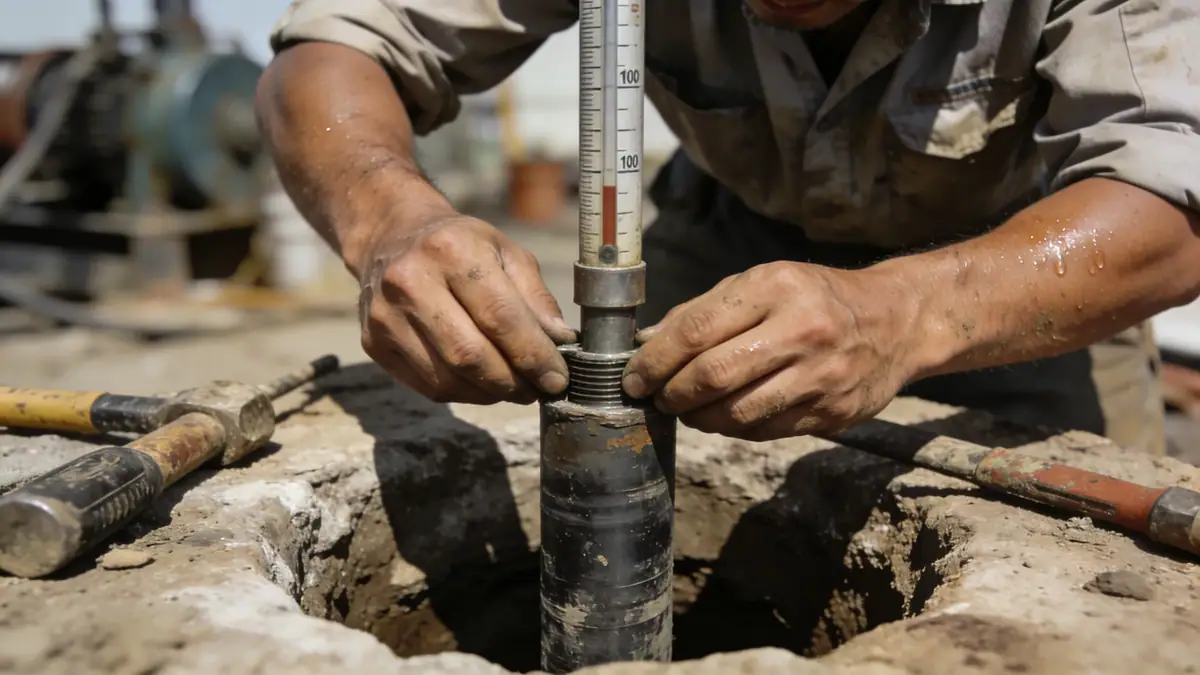
Our methodology for standard penetration test in Moreno Valley follows ASTM D1586, with boreholes advanced to depths of 8–15 meters for residential projects and up to 30 meters for industrial structures. We employ a 63.5 kg hammer dropped 0.76 m, recording blow counts (N-value) at 1.5 m intervals. Samples are retrieved via split-spoon sampler for classification and laboratory testing. Our approach incorporates continuous monitoring of groundwater levels, as the shallow water table in valley areas can significantly impact foundation design. We integrate results with seismic site classification per ASCE 7, using shear wave velocity correlations to assess liquefaction potential. For detailed profiling, we also offer cone penetration test (cpt) as a complementary method.
Reference Technical Parameters
| Parameter | Reference Value |
|---|---|
| Predominant soil type | Alluvial sands, silts, and clays with gravel lenses |
| Maximum seismic acceleration (PGA) | 0.4g to 0.6g (ASCE 7 Seismic Design Category D) |
| Typical groundwater level | 2–6 meters below ground surface |
| Bedrock depth | Greater than 30 meters (deep alluvial basin) |
| Typical N60 range | 5–30 blows per 0.3 m (loose to medium dense sands) |
Local Considerations — Moreno Valley
Moreno Valley lies within the San Jacinto fault zone, experiencing high seismic activity with PGA up to 0.6g. The city's alluvial basin features variable soil profiles: coarser sands and gravels in western areas near the Box Springs Mountains, and finer silts/clays with shallow groundwater (2–6 m) in central and eastern zones. This variability demands site-specific SPT programs to assess liquefaction risk under seismic loading. Our team has extensive experience in local residential subdivisions and commercial developments, where standard penetration test data consistently informs foundation design. For projects requiring higher resolution profiling, we recommend dpsh dynamic probing to complement SPT results. Additionally, our hub in standard penetration test en Los Angeles provides regional coordination for complex multi-site investigations.
Request a Quote
Our team reviews your project and issues an initial report at no cost.
Or write us directly at [email protected]
Services in Moreno Valley
Applicable Standards
- ASTM D1586 (Standard Test Method for Standard Penetration Test)
- ASCE 7 (Minimum Design Loads for Buildings and Other Structures)
- California Building Code (CBC) Seismic Provisions
- ASTM D2487 (Classification of Soils for Engineering Purposes)
- OSHA 29 CFR 1926 Subpart P (Excavation Safety)
Frequently Asked Questions
What soil types are commonly found in Moreno Valley?
Moreno Valley's soils are predominantly alluvial sands, silts, and clays, with gravel lenses in western areas. The eastern region contains finer sediments with a shallow water table, requiring careful evaluation for liquefaction potential during seismic events.
Is a standard penetration test required for building permits in Moreno Valley?
Yes, the California Building Code mandates geotechnical investigations for most structures in Seismic Design Category D. A standard penetration test provides essential N-values for site classification and foundation design, ensuring compliance with ASCE 7 and local regulations.
How does seismic activity in Moreno Valley affect SPT results?
High PGA values (0.4g–0.6g) necessitate detailed liquefaction analysis. SPT data is used to calculate cyclic resistance ratios and assess settlement potential. Our team integrates N-values with shear wave velocity correlations to mitigate seismic risks.