
Methodology
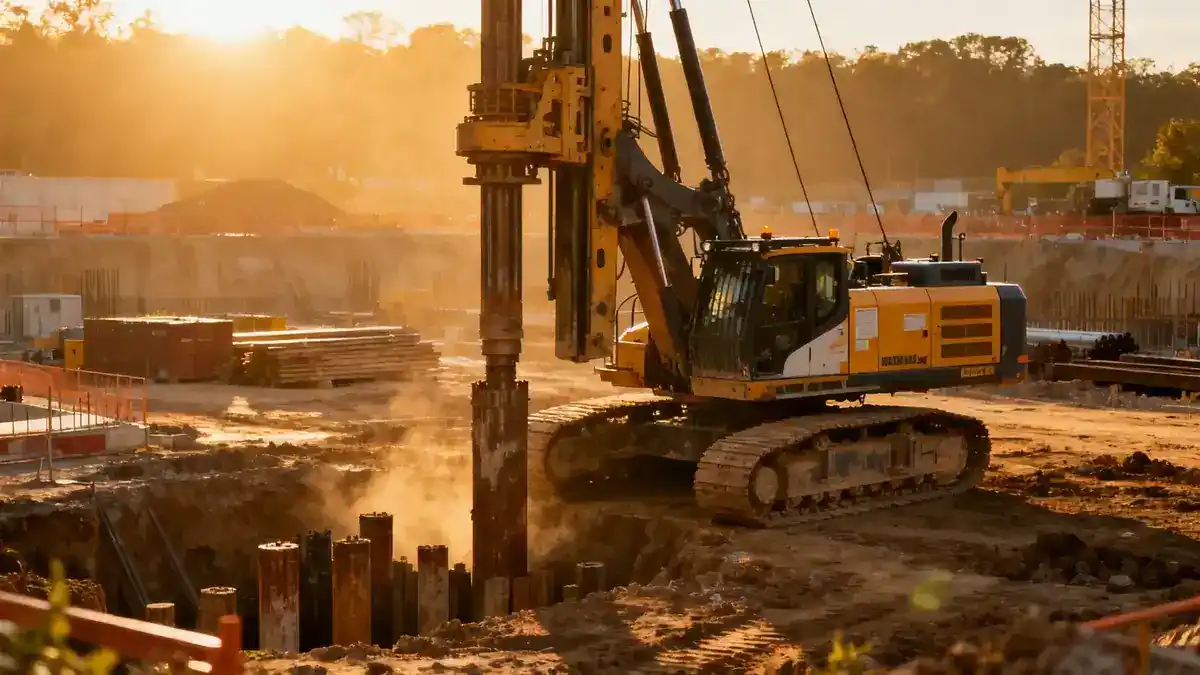
Our team executes the standard penetration test (SPT) in Lubbock strictly per ASTM D1586. We use a 63.5 kg hammer dropped 0.76 m to drive a 50.8 mm split-barrel sampler, recording blow counts per 150 mm interval. The test is conducted at 1.5 m intervals to a typical depth of 15 m, with continuous sampling in variable strata. Soil recovery is logged in the field, and samples are classified visually and later tested for moisture content and grain size. Data reduction includes correction for overburden pressure (N60) and energy efficiency. Our methodology ensures repeatable results for bearing capacity and settlement analysis.
Reference Technical Parameters
| Parameter | Reference Value |
|---|---|
| Predominant soil type | Sandy clay and silty sand (SM-SC) |
| Maximum seismic acceleration (PGA) | 0.05g (ASCE 7 Seismic Zone 1) |
| Typical groundwater level | 30-50 m below grade |
| Bedrock depth | >100 m (Ogallala Formation) |
| Typical N60 range | 10-30 blows/0.3 m |
Local Considerations — Lubbock
Lubbock's flat terrain and deep water table favor shallow foundations on compacted fill, but expansive clays in the upper 3 m require caution. Our team has executed standard penetration test programs across residential subdivisions in Southwest Lubbock and industrial sites near the airport. The Ogallala Formation's variability—from cemented caliche layers to loose sands—demands continuous SPT sampling per ASTM D1586. Unlike regions with shallow bedrock, Lubbock's deep profile allows deeper borings for high-rise projects. For regional context, our standard penetration test en Denver experience contrasts with Lubbock's unique aquifer constraints. We also deploy cone penetration test (cpt) for rapid profiling in thick sand sequences.
Request a Quote
Our team reviews your project and issues an initial report at no cost.
Or write us directly at [email protected]
Services in Lubbock
Applicable Standards
- ASTM D1586
- ASCE 7
- IBC 2021
- Texas Administrative Code (Title 16, Part 1, Rule §61.30)
Frequently Asked Questions
What soil types are encountered in Lubbock during SPT?
Lubbock's subsurface is dominated by the Ogallala Formation, consisting of interbedded sands, silts, and clays. Caliche layers (calcium carbonate cemented horizons) are common at depths of 1-3 m, requiring careful SPT hammer operation to avoid refusal. Below 10 m, dense sand and gravel deposits prevail.
Is a standard penetration test required for residential construction in Lubbock?
While not mandated for single-family homes, the City of Lubbock requires geotechnical investigations for commercial buildings and multi-story structures per IBC 2021. SPT is the preferred method for determining bearing capacity and settlement parameters in the region's variable soils.
How does Lubbock's seismic zone affect SPT procedures?
Lubbock is in ASCE 7 Seismic Zone 1 (PGA < 0.05g), resulting in low seismic risk. SPT N-values are used primarily for static bearing capacity and liquefaction assessment is rarely required. However, for critical facilities, our team still evaluates cyclic resistance using corrected N60 values.