
Methodology
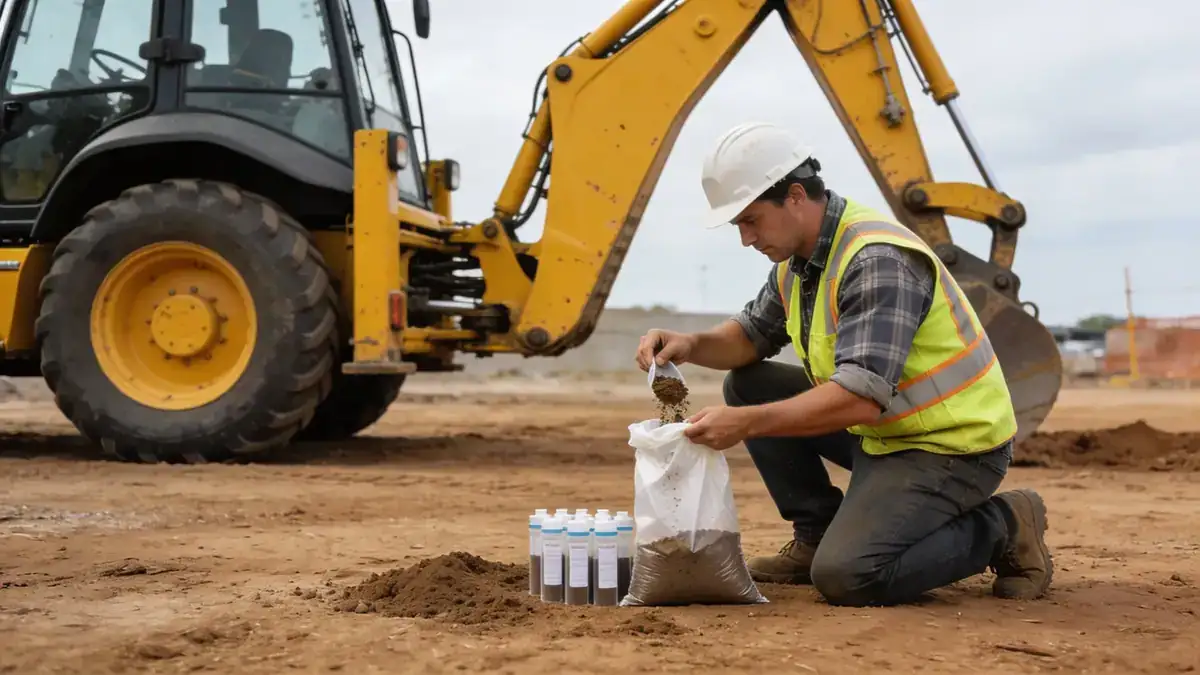
Our methodology for standard penetration test in Louisville follows ASTM D1586 procedures, using a 63.5 kg hammer dropped 760 mm to drive a split-barrel sampler. We record blow counts per 150 mm increment to obtain N60 values, corrected for overburden and energy efficiency. Boreholes are advanced using hollow-stem augers or mud rotary techniques, with sampling intervals typically 1.5 m. This approach is complemented by standard penetration test (spt) for continuous profiling and cone penetration test (cpt) where detailed stratigraphy is required. All data is analyzed in accordance with IBC 2021 and ASCE 7 seismic provisions.
Reference Technical Parameters
| Parameter | Reference Value |
|---|---|
| Predominant soil type | Alluvial silty sands and clays (Ohio River floodplain) |
| Maximum seismic acceleration (PGA) | 0.15–0.20 g (IBC 2021 site class D) |
| Typical groundwater level | 2–5 m below grade |
| Bedrock depth | 10–30 m (Devonian limestone/shale) |
| Typical N60 range (sands) | 5–30 blows/300 mm |
Local Considerations — Louisville
Louisville’s geology is dominated by Ohio River alluvium overlying Devonian limestone and shale. The water table is shallow (2–5 m), requiring dewatering considerations for excavations. Seismic hazard is moderate (PGA 0.15–0.20 g) per IBC 2021, with liquefaction potential in loose saturated sands. Contrasting soil conditions exist between the floodplain (soft clays) and upland areas (stiffer glacial tills). Typical projects include high-rises in downtown, residential subdivisions in the East End, and industrial facilities along the river. Our dpsh dynamic probing service is often used for rapid profiling in these settings. For regional coordination, our standard penetration test en Chicago hub supports multi-state projects.
Request a Quote
Our team reviews your project and issues an initial report at no cost.
Or write us directly at [email protected]
Services in Louisville
Applicable Standards
- ASTM D1586 (Standard Test Method for SPT)
- IBC 2021 (International Building Code)
- ASCE 7-22 (Minimum Design Loads for Buildings)
- Kentucky Building Code (KBC) Chapter 18
Frequently Asked Questions
What soil types are common in Louisville and how do they affect SPT results?
Louisville’s soils include alluvial silty sands, soft clays, and glacial tills. SPT N-values in sands typically range from 5 to 30, while clays show lower blow counts. These variations influence foundation type and depth, requiring careful interpretation per ASTM D1586.
Is a standard penetration test required for building permits in Louisville?
Yes, for most commercial and multi-family structures. The Kentucky Building Code mandates geotechnical investigation per IBC Chapter 18, including SPT borings, to determine soil bearing capacity and seismic site class. Single-family homes may be exempt on stable soils.
How does seismic risk in Louisville affect SPT testing requirements?
Louisville is in Seismic Design Category C (PGA 0.15–0.20 g). SPT data is used to assess liquefaction potential per ASCE 7-22. Borings must reach depths equivalent to the liquefiable zone, typically 15–20 m, with N60 values critical for site class determination.