
Methodology
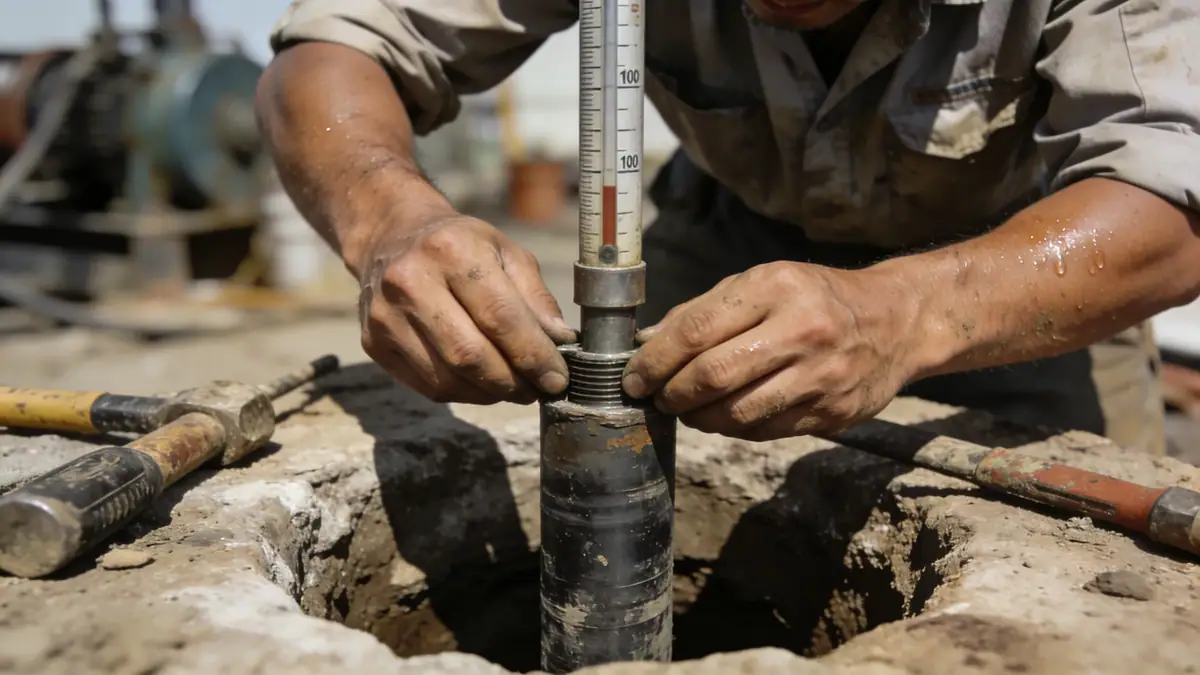
Our team executes the standard penetration test (SPT) in Hartford Connecticut following ASTM D1586 procedures. We drive a split-spoon sampler using a 140-lb hammer falling 30 inches, recording blow counts per 6-inch interval. Energy corrections are applied to obtain N60 values for foundation design. For continuous profiling, we also offer cone penetration test (cpt) to complement SPT data. Our methods ensure high-quality soil classification and strength parameters for all project scales.
Reference Technical Parameters
| Parameter | Reference Value |
|---|---|
| Predominant soil type | Glacial till and alluvial sands/clays |
| Maximum seismic acceleration (PGA) | 0.2g (ASCE 7-16) |
| Typical groundwater level | 3–6 m below surface |
| Bedrock depth | 10–30 m (brownstone/sandstone) |
| Typical N60 range | 4–30 blows/ft (sands to stiff clays) |
Local Considerations — Hartford Connecticut
Hartford Connecticut lies within the Connecticut River Valley, characterized by glacial till, alluvial sands, and clays overlying Triassic brownstone bedrock. The region is in Seismic Design Category B (ASCE 7), with peak ground acceleration of 0.2g. Groundwater levels are typically shallow (3–6 m), requiring dewatering for excavations. Soil conditions vary between downtown fill deposits and suburban glacial tills. For advanced profiling, we recommend dpsh dynamic probing to assess dense sands and gravels. Our team integrates these factors to deliver site-specific recommendations, referencing our extensive work in standard penetration test en New York for comparable urban settings.
Request a Quote
Our team reviews your project and issues an initial report at no cost.
Or write us directly at [email protected]
Services in Hartford Connecticut
Applicable Standards
- ASTM D1586
- ASCE 7-16
- IBC 2021
- Connecticut State Building Code
Frequently Asked Questions
What soil types are common in Hartford Connecticut?
Hartford Connecticut features glacial till, alluvial sands and clays, and occasional organic deposits. The Connecticut River Valley contributes variable stratigraphy, with dense sands and stiff clays overlying brownstone bedrock at depths of 10–30 m.
What seismic codes apply to Hartford Connecticut?
Hartford Connecticut follows ASCE 7-16 and the IBC 2021. The region is in Seismic Design Category B, with a peak ground acceleration of 0.2g. Site-specific response spectra are required for critical structures, using SPT N60 values to classify soil profiles.
Are geotechnical investigations mandatory in Hartford Connecticut?
Yes, the Connecticut State Building Code mandates subsurface investigations for most structures, especially those with deep foundations or seismic design. Standard penetration tests are typically required to determine soil bearing capacity and liquefaction potential.