Methodology
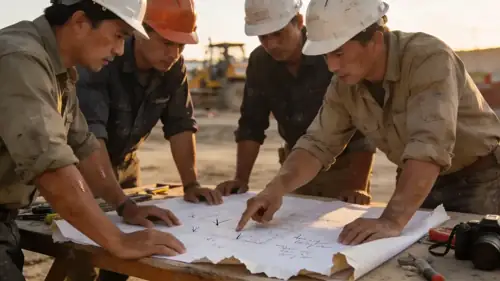
Our methodology for standard penetration testing in Gilbert follows ASTM D1586, with split-spoon sampling at 1.5-meter intervals to refusal or target depth. We employ automatic hammers and calibrated equipment to ensure consistent energy delivery. Field logs record blow counts, soil recovery, and groundwater observations. Samples are classified visually and undergo laboratory testing as needed. The program adapts to site conditions, with deeper borings for multi-story structures and shallower profiles for single-family developments. For advanced profiling, we integrate cone penetration test (cpt) where continuous stratigraphy is required.
Reference Technical Parameters
| Parameter | Reference Value |
|---|---|
| Predominant soil type | Silty sand and clayey gravel (alluvial fan deposits) |
| Maximum seismic acceleration (PGA) | 0.36g (ASCE 7-16, Site Class D) |
| Typical groundwater level | 15–25 m below surface |
| Bedrock depth | >50 m (basin fill sediments) |
| Typical N60 range | 5–30 blows/ft (variable with depth and moisture) |
Local Considerations — Gilbert
Gilbert's subsurface consists of deep alluvial deposits from the Salt River system, with interbedded silts, sands, and gravels. Groundwater is generally deep (>15 m), but local perched zones may occur near canals. Seismic design follows ASCE 7 with PGA up to 0.36g, requiring liquefaction assessment in loose saturated layers. Older subdivisions (pre-2000) often have undocumented fills; newer areas feature engineered fills. Typical projects include residential slab-on-grade and commercial strip malls. Our firm coordinates these studies from our standard penetration test en Phoenix hub, ensuring consistent regional coverage.
Request a Quote
Our team reviews your project and issues an initial report at no cost.
Or write us directly at [email protected]
Services in Gilbert
Applicable Standards
- ASTM D1586 (Standard Test Method for Standard Penetration Test)
- ASCE 7-16 (Minimum Design Loads for Buildings and Other Structures)
- IBC 2021 (International Building Code)
- ASTM D2487 (Classification of Soils for Engineering Purposes)
Frequently Asked Questions
What soil types are typically encountered in Gilbert?
Gilbert's soils are predominantly alluvial, consisting of silty sands, clayey sands, and gravels with varying fines content. These soils are generally non-expansive, but localized clay lenses may exhibit moderate shrink-swell potential. Standard penetration testing helps identify these variations and assess bearing capacity.
How does seismic design affect standard penetration testing in Gilbert?
Gilbert lies in a seismically active region with a PGA of 0.36g per ASCE 7. SPT data is used to evaluate liquefaction potential and site class (typically D or E). Loose, saturated sands require careful assessment. Our testing programs are designed to capture critical strata for seismic analysis.
Is standard penetration testing required for residential projects in Gilbert?
While not mandatory for all single-family homes, most municipalities require geotechnical reports for new subdivisions or structures with deep foundations. Standard penetration testing provides reliable soil strength and density data, often fulfilling local building department requirements for engineered designs.