
Methodology
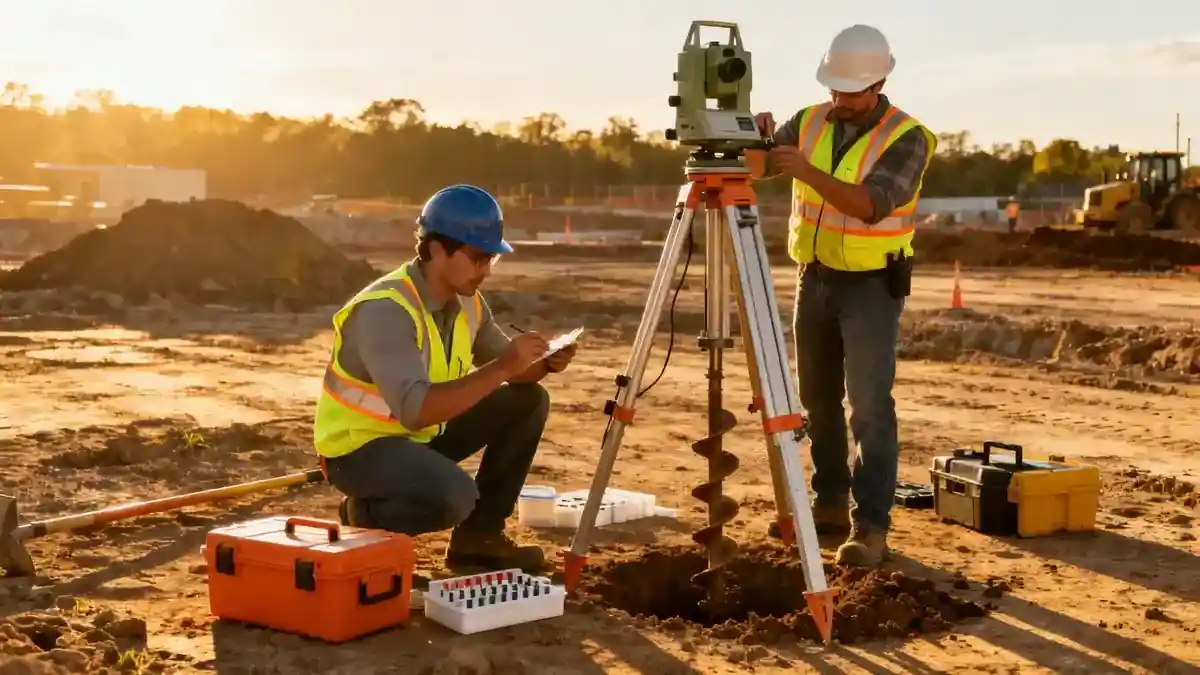
Our methodology for standard penetration test (spt) in Fresno follows ASTM D1586, utilizing a 63.5 kg hammer dropped 760 mm to drive a split-spoon sampler. We record blow counts per 150 mm interval, with N-values corrected for energy efficiency and overburden. Boreholes are advanced using hollow-stem augers or mud rotary to minimize disturbance. Sampling intervals are typically 1.5 m, with continuous sampling in critical zones. Soil classifications are performed per ASTM D2487. Our team coordinates with local drilling contractors to manage groundwater and cobble layers common to the Fresno area. Data is synthesized into geotechnical reports with recommendations for shallow and deep foundation systems, including driven piles and mat foundations.
Reference Technical Parameters
| Parameter | Reference Value |
|---|---|
| Predominant soil type | Alluvial sands, silts, and gravels; localized clay lenses |
| Maximum seismic acceleration (PGA) | 0.25g to 0.35g (ASCE 7-16, Site Class D) |
| Typical groundwater level | 6–15 m below grade, varies seasonally |
| Bedrock depth | >30 m (Great Valley sequence) |
| Typical N60 range | 10–30 blows/300 mm (sands); 4–15 blows/300 mm (silts) |
Local Considerations — Fresno
Fresno's subsurface reflects Quaternary alluvial deposits from the Sierra Nevada. Downtown, dense sands and gravels yield moderate blow counts, while southeastern areas near the Kings River have softer silts and higher groundwater. Seismic design per ASCE 7-16 requires Site Class D or E evaluations. Liquefaction potential is low to moderate in saturated loose sands. Our firm also offers cone penetration test (cpt) for continuous profiling in these variable soils. For major projects, we reference adjacent borehole logs to optimize sampling programs. Regional subsidence from groundwater extraction necessitates careful consolidation analysis. Clients benefit from our integrated approach to foundation design, combining SPT data with local geologic maps and regulatory requirements.
Request a Quote
Our team reviews your project and issues an initial report at no cost.
Or write us directly at [email protected]
Services in Fresno
Applicable Standards
- ASTM D1586
- ASCE 7-16
- California Building Code (CBC) 2022
- ASTM D2487
- ASTM D4220
Frequently Asked Questions
What soil types are commonly encountered in Fresno?
Fresno's soils are predominantly alluvial sands, silts, and gravels deposited by the San Joaquin River and its tributaries. Clay lenses are present in some areas, and groundwater levels vary seasonally. Our standard penetration tests characterize these layers for foundation design.
Is geotechnical investigation mandatory for new construction in Fresno?
Yes, the California Building Code requires site-specific geotechnical reports for most new structures, especially in Seismic Design Categories C and D. Local jurisdictions in Fresno County enforce these requirements to ensure public safety.
How does seismic activity in Fresno affect SPT requirements?
Fresno lies in a moderate seismic zone with PGA up to 0.35g. SPT data is used to evaluate liquefaction potential and site class per ASCE 7. Our testing programs are designed to meet these seismic criteria, often including additional borings near fault zones.