
Methodology
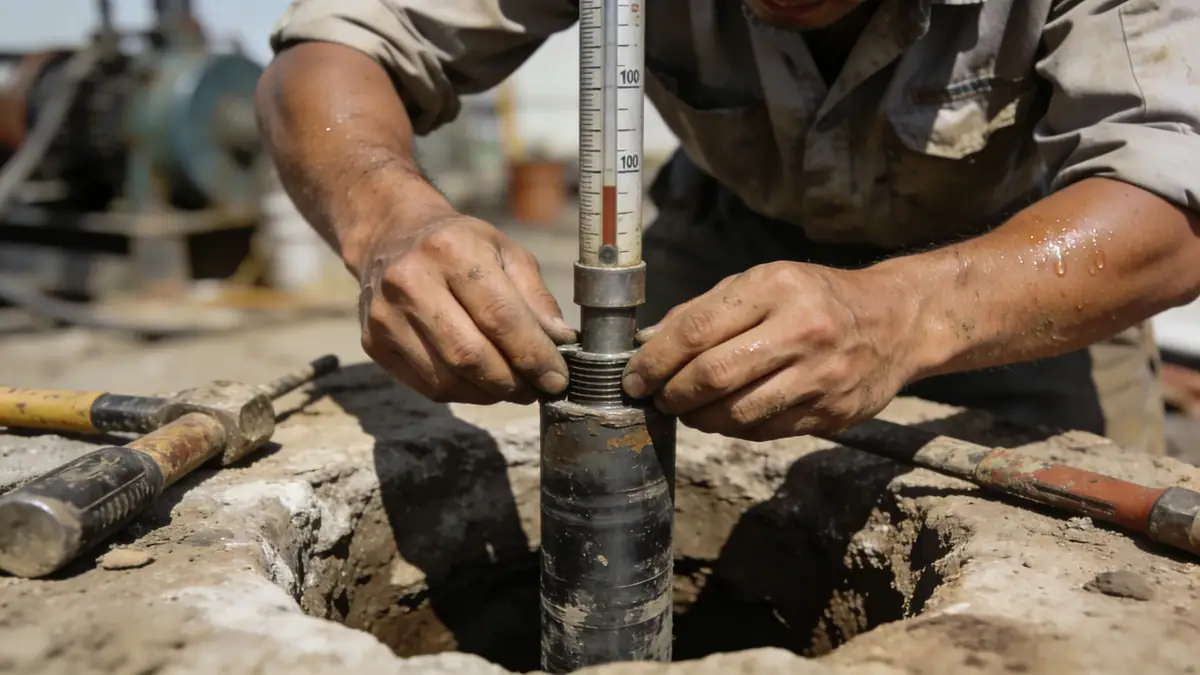
Our methodology for Standard Penetration Test in Fort Worth follows ASTM D1586, using a 63.5 kg hammer dropped 760 mm to drive a split-barrel sampler. We record blow counts for each 150 mm increment, with the sum of the last two increments reported as N-value. Boreholes are advanced using hollow-stem augers to maintain borehole stability, particularly in the clay-rich Eagle Ford Shale. Sampling intervals are typically 1.5 m, with continuous sampling in critical zones. All equipment is calibrated annually, and our field technicians verify hammer energy efficiency. For a detailed description of our SPT procedures, see our standard penetration test (spt) page.
Reference Technical Parameters
| Parameter | Reference Value |
|---|---|
| Predominant soil type | Clay (Eagle Ford Shale) and limestone (Austin Chalk) |
| Maximum seismic acceleration (PGA) | 0.15g (ASCE 7-16, Site Class C) |
| Typical groundwater level | 15–30 ft (variable with season and location) |
| Bedrock depth | 10–50 ft (Austin Chalk) |
| Typical N60 range (clay) | 5–25 blows/ft |
Local Considerations — Fort Worth
Fort Worth's geology presents unique challenges for Standard Penetration Test. The eastern half of the city, underlain by Eagle Ford Shale, exhibits expansive clay behavior with high plasticity (PI > 40). This requires careful moisture conditioning and may necessitate deep foundations. The western areas, atop Austin Chalk, often require rock coring or DCPT. Seismic design per ASCE 7-16 assigns a PGA of 0.15g for Site Class C, but liquefaction potential is low except near the Trinity River alluvium. Our team coordinates with local geologists to adjust sampling depths and methods accordingly. For alternative probing in hard layers, see our cone penetration test (cpt) page. Additionally, our hub in standard penetration test en Houston provides regional support for complex projects.
Request a Quote
Our team reviews your project and issues an initial report at no cost.
Or write us directly at [email protected]
Services in Fort Worth
Applicable Standards
- ASTM D1586
- ASCE 7-16
- IBC 2021
- City of Fort Worth Geotechnical Report Guidelines
Frequently Asked Questions
What are the typical soil conditions in Fort Worth for SPT?
Fort Worth soils vary from expansive clays (Eagle Ford Shale) in the east to limestone (Austin Chalk) in the west. SPT N-values in clay typically range from 5 to 25 blows/ft, while chalk may exceed 50 blows/ft. Groundwater is usually encountered at 15–30 ft, requiring casing or mud rotary drilling.
Is a Standard Penetration Test required for residential construction in Fort Worth?
Yes, most municipalities in Tarrant County require a geotechnical investigation for new residential foundations, especially in expansive soil areas. An SPT provides essential data for slab design and pier depth. The City of Fort Worth recommends at least one boring per 2,000 sq ft of building area.
What seismic design parameters apply to Fort Worth?
Fort Worth is in Seismic Design Category B per ASCE 7-16, with a mapped PGA of 0.15g for Site Class C. Site-specific response spectra are required for structures with a Seismic Importance Factor of 1.25 or higher. SPT data is used to classify site class and assess liquefaction potential.