Methodology
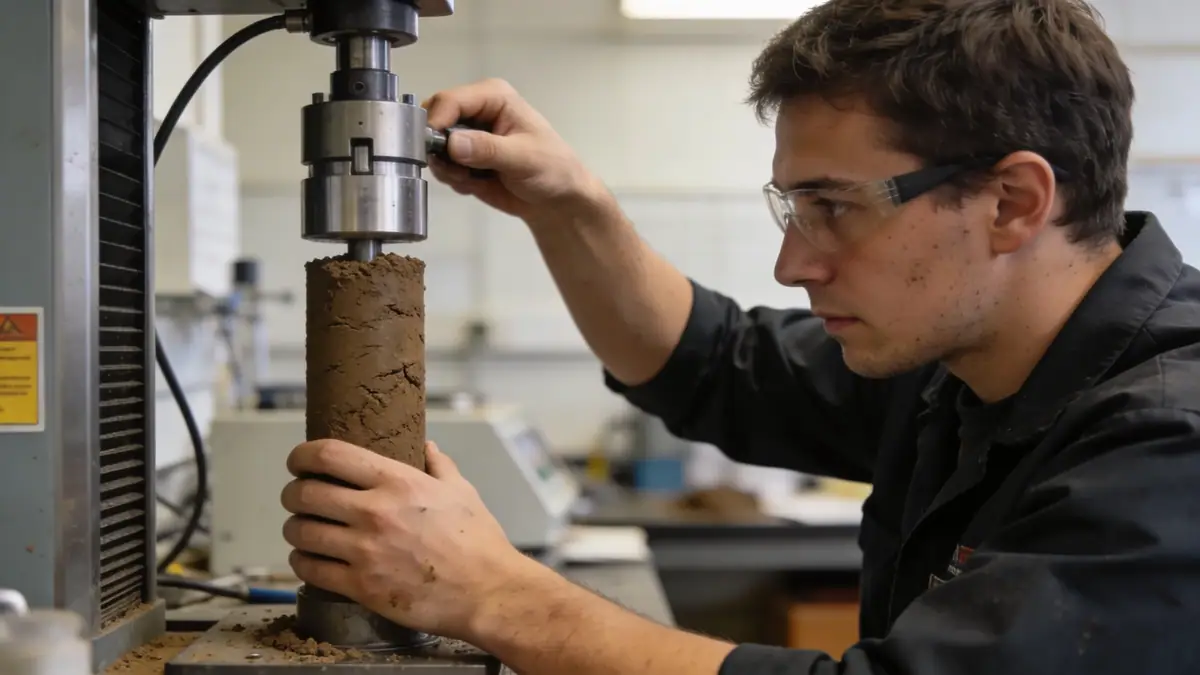
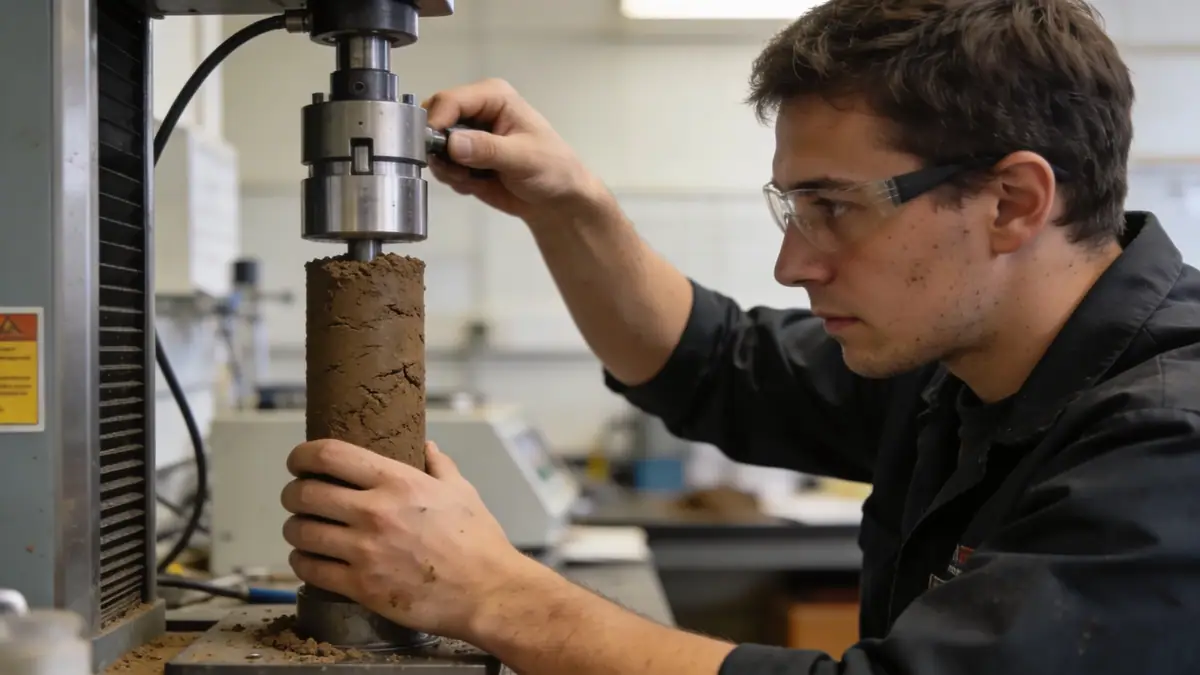
Our approach to the standard penetration test (SPT) in Fort Wayne follows ASTM D1586, with a hollow-stem auger advancing a split-barrel sampler at 1.5-meter intervals. We record blow counts (N-value) for each 150-mm increment, correcting for overburden and hammer efficiency to obtain N60. In cohesive soils, we collect undisturbed tube samples for laboratory testing. Our team integrates the standard penetration test (spt) with cone penetration test (CPT) soundings where needed to map stratigraphic transitions common in Fort Wayne's glacial deposits. Data reduction includes energy measurements per ASTM D4633 to ensure repeatability.
Reference Technical Parameters
| Parameter | Reference Value |
|---|---|
| Predominant soil type | Glacial till (silty clay with sand and gravel) |
| Maximum seismic acceleration (PGA) | 0.15g (ASCE 7-16 Site Class D) |
| Typical groundwater level | 3–6 m below grade |
| Bedrock depth | 30–50 m (Ordovician limestone/shale) |
| Typical N60 range | 10–30 blows/300 mm (medium dense to dense) |
Local Considerations — Fort Wayne
Fort Wayne lies within the Eastern Great Lakes and Ohio River Valley glacial limits, characterized by multiple till sheets interbedded with outwash sands and lacustrine clays. The water table fluctuates seasonally, often within 3 meters of the surface, requiring careful dewatering planning. Seismic hazard is moderate (PGA 0.15g per ASCE 7), necessitating Site Class D evaluations. In the downtown core, historical fill and buried utilities complicate access, while suburban areas present uniform till profiles. Our team coordinates with local permitting authorities and references the Indiana Building Code. We also collaborate with our standard penetration test en Chicago office for regional consistency. For deeper stratigraphic profiling, we recommend the cone penetration test (cpt) to complement SPT data.
Request a Quote
Our team reviews your project and issues an initial report at no cost.
Or write us directly at [email protected]
Services in Fort Wayne
Applicable Standards
- ASTM D1586
- ASCE 7-16
- Indiana Building Code 2020
- ASTM D2487 (Unified Soil Classification System)
- ASTM D4633 (Energy Measurement)
Frequently Asked Questions
What soil conditions are typical for standard penetration testing in Fort Wayne?
Fort Wayne's subsurface is dominated by glacial till—a heterogeneous mix of silty clay, sand, and gravel. Outwash sands and lacustrine clays are also present. SPT N60 values typically range from 10 to 30, indicating medium dense to dense conditions, though soft zones may occur near paleochannels.
What seismic design parameters apply to Fort Wayne based on SPT data?
Per ASCE 7-16, Fort Wayne has a maximum considered earthquake spectral response acceleration (SDS) of 0.30g for Site Class D. Standard penetration test N60 values are used to determine site class, with average N60 between 15 and 50 typically placing the site in Class D. Groundwater corrections are applied per the code.
Are geotechnical investigations mandatory for construction in Fort Wayne?
The Indiana Building Code requires geotechnical reports for all new structures, including SPT borings. For residential projects, a minimum of two borings to 15 m or refusal is common. Commercial and industrial projects require more extensive testing, including seismic site classification per ASCE 7.