Methodology
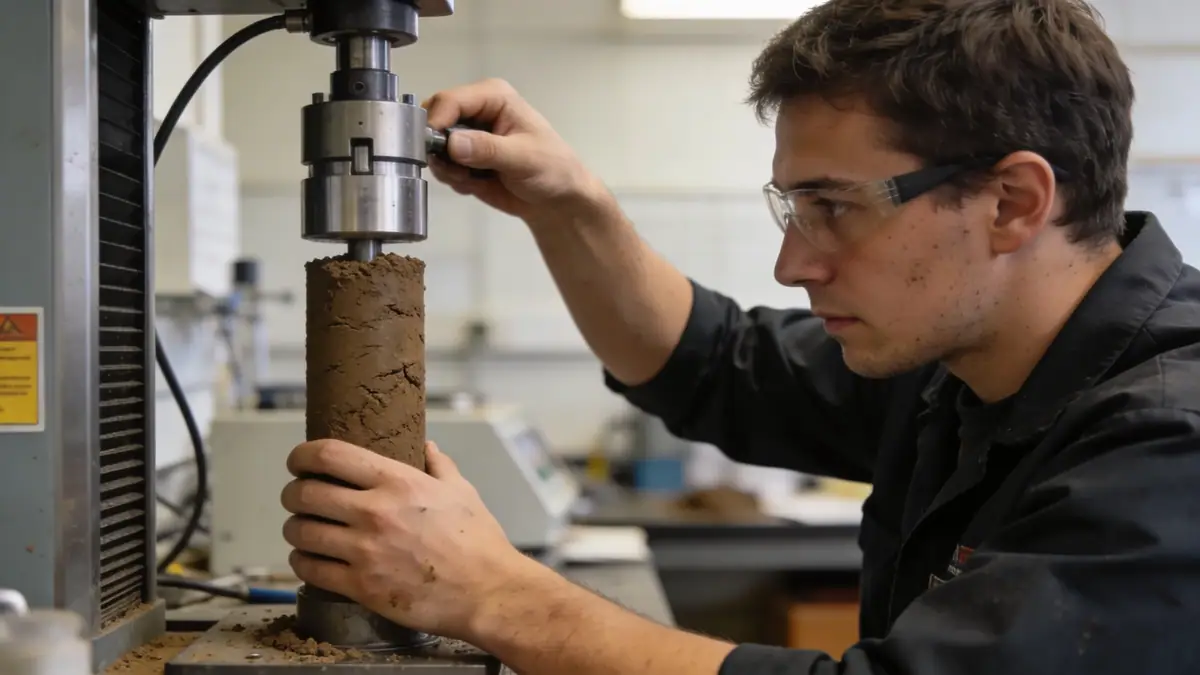
Our standard penetration testing methodology in Fontana follows ASTM D1586, with hammer energy calibration exceeding 60% efficiency. We perform SPT borings at intervals of 1.0 to 1.5 meters, reaching depths of 8 to 15 meters for residential projects and up to 30 meters for industrial sites. In addition to standard penetration test (spt), our team offers complementary techniques such as cone penetration test (CPT) for continuous profiling and dynamic probing for shallow investigations. All field data is processed in accordance with local codes, providing clients with N60 values and soil classifications necessary for foundation design.
Reference Technical Parameters
| Parameter | Reference Value |
|---|---|
| Predominant soil type | Alluvial sands and silty clays |
| Maximum seismic acceleration (PGA) | 0.4g (per ASCE 7-16) |
| Typical groundwater level | 10–15 m below grade |
| Bedrock depth | Variable, 30–50 m |
| Typical N60 range | 10–30 blows/ft |
Local Considerations — Fontana
Fontana's geology consists of Quaternary alluvial deposits from the Santa Ana River and Lytle Creek watersheds. These soils exhibit moderate to high liquefaction potential under seismic loading, as evidenced during the 1992 Landers earthquake. Groundwater is typically encountered at depths of 10–15 m, though seasonal variations occur. In northern Fontana (near the San Gabriel foothills), colluvial and residual soils with higher gravel content are common, requiring specialized drilling techniques. For projects in the central industrial corridor, our team often recommends cone penetration test (cpt) for rapid profiling. Typical foundation issues include expansive clay layers and variable bearing capacity, which we address through targeted SPT and laboratory testing.
Request a Quote
Our team reviews your project and issues an initial report at no cost.
Or write us directly at [email protected]
Services in Fontana
Applicable Standards
- ASTM D1586
- ASCE 7-16
- California Building Code (CBC) 2022
- San Bernardino County Grading Ordinance
Frequently Asked Questions
What are the typical soil conditions for standard penetration testing in Fontana?
Fontana's soils are predominantly alluvial sands and silty clays with occasional gravel layers. Groundwater is usually deep (10–15 m), but seasonal rises can occur. Our SPT program accounts for these conditions to provide reliable N60 values for foundation design.
How does seismic design in Fontana affect standard penetration testing?
Fontana is in Seismic Design Category D per ASCE 7-16, with a PGA of 0.4g. Our testing evaluates liquefaction potential and soil strength under cyclic loading, ensuring compliance with the California Building Code and reducing earthquake risk.
Is a standard penetration test mandatory for construction in Fontana?
While not always mandatory for small structures, most commercial and multi-family projects require geotechnical investigation per San Bernardino County grading ordinances. Our team recommends SPT for any project with significant seismic or settlement concerns.