Methodology

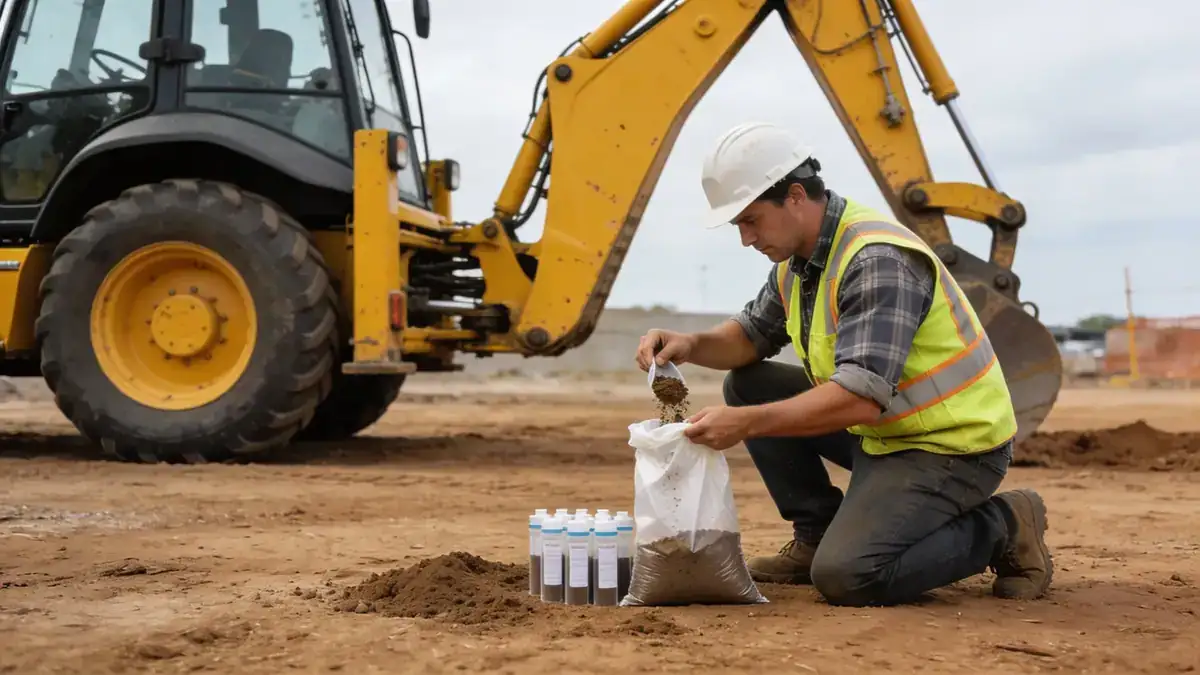
Our approach to standard penetration test in Fayetteville Arkansas follows ASTM D1586, driving a split-spoon sampler to recover disturbed soil samples while measuring blow counts. We perform SPT at intervals of 1.0 to 1.5 meters to depths typical of 8 to 15 meters for residential structures, and up to 30 meters for larger projects. The N60 values are corrected for energy efficiency and overburden, providing a consistent measure of soil resistance. This methodology, combined with our expertise in local conditions, delivers reliable data for foundation design. For more details, see our standard penetration test (spt) page.
Reference Technical Parameters
| Parameter | Reference Value |
|---|---|
| Predominant soil type | Silty clay and clayey silt with sand layers, residual soils over shale/limestone |
| Maximum seismic acceleration (PGA) | 0.2g to 0.3g (ASCE 7 seismic design category C/D) |
| Typical groundwater level | Variable from 3 to 8 meters below grade |
| Bedrock depth | Shallow (2–5 m) in upland areas; deeper (8–15 m) in valleys |
| Typical N60 range | 4–15 in clay strata; 20–50 in sand/gravel layers |
Local Considerations — Fayetteville Arkansas
Fayetteville's geology, part of the Ozark Plateau, features residual soils over Mississippian limestone and shale. Depth to bedrock varies significantly—shallow in uplands (2–5 m) but deeper in valley fills (8–15 m). Groundwater is typically 3–8 m deep but may be perched in clay strata. Seismic hazard is moderate; ASCE 7 maps indicate PGA of 0.2–0.3g, requiring site-specific response analysis for critical structures. Neighborhoods like Wilson Park and Dickson Street areas show variable soil stiffness, while new developments near Interstate 49 often encounter weathered shale. Our team integrates these conditions into every project. For complementary services, see our cone penetration test (cpt) page.
Request a Quote
Our team reviews your project and issues an initial report at no cost.
Or write us directly at [email protected]
Services in Fayetteville Arkansas
Applicable Standards
- ASTM D1586
- ASCE 7
- IBC 2021
- Arkansas State Building Code
Frequently Asked Questions
What soil types are common in Fayetteville Arkansas?
Typical soils include silty clays and clayey silts with sand lenses, underlain by weathered shale and limestone. Residual soils from the Ozark plateau dominate, with variable depth to bedrock.
Does Fayetteville require seismic site classification for new buildings?
Yes. Per ASCE 7, most of Fayetteville falls in Seismic Design Category C or D. Site-specific SPT data is often needed to determine the site class (A–F) and design response spectrum.
Is a standard penetration test mandatory for residential construction in Fayetteville?
While not always mandatory for single-family homes, many local building officials and geotechnical engineers recommend SPT to verify bearing capacity and settlement, especially in areas with variable fill or shallow bedrock.