
Methodology
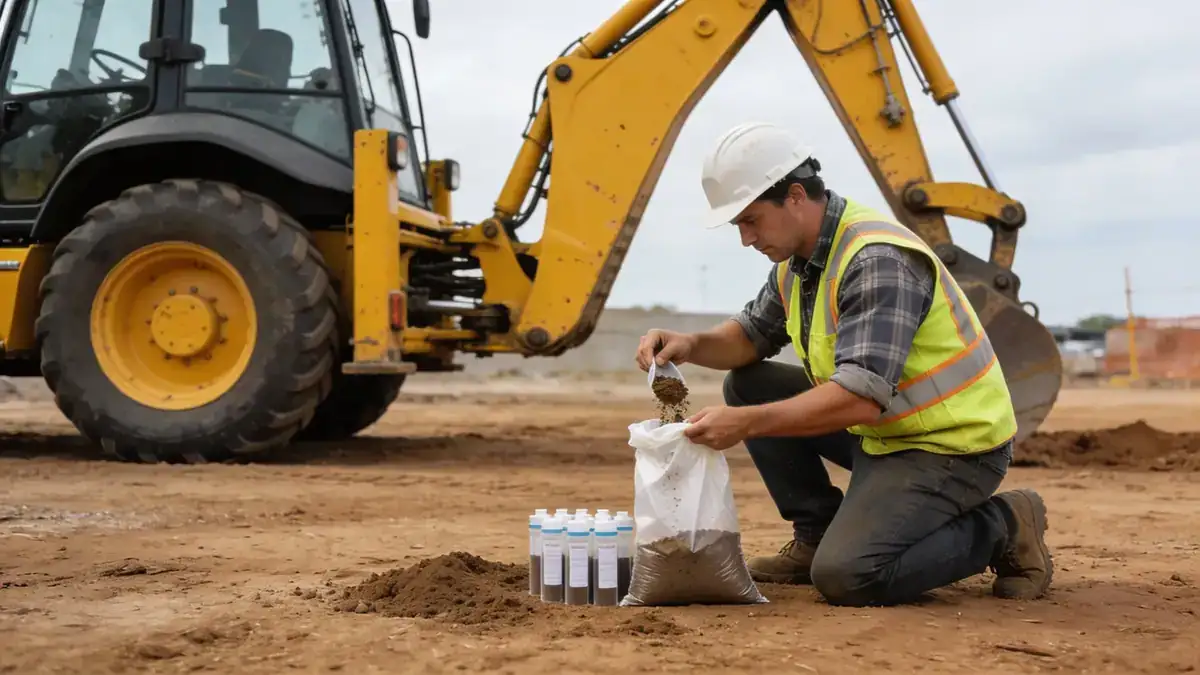
Our team follows ASTM D1586 procedures for every standard penetration test (spt) in El Paso. We use a 63.5 kg hammer dropped 760 mm to drive a split-spoon sampler into the soil, recording blow counts every 150 mm to determine N-values. Corrections for overburden pressure and energy efficiency are applied per industry standards. Continuous sampling intervals of 1.5 m are typical, with depths ranging up to 30 m for industrial sites. Each test is logged in real-time and verified by our certified technicians to ensure data integrity.
Reference Technical Parameters
| Parameter | Reference Value |
|---|---|
| Predominant soil type | Silty sand (SM) with caliche layers |
| Maximum seismic acceleration (PGA) | 0.2g – 0.3g (ASCE 7-16) |
| Typical groundwater level | 15 – 30 m (variable by season) |
| Bedrock depth | 10 – 50 m (shallow near Franklin Mountains) |
| Typical N60 range (SPT) | 10 – 40 (sand/gravel), 5 – 15 (clay/silt) |
Local Considerations — El Paso
El Paso sits within the Rio Grande rift, with deep alluvial basins and fault-bounded mountains. Soils are predominantly silty sands and gravels with cemented caliche horizons that can cause false high blow counts. The area is seismically active, requiring site-specific response spectra per ASCE 7-16. Our cone penetration test (cpt) services complement SPT for profiling these variable deposits. For projects near the central business district vs. the West Side, we adjust sampling intervals to capture shallow fills or stiff clays. Typical challenges include penetrating caliche layers and avoiding perched water tables after monsoon rains.
Request a Quote
Our team reviews your project and issues an initial report at no cost.
Or write us directly at [email protected]
Services in El Paso
Applicable Standards
- ASTM D1586 (Standard Penetration Test)
- ASCE 7-16 (Minimum Design Loads and Associated Criteria for Buildings)
- IBC 2021 (International Building Code)
- ASTM D2487 (Classification of Soils for Engineering Purposes)
Frequently Asked Questions
What soil types are commonly encountered in El Paso during SPT?
Typical soils include silty sands (SM), poorly graded sands (SP), and clayey sands (SC) with frequent caliche layers. In the Rio Grande valley, soft clays and organic silts may be present near the river. The Franklin Mountains area often has stiff clays and weathered bedrock.
Is a standard penetration test required for building permits in El Paso?
Yes, the City of El Paso requires geotechnical investigations for most new construction, especially in seismic zones. A standard penetration test provides essential soil strength and density data for foundation design per IBC 2021 and ASCE 7-16 seismic provisions.
How does El Paso's seismic activity affect SPT procedures?
El Paso is in a moderate seismic zone with PGA up to 0.3g. Our SPT procedures include seismic site classification based on N60 values to determine soil type (A–F) per ASCE 7-16. This directly influences design response spectra and foundation detailing.