
Methodology
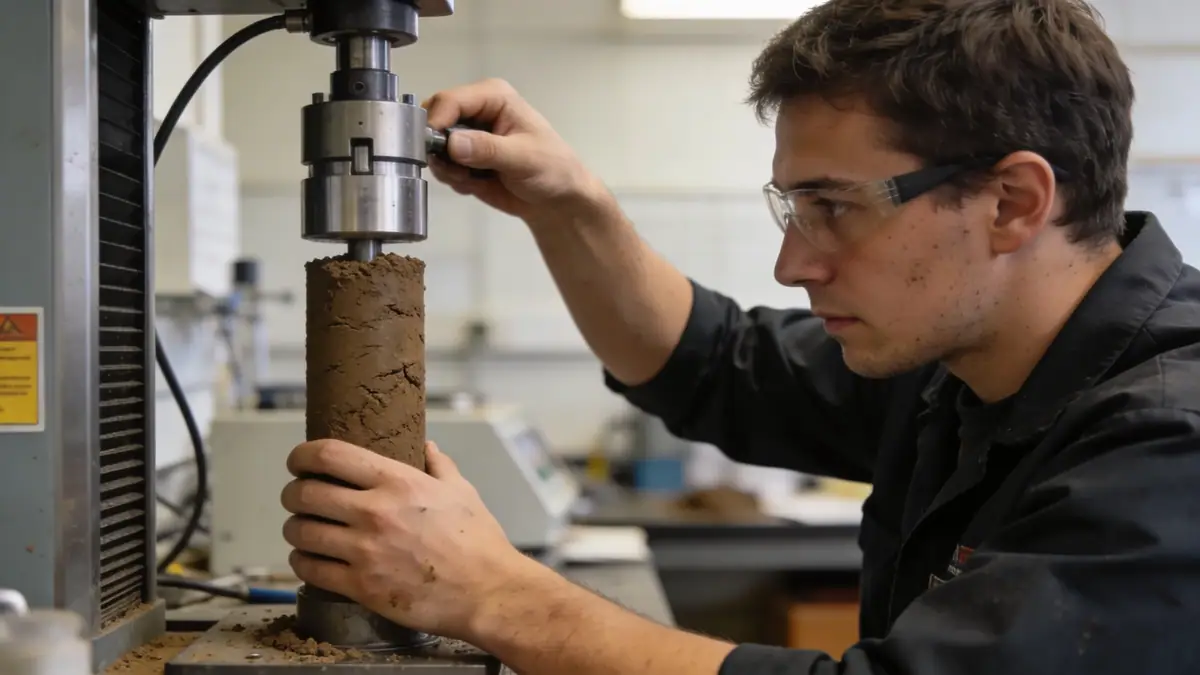
Our methodology for standard penetration test in Corona California follows ASTM D1586, utilizing a 63.5 kg hammer dropped 760 mm to drive a split-spoon sampler. We record blow counts per 150 mm increment to determine N-values, corrected for overburden (N60). Sampling intervals are typically 1.5 m, with continuous sampling in critical zones. Our team deploys truck-mounted drill rigs capable of reaching depths up to 30 m, depending on subsurface conditions. Data is integrated with cone penetration test (cpt) soundings where needed to refine soil profiles. All equipment is calibrated annually, and field procedures comply with local building codes. This approach ensures reliable parameters for seismic site classification and foundation design in Corona.
Reference Technical Parameters
| Parameter | Reference Value |
|---|---|
| Predominant soil type | Alluvial sands and silty clays with gravel layers |
| Maximum seismic acceleration (PGA) | 0.4g to 0.6g (ASCE 7 seismic design category D/E) |
| Typical groundwater level | 6 to 15 m below ground surface (varies seasonally) |
| Bedrock depth | 30 to 60 m (sedimentary rock over basement) |
| Typical N60 range | 5 to 30 blows/ft (loose to dense sands) |
Local Considerations — Corona California
Corona California's geology consists of Quaternary alluvium from the Santa Ana River and its tributaries, underlain by older Pleistocene deposits. The San Jacinto fault zone runs nearby, imposing high seismic hazard. Liquefaction potential is moderate in areas with shallow groundwater and loose sands. Our standard penetration test programs in Corona typically target depths of 10–20 m to capture the full soil profile. For projects near the Cleveland National Forest, colluvial soils with cobbles require careful drilling techniques. We coordinate with local agencies to obtain permits for borings in public right-of-way. Our experience includes residential subdivisions and commercial developments, where standard penetration test (spt) data informs foundation type and depth. For larger infrastructure, we coordinate with our team in standard penetration test en Los Angeles to ensure consistency across regional projects.
Request a Quote
Our team reviews your project and issues an initial report at no cost.
Or write us directly at [email protected]
Services in Corona California
Applicable Standards
- ASTM D1586
- ASCE 7
- California Building Code (CBC) 2022
- Caltrans Geotechnical Manual
Frequently Asked Questions
What soil types are typical for standard penetration test in Corona California?
Corona's subsurface primarily comprises alluvial sands, silty clays, and gravels from the Santa Ana River deposits. Older Pleistocene formations appear at depth. SPT N60 values range from 5 to 30 blows/ft, reflecting loose to dense conditions, with occasional cemented layers.
How does seismic design affect SPT requirements in Corona?
Corona falls under ASCE 7 seismic design category D or E due to proximity to the San Jacinto fault. SPT data is used to determine site class (D or E) based on average N60. This classification directly impacts base shear calculations and foundation design, making thorough SPT coverage essential.
Is a standard penetration test mandatory for new construction in Corona?
The California Building Code requires geotechnical investigation for most structures, especially in seismic zones. While SPT is not the only method, it is widely accepted for liquefaction assessment and bearing capacity. Local jurisdictions often mandate SPT borings for buildings exceeding two stories or in areas with known soil variability.