Methodology

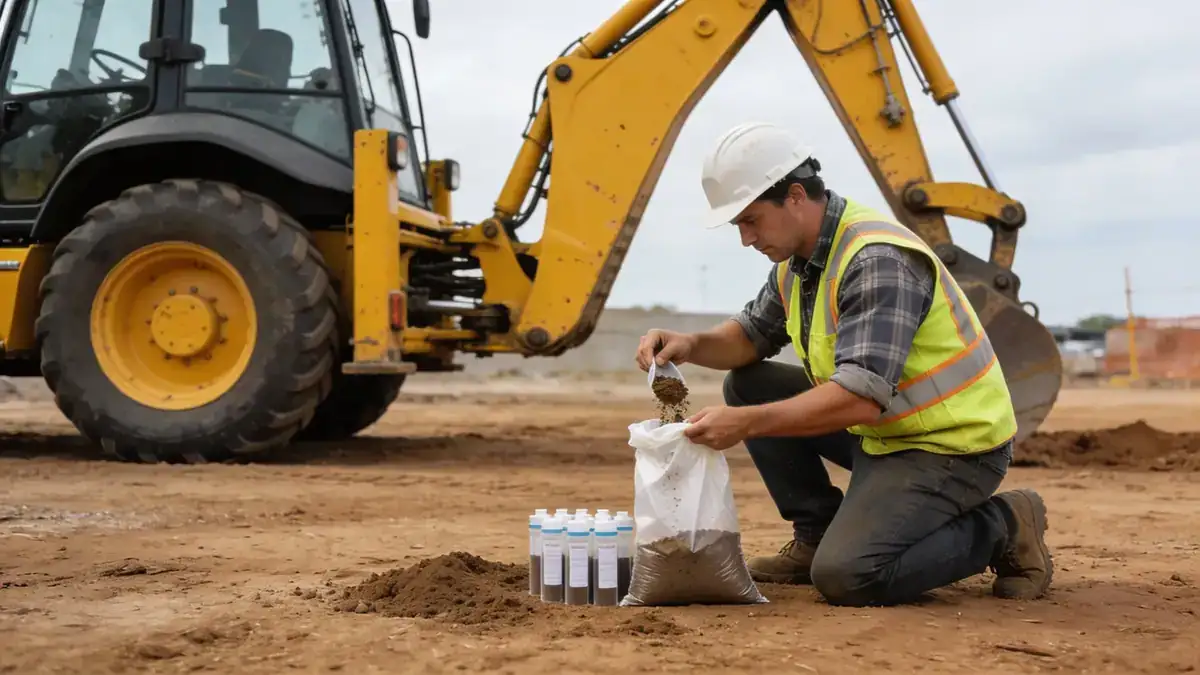
Our team executes Standard Penetration Tests in Concord following ASTM D1586, using a 63.5 kg hammer with a 760 mm drop to drive a 51 mm split-barrel sampler. We record blow counts per 150 mm interval and compute N60 values corrected for hammer efficiency and rod length. Soil samples are retrieved for classification per ASTM D2487. We coordinate with local drilling contractors to achieve depths of 8–15 m for residential projects and up to 30 m for commercial structures. For continuous profiling, we also offer cone penetration test (cpt) services. Our methodology ensures reliable data for liquefaction assessment and settlement analysis under California Building Code (CBC) requirements.
Reference Technical Parameters
| Parameter | Reference Value |
|---|---|
| Predominant Soil Type | Dense silty sand and stiff clay (CL/SC) |
| Peak Ground Acceleration (PGA) | 0.4g (ASCE 7-16 Site Class D) |
| Typical Groundwater Depth | 3–6 m (variable seasonally) |
| Bedrock Depth | 15–25 m (Merced Formation) |
| Typical N60 Range | 20–40 blows/300 mm |
Local Considerations — Concord California
Concord's alluvial soils present challenges for foundation design. Our team considers the following local factors: (1) Liquefaction potential in loose saturated sands near the Concord Fault. (2) Variable groundwater levels (3–6 m) requiring seasonal adjustments. (3) Seismic site classification per ASCE 7, typically Site Class D. (4) Contrasting soil conditions between downtown Concord (stiffer clays) and the Clayton Valley (looser sands). (5) Typical projects include residential developments and school retrofits. We also provide dpsh dynamic probing for rapid profiling in sensitive areas. Our local knowledge ensures accurate hazard assessments for Concord's regulatory environment.
Request a Quote
Our team reviews your project and issues an initial report at no cost.
Or write us directly at [email protected]
Services in Concord California
Applicable Standards
- ASTM D1586
- ASCE 7-16
- California Building Code (CBC) 2022
- OSHA 29 CFR 1926
- Contra Costa County Grading Ordinance
Frequently Asked Questions
What soil types are commonly encountered in Concord, California?
Concord's subsurface is dominated by alluvial silty sands (SM) and stiff clays (CL) from the Merced Formation. Occasional lenses of loose sand or gravel are found near channels. These soils typically exhibit N60 values of 20–40, but require careful evaluation for liquefaction and settlement.
How does seismic activity in Concord affect SPT testing?
Concord lies near the Concord and Green Valley Faults, with a PGA of 0.4g per ASCE 7. SPT data is critical for liquefaction analysis and site classification. Our testing follows ASTM D1586 to provide reliable N60 values for seismic design per CBC 2022.
Is a geotechnical investigation mandatory for construction in Concord?
Yes, for most commercial and residential projects. Contra Costa County requires a geotechnical report per CBC Chapter 18. SPT is the standard method for seismic design, especially in Site Class D areas. Our firm provides compliant SPT services to support permitting.