
Methodology
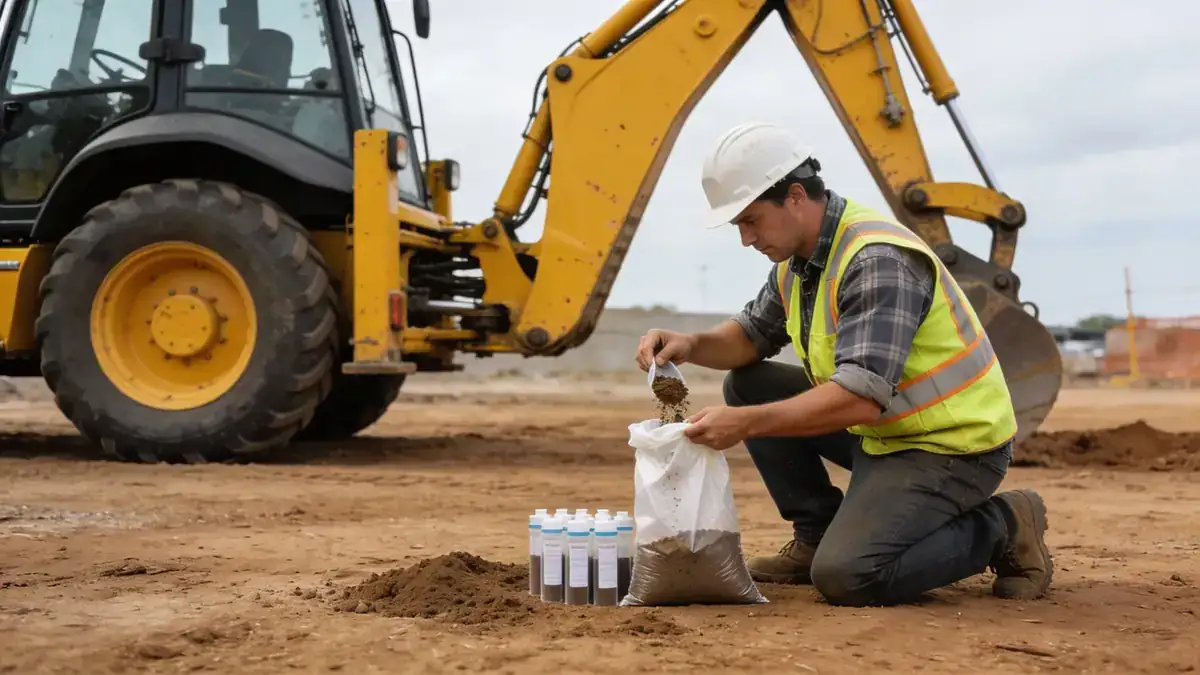
Our methodology for standard penetration test in Columbus Ohio follows ASTM D1586, with split-spoon sampling at 1.5 m intervals to depths exceeding 15 m in urban zones. We correlate N-values with soil density and shear strength, integrating results with local geology and seismic parameters. For cohesive soils, we supplement with Atterberg limits per ASTM D4318. This approach ensures robust data for foundation design, slope stability, and liquefaction assessment. Learn more about our standard penetration test (spt) procedures.
Reference Technical Parameters
| Parameter | Reference Value |
|---|---|
| Predominant soil type | Glacial till (silty clay to sandy loam) and alluvial deposits |
| Maximum seismic acceleration (PGA) | 0.18 g (ASCE 7-16, Site Class C) |
| Typical groundwater level | 3–6 m below surface (variable by season) |
| Bedrock depth | 30–60 m (Ohio Shale and limestone) |
| Typical N60 range | 5–30 blows/300 mm (fill to dense till) |
Local Considerations — Columbus Ohio
Columbus Ohio lies within the Central Lowland physiographic province, underlain by glacial till and outwash deposits. Key considerations include: (1) variable soil density due to glacial history; (2) shallow groundwater in areas near the Scioto and Olentangy rivers; (3) moderate seismicity with PGA up to 0.18 g per ASCE 7-16; (4) contrast between stiff till in northern suburbs and soft alluvium downtown; (5) typical projects require SPT borings to 15–20 m for multi-story structures. For alternative methods, see cone penetration test (cpt) services.
Request a Quote
Our team reviews your project and issues an initial report at no cost.
Or write us directly at [email protected]
Services in Columbus Ohio
Applicable Standards
- ASTM D1586
- ASCE 7-16
- IBC 2021
- Ohio Building Code
- ASTM D2487 (USCS)
Frequently Asked Questions
What are the typical soil types encountered in Columbus Ohio?
Soils in Columbus Ohio are predominantly glacial till (silty clay, sandy loam) and alluvial deposits (sand, silt, clay with organics). The till is often dense to very dense, while alluvium can be loose to medium dense. Standard penetration test effectively characterizes these layers for foundation design.
What seismic design parameters apply to Columbus Ohio?
Columbus Ohio is classified as moderate seismicity per ASCE 7-16. The mapped peak ground acceleration (PGA) is 0.18 g for Site Class C, with short-period spectral acceleration (Ss) of 0.35 g and long-period (S1) of 0.12 g. Site-specific geotechnical studies using SPT data refine these values.
Are standard penetration tests mandatory for construction in Columbus Ohio?
While not always mandatory, the Ohio Building Code requires geotechnical investigations for most commercial and multi-family residential structures. Standard penetration test is the preferred method for subsurface profiling and bearing capacity determination, especially in areas with variable glacial deposits.