
Methodology
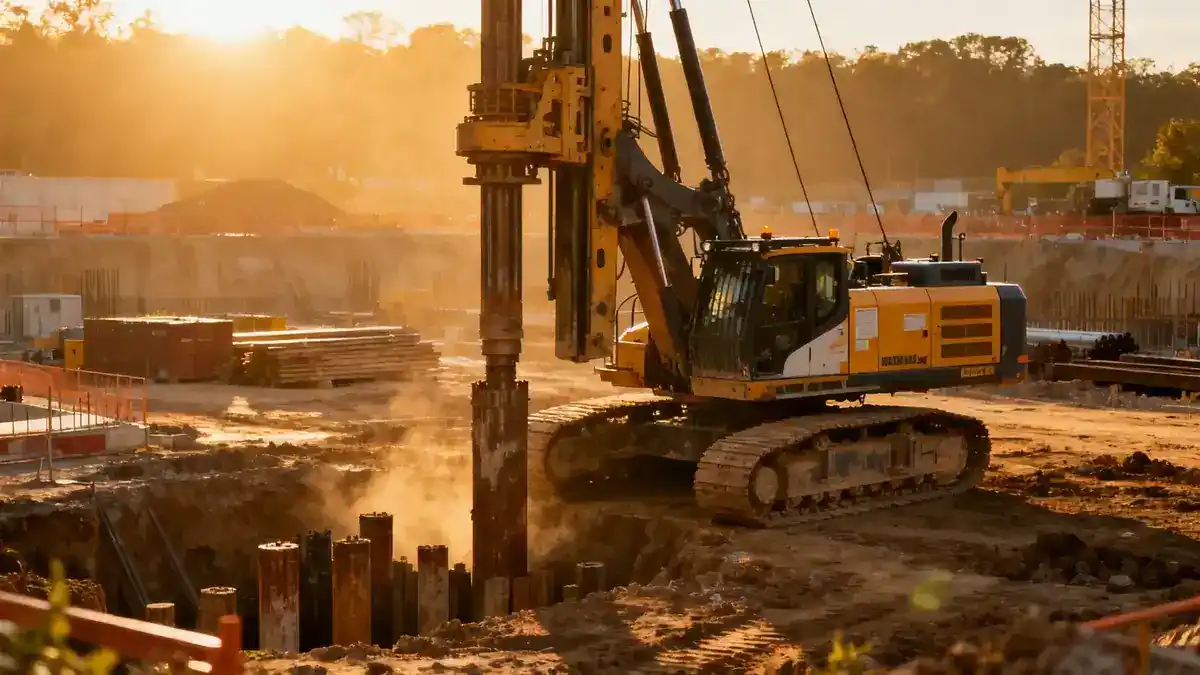
Our methodology for standard penetration test in Charlotte follows ASTM D1586, with continuous sampling at 1.5-meter intervals to capture soil variability. In Piedmont residual soils, we typically advance borings to refusal on weathered rock, often reaching depths of 10 to 20 meters for mid-rise structures. For sites near the Catawba River, deeper borings may be required to assess alluvial sands and clays. We integrate SPT data with laboratory testing to classify soils and estimate engineering parameters. Our approach includes a site-specific drilling plan, safety protocols, and real-time data review. For detailed information on our standard penetration test (spt) procedures, please refer to our dedicated service page.
Reference Technical Parameters
| Parameter | Reference Value |
|---|---|
| Predominant soil type | Residual silt and sand (Piedmont saprolite), with alluvial deposits in river valleys |
| Maximum seismic acceleration (PGA) | 0.10–0.15 g (ASCE 7-16, Site Class C/D) |
| Typical groundwater level | 3–10 m below grade, variable with topography and season |
| Bedrock depth | 5–30 m, with weathered rock (saprolite) extending to 15 m |
| Typical N60 range | 10–50 blows/ft in residual soils; 5–20 blows/ft in alluvial deposits |
Local Considerations — Charlotte
Charlotte's subsurface is dominated by Piedmont geology: residual soils from crystalline rock weathering, often underlain by saprolite and partially weathered rock. Groundwater levels fluctuate with topography, typically encountered at depths of 3–10 m. Seismic hazard is moderate, with PGA values of 0.10–0.15 g per ASCE 7-16, requiring site-specific response analyses for critical structures. The city's growth has led to increased demand for geotechnical investigations in previously undeveloped areas, where fill and undocumented soils pose challenges. Our team integrates these local conditions with advanced techniques such as cone penetration test (cpt) to provide comprehensive subsurface characterization. This localized knowledge ensures accurate parameter selection and foundation recommendations aligned with Charlotte's regulatory environment.
Request a Quote
Our team reviews your project and issues an initial report at no cost.
Or write us directly at [email protected]
Services in Charlotte
Applicable Standards
- ASTM D1586
- ASCE 7-16
- IBC 2018
- North Carolina Building Code
Frequently Asked Questions
What soil types are commonly encountered during standard penetration test in Charlotte?
Charlotte's soils are primarily residual, derived from granite and gneiss weathering, forming silty sands and sandy silts (SM, ML). In river valleys, alluvial deposits of loose to medium dense sands and soft clays are present. Saprolite—a weathered rock mass—is common at depth, exhibiting variable strength.
How does seismic hazard affect standard penetration test requirements in Charlotte?
Charlotte is in Seismic Design Category B per IBC, with moderate ground motion. SPT data is used to evaluate soil liquefaction potential and site class (typically C or D). For structures exceeding certain thresholds, ASCE 7-16 mandates site-specific response spectra, requiring deeper borings to refusal.
Are standard penetration tests mandatory for all construction projects in Charlotte?
The North Carolina Building Code requires geotechnical investigations for most commercial and multi-family projects. For single-family homes, SPT may be recommended but not always mandatory. Local jurisdictions may impose additional requirements for sites with known fill, steep slopes, or high water tables.