
Methodology
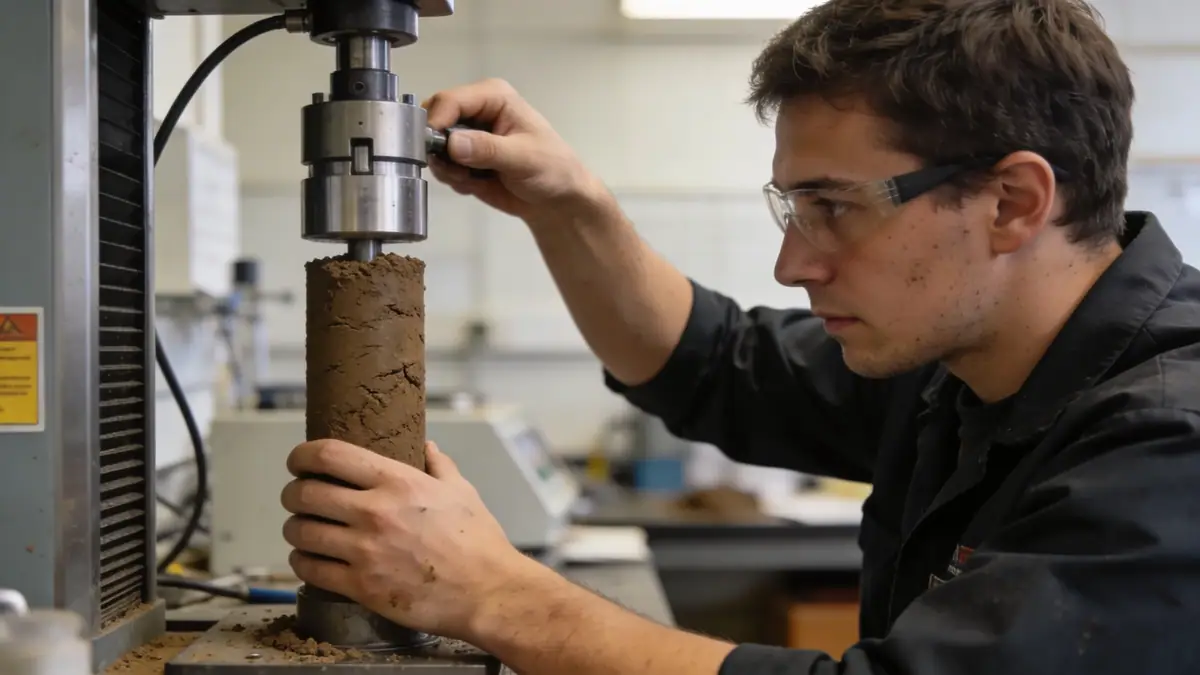
Our standard penetration test (SPT) methodology in Chandler follows ASTM D1586, employing a 63.5 kg hammer dropped 760 mm to drive a split-barrel sampler. We record blow counts (N-value) at 1.5-meter intervals to depths of 25 meters, with continuous sampling in critical zones. Energy measurements are corrected to 60% efficiency (N60) for consistent correlations. Data is integrated with laboratory testing for index properties and strength parameters. For deeper profiles, we recommend cone penetration test (cpt) as a complementary method to obtain continuous stratigraphic logs.
Reference Technical Parameters
| Parameter | Reference Value |
|---|---|
| Predominant soil type | Alluvial sand, silt, and clay (USC: SM, ML, CL) |
| Maximum seismic acceleration (PGA) | 0.24g (ASCE 7-16, Site Class D) |
| Typical groundwater level | 15–30 m below ground surface |
| Bedrock depth | >100 m (deep alluvial basin) |
| Typical N60 range (0–15 m) | 5–25 blows/ft (loose to medium dense) |
Local Considerations — Chandler
Chandler's alluvial soils can exhibit variable density and cementation, affecting SPT blow counts. Seismic design per ASCE 7 requires site-specific ground motion analysis. The eastern part of the city has deeper groundwater, while western areas may encounter shallow perched zones near canals. Typical projects include residential subdivisions and commercial complexes requiring shallow foundation recommendations. For dynamic compaction assessments, our team often utilizes dpsh dynamic probing to evaluate soil improvement. Coordination with local building departments is essential for permit approvals. Our experience in standard penetration test en Phoenix provides regional context for Chandler's subsurface conditions.
Request a Quote
Our team reviews your project and issues an initial report at no cost.
Or write us directly at [email protected]
Services in Chandler
Applicable Standards
- ASTM D1586
- ASCE 7-16
- IBC 2021
- Arizona Administrative Code Title 18
Frequently Asked Questions
What soil types are commonly found in Chandler?
Chandler's subsurface consists of deep alluvial deposits from the Salt River, with interbedded sands, silts, and clays. These soils are typically non-expansive but can vary in density and moisture content, requiring careful SPT evaluation for foundation design.
How does seismic design affect standard penetration testing in Chandler?
Chandler is in Seismic Design Category C per ASCE 7-16, with a PGA of 0.24g. SPT data is used to determine Site Class and evaluate liquefaction potential, which is critical for medium to fine sands below the water table.
Are geotechnical investigations mandatory for construction in Chandler?
While not always mandatory for single-family homes, most commercial and multi-family projects require a geotechnical report per IBC 2021. Local building officials often request SPT data to verify bearing capacity and seismic parameters.