Methodology

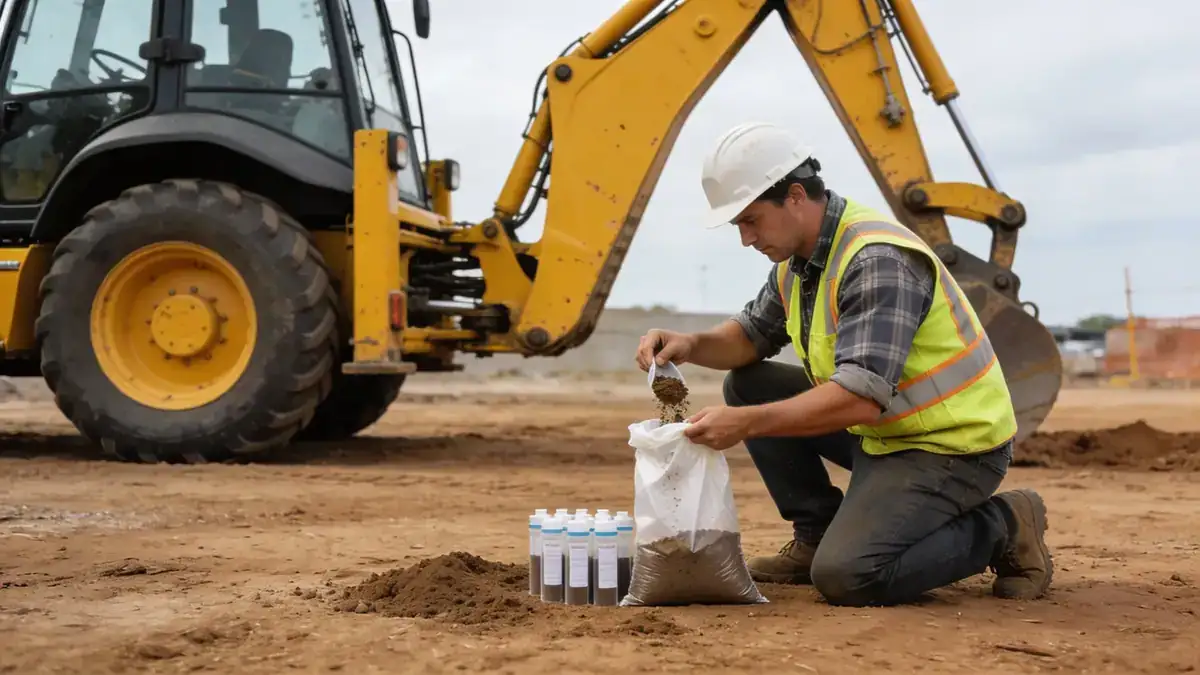
Our approach to standard penetration test (SPT) in Buffalo follows ASTM D1586, with continuous sampling at 1.5-meter intervals to capture soil variability. We employ automatic hammers and calibrated equipment to ensure consistent N60 values. Our methodology integrates seismic hazard analysis per ASCE 7-16 for Site Class determination, crucial in Buffalo's moderate seismicity zone. We also correlate SPT results with cone penetration test (CPT) data where needed, providing a comprehensive subsurface profile. Our team prioritizes quality control, with field logs reviewed by senior geotechnical engineers. For more details on our SPT procedures, visit standard penetration test (spt).
Reference Technical Parameters
| Parameter | Reference Value |
|---|---|
| Predominant soil type | Glacial till, silt, clay, and sand |
| Maximum seismic acceleration (PGA) | 0.15g to 0.20g (ASCE 7-16) |
| Typical groundwater level | 2–5 meters below surface |
| Bedrock depth | 10–30 meters (shale and limestone) |
| Typical N60 range | 5–30 blows/0.3m (variable) |
Local Considerations — Buffalo
Buffalo's geology is dominated by glacial till and lacustrine deposits, with significant variability across the city. Downtown areas often feature fill and soft clays, while suburbs like Amherst encounter dense tills. Seismic design per ASCE 7-16 is critical, with PGA values up to 0.20g. High groundwater levels (2–5 m) pose challenges for excavations. Our team has extensive experience with these conditions, ensuring reliable data for foundation design. For projects requiring continuous profiling, we also offer cone penetration test (cpt) services. Additionally, our hub in Philadelphia provides broader regional support: standard penetration test en Philadelphia.
Request a Quote
Our team reviews your project and issues an initial report at no cost.
Or write us directly at [email protected]
Services in Buffalo
Applicable Standards
- ASTM D1586
- ASCE 7-16
- IBC 2021
- New York State Building Code
Frequently Asked Questions
What soil types are commonly encountered in Buffalo during SPT?
Buffalo's subsurface typically consists of glacial till, silty clays, and sands. The till often contains cobbles and boulders, which can affect SPT driving resistance. Proper equipment and experienced operators are essential to obtain reliable N60 values in these variable conditions.
How does seismic hazard affect standard penetration testing in Buffalo?
Buffalo is in Seismic Design Category B to C per ASCE 7-16, with peak ground accelerations up to 0.20g. SPT data is used to determine Site Class (A–F) and assess liquefaction potential in loose sands. Our testing includes cyclic resistance evaluations for critical projects.
Is a standard penetration test required for residential projects in Buffalo?
While not always mandatory for single-family homes, SPT is strongly recommended for projects on fill, steep slopes, or in seismic-prone areas. Local building officials may require geotechnical reports for structures exceeding two stories or with unusual loads.