
Methodology
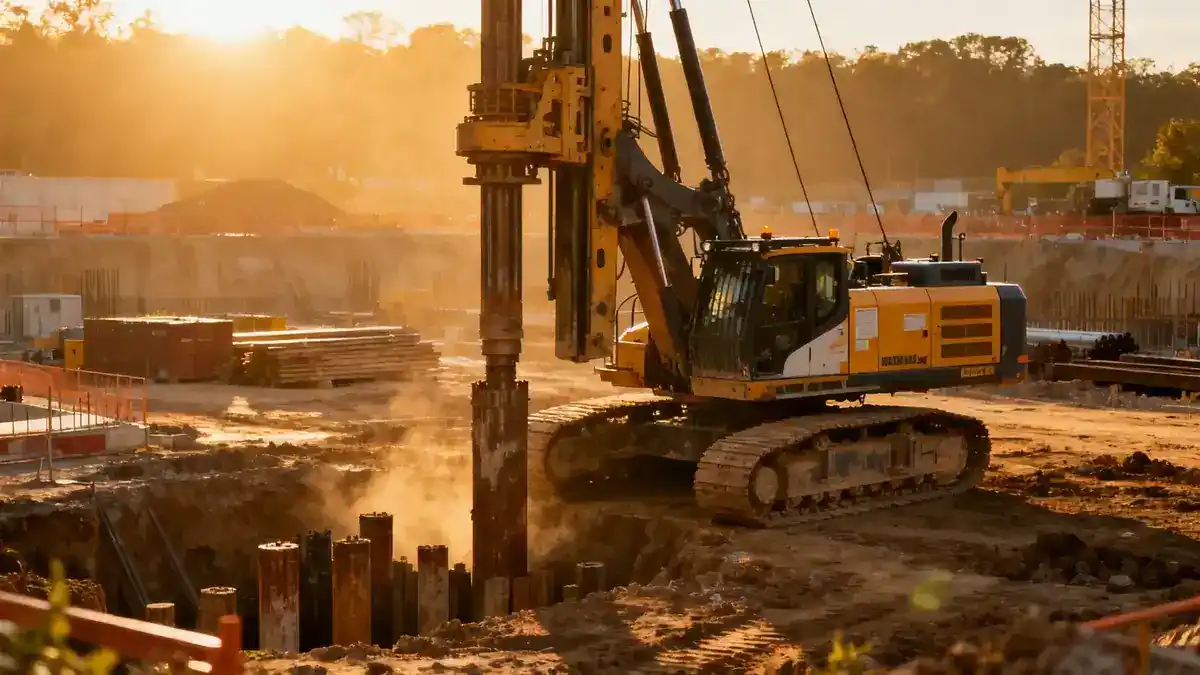
Our approach to standard penetration test in Boise Idaho follows ASTM D1586, with sampling intervals typically every 1.0–1.5 m to capture soil variability. We deploy standard split-barrel samplers and record blow counts (N60) to estimate relative density and strength. For cohesive soils, we complement SPT with undisturbed sampling for laboratory testing. In Boise Idaho, the presence of gravel layers and variable groundwater levels requires careful drilling techniques. Our team integrates SPT data with local seismic hazard maps to refine liquefaction assessments. For additional detail, our standard penetration test (spt) page outlines the full procedure.
Reference Technical Parameters
| Parameter | Reference Value |
|---|---|
| Predominant soil type | Alluvial sands, silts, and gravels with clay lenses |
| Maximum seismic acceleration (PGA) | 0.2–0.4 g per ASCE 7-16 |
| Typical groundwater level | 2–6 m below grade |
| Bedrock depth | 15–30 m (Columbia River Basalt Group) |
| Typical N60 range | 10–40 blows/ft in sands; 5–20 in silts |
Local Considerations — Boise Idaho
Boise Idaho sits within the Intermountain Seismic Belt, with active faults such as the Lost River fault capable of M7+ events. The alluvial soils of the Boise River valley exhibit high liquefaction potential under moderate shaking, particularly in areas with shallow groundwater. Older Pleistocene gravels in the foothills offer better bearing capacity but require deeper sampling. Our firm has extensive experience across downtown Boise, the Bench, and Meridian, where contrasting soil conditions demand site-specific evaluation. For developers, we recommend integrating cone penetration test (cpt) for continuous profiling in critical projects. Comparison with standard penetration test en Seattle highlights regional variations in seismic design.
Request a Quote
Our team reviews your project and issues an initial report at no cost.
Or write us directly at [email protected]
Services in Boise Idaho
Applicable Standards
- ASTM D1586: Standard Test Method for Standard Penetration Test (SPT)
- ASCE 7-16: Minimum Design Loads for Buildings and Other Structures
- IBC 2018: International Building Code (adopted by Idaho)
- USGS Seismic Hazard Maps for Idaho
Frequently Asked Questions
What are the typical soil conditions in Boise Idaho for SPT?
Soils in the Boise Valley consist of alluvial sands, silts, and gravels interbedded with clay layers. In the foothills, colluvial and residual soils overlie basalt bedrock. SPT N60 values range from 10 to 40 blows/ft in granular soils, with lower values in fine-grained deposits.
Is seismic design mandatory for projects in Boise Idaho?
Yes, Boise Idaho lies in a high seismic zone per ASCE 7-16 and the IBC. Site-specific SPT data are required to determine liquefaction potential and seismic site class (A–F). Local building departments enforce these provisions, especially for critical facilities.
When is a standard penetration test required in Boise Idaho?
SPT is required for most commercial and multi-story residential projects to satisfy geotechnical reporting requirements. It is also recommended for large subdivisions and infrastructure to assess fill quality and bearing capacity. Local ordinances may mandate SPT for certain soil types.