
Methodology
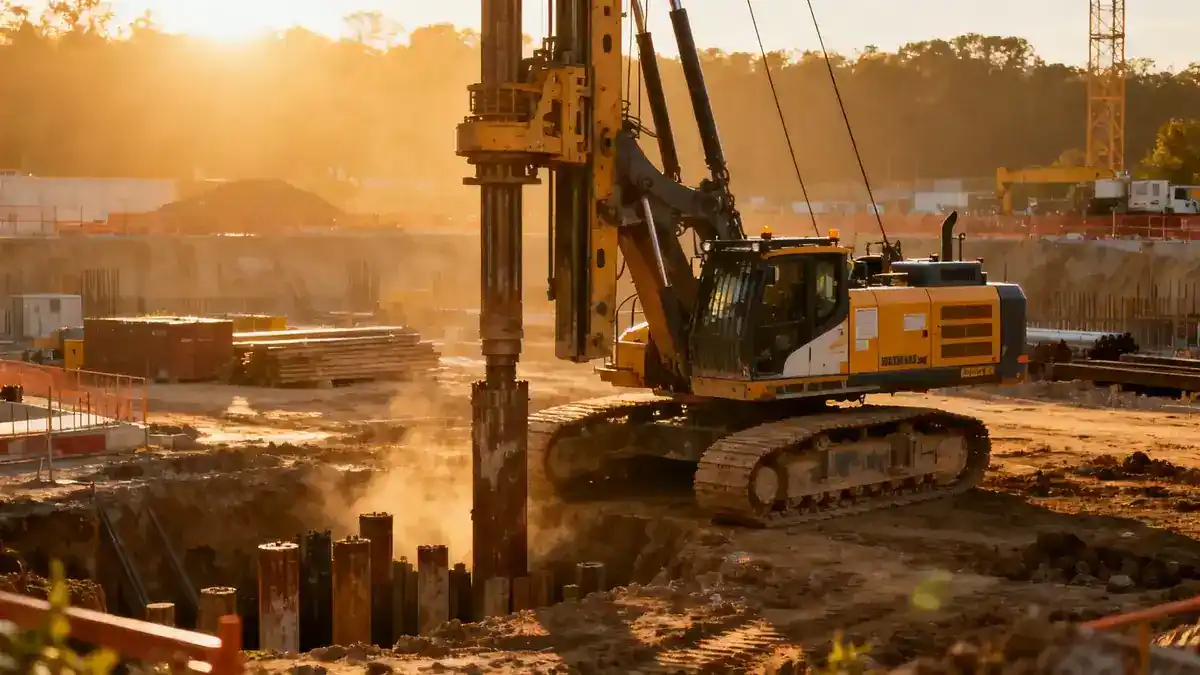
Our methodology for standard penetration test in Baton Rouge follows ASTM D1586, employing a 63.5 kg hammer dropped 0.76 m to drive a split-barrel sampler. We record blow counts per 150 mm interval, terminating upon refusal or at target depth. Soil samples are retrieved for laboratory classification, including moisture content, grain size, and Atterberg limits. Our team integrates SPT results with cone penetration test (cpt) data to refine stratigraphic models. This combined approach delivers robust N60 values for bearing capacity and liquefaction assessments, critical in this seismically active region.
Reference Technical Parameters
| Parameter | Reference Value |
|---|---|
| Predominant soil type | Silty clay and sandy silt (Mississippi River alluvium) |
| Maximum seismic acceleration (PGA) | 0.15–0.20 g (ASCE 7-16) |
| Typical groundwater level | 1.5–4.5 m below ground surface |
| Bedrock depth | > 30 m (Pleistocene terrace deposits) |
| Typical N60 range | 5–25 blows/0.3 m |
Local Considerations — Baton Rouge
Baton Rouge's subsurface is dominated by Mississippi River alluvium, with interbedded silty clays, sands, and gravels. Shallow groundwater (1.5–4.5 m) requires dewatering considerations. Seismic design per ASCE 7-16 Site Class D is typical. Older neighborhoods (e.g., Garden District) often have undocumented fills, while industrial areas (e.g., Port of Baton Rouge) require deep foundations. Our firm coordinates with local geotechnical labs for tailored testing. For regional projects, our standard penetration test en Houston hub provides analogous expertise for Gulf Coast conditions.
Request a Quote
Our team reviews your project and issues an initial report at no cost.
Or write us directly at [email protected]
Services in Baton Rouge
Applicable Standards
- ASTM D1586
- ASCE 7-16
- IBC 2021
- Louisiana State Uniform Construction Code
Frequently Asked Questions
What are the typical soil conditions encountered in Baton Rouge?
Baton Rouge lies in the Mississippi River floodplain, underlain by alluvial silty clays and sands to depths exceeding 30 m. Groundwater is shallow, often within 1.5–4.5 m. These conditions necessitate standard penetration testing to evaluate bearing capacity and liquefaction potential.
Is standard penetration testing required for seismic design in Baton Rouge?
Yes. Baton Rouge is in a moderate seismic zone (PGA 0.15–0.20 g). Per ASCE 7-16, site classification for seismic design requires SPT N-values to determine soil profile type and liquefaction susceptibility. Our testing provides these critical parameters.
How deep should SPT borings be for a typical commercial building in Baton Rouge?
For most commercial structures, borings extend to 15–30 m depth to penetrate soft alluvium and reach competent bearing strata. Residential projects may require only 8–15 m. Depth is determined based on structural loads and local geotechnical conditions.