
Methodology
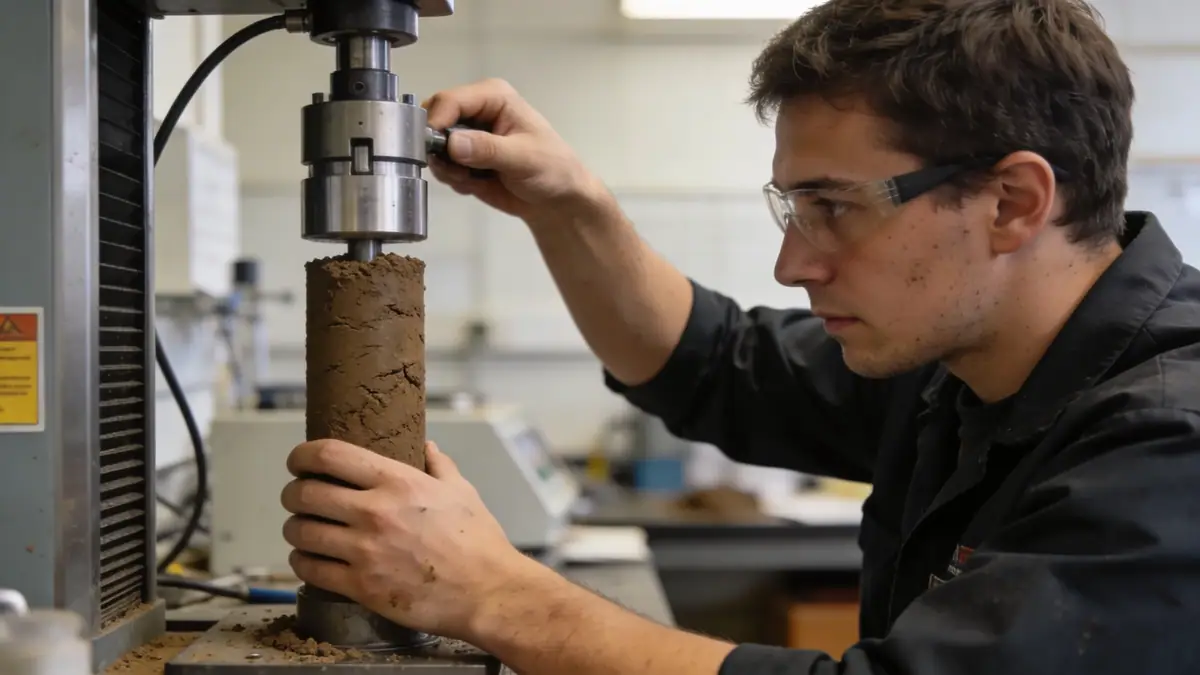
Our methodology for standard penetration testing in Baltimore follows strict adherence to ASTM D1586, with continuous sampling at 1.5-meter intervals or as required by project specifications. We deploy conventional safety hammers and automatic trip hammers to ensure energy efficiency, recording blow counts for each 150-mm increment. The standard penetration test (spt) is our primary tool for evaluating soil density and strength, but we also integrate complementary methods such as cone penetration test (cpt) in soft clays and dpsh dynamic probing in coarse fills. Our field teams calibrate equipment daily and document all observations on standardized forms. We coordinate with local drilling contractors to minimize disruption and adhere to Baltimore City permitting requirements.
Reference Technical Parameters
| Parameter | Reference Value |
|---|---|
| Predominant soil type | Silty sands, clays, and fill |
| Maximum seismic acceleration (PGA) | 0.20g (ASCE 7-16, Site Class D) |
| Typical groundwater level | 2–6 m below surface |
| Bedrock depth | 10–30 m (saprolite to gneiss/schist) |
| Typical N60 range | 5–30 blows/ft (sands), 4–15 blows/ft (clays) |
Local Considerations — Baltimore
Baltimore's geology is dominated by Coastal Plain sediments in the south and Piedmont residuum in the north, creating abrupt transitions. The inner harbor area often contains uncontrolled fill and buried structures, requiring careful SPT spacing. Our team has extensive experience with the Maryland State Highway Administration's geotechnical manual and Baltimore City's foundation inspection protocols. For projects near the Patapsco River, we account for high groundwater and potential liquefaction. We also reference the regional seismic hazard maps (USGS) that assign a PGA of 0.20g. Our familiarity with local conditions allows us to recommend appropriate boring depths and testing frequencies. For broader regional context, our team also provides standard penetration test en Philadelphia services, addressing similar Piedmont geology.
Request a Quote
Our team reviews your project and issues an initial report at no cost.
Or write us directly at [email protected]
Services in Baltimore
Applicable Standards
- ASTM D1586
- ASCE 7-16
- Baltimore City Building Code (IBC 2018)
- Maryland State Highway Administration Geotechnical Manual
- USGS Seismic Hazard Maps
Frequently Asked Questions
What are the typical soil conditions encountered during standard penetration tests in Baltimore?
Baltimore soils range from loose sandy fills and soft organic clays in the harbor area to stiff residual silts and sands over weathered bedrock in the northern suburbs. Groundwater is typically shallow in low-lying zones. SPT N-values vary widely, from less than 5 blows/ft in fill to over 30 blows/ft in dense sands.
Is standard penetration testing required for building permits in Baltimore?
Yes, the Baltimore City Building Code (based on IBC 2018) mandates subsurface investigations for most structures. SPT is commonly used to determine soil bearing capacity and liquefaction potential. Our team helps developers comply with these requirements by providing thorough boring programs and certified reports.
How does seismic design affect SPT requirements in Baltimore?
Baltimore is in Seismic Design Category B per ASCE 7-16, with a PGA of 0.20g. SPT data is essential for evaluating liquefaction susceptibility in saturated sands and for determining site class. Our testing programs include sufficient blow counts and fines content analysis to meet seismic design criteria.