Methodology

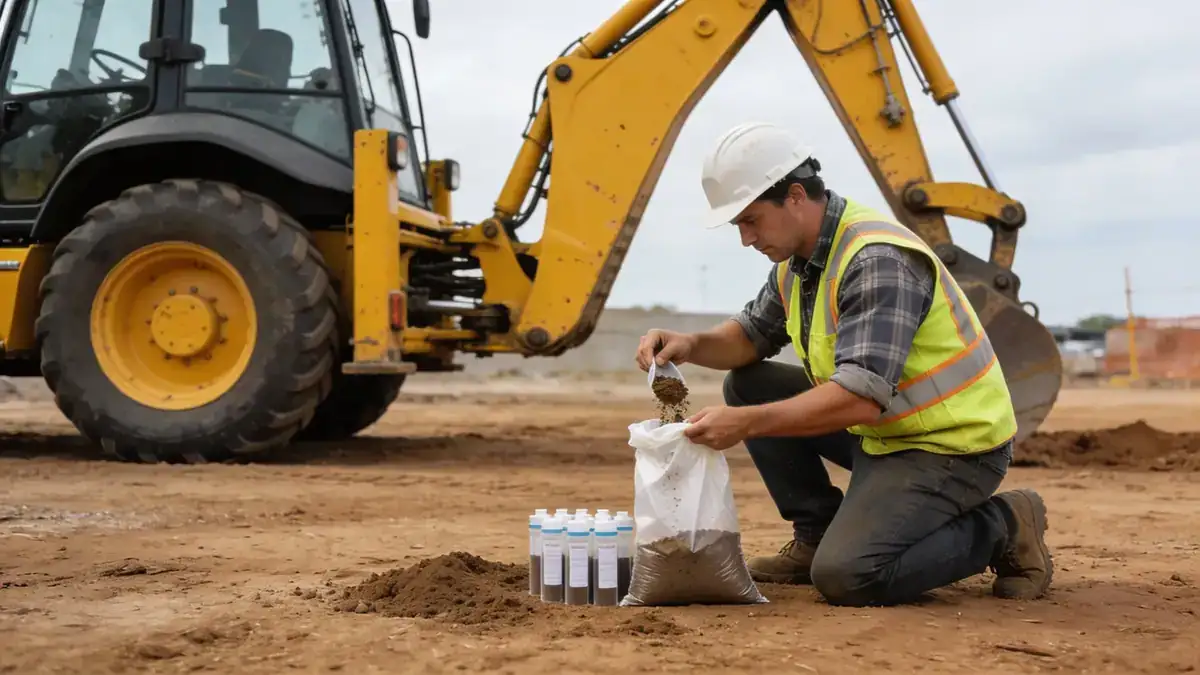
Our approach to standard penetration testing in Bakersfield follows ASTM D1586 procedures, using a 63.5 kg hammer dropped 0.76 m to drive a split-spoon sampler. We perform tests at 1.5 m intervals to depths of 15–30 m, depending on project requirements. Energy measurements are recorded via an instrumented rod to correct N-values to N60. This data is integrated with our standard penetration test (spt) services to develop soil profiles, assess liquefaction potential, and provide bearing capacity estimates. All fieldwork adheres to the CBC and local seismic guidelines.
Reference Technical Parameters
| Parameter | Reference Value |
|---|---|
| Predominant soil type | Alluvial sands, silts, and clays (SM, ML, CL) |
| Maximum seismic acceleration (PGA) | 0.4g–0.6g (CBC Seismic Zone 4) |
| Typical groundwater level | 3–6 m below surface, variable seasonally |
| Bedrock depth | >100 m (deep alluvial basin) |
| Typical N60 range | 5–30 blows/ft (sands); 2–15 blows/ft (clays) |
Local Considerations — Bakersfield
Bakersfield's alluvial soils pose liquefaction risks under seismic loading, requiring careful evaluation per ASCE 7-16. Our team integrates standard penetration test data with cone penetration test (CPT) soundings to delineate loose sand layers. Groundwater levels fluctuate with irrigation and Kern River flows, affecting foundation design. For projects near the Kern River, deeper investigations are often needed. We also reference our cone penetration test (cpt) for continuous profiling in variable strata. Our experience includes multifamily developments, schools, and industrial facilities, ensuring compliance with Kern County grading ordinances. For regional context, our standard penetration test en Los Angeles hub covers broader seismic considerations.
Request a Quote
Our team reviews your project and issues an initial report at no cost.
Or write us directly at [email protected]
Services in Bakersfield
Applicable Standards
- ASTM D1586
- ASCE 7-16
- California Building Code (CBC) 2022
- Kern County Grading Ordinance
- California Geological Survey Special Publication 117
Frequently Asked Questions
What are the typical soil conditions for standard penetration tests in Bakersfield?
Bakersfield's soils are predominantly alluvial sands, silts, and clays from the Kern River fan. Standard penetration tests typically encounter loose to medium dense sands (N60 5–15) in the upper 10 m, underlain by stiff clays and dense sands. Groundwater is often encountered at 3–6 m depth.
How does seismic zoning in Bakersfield affect standard penetration test requirements?
Bakersfield is in Seismic Zone 4 per the CBC, with high PGA values (0.4g–0.6g). Standard penetration test data is critical for evaluating liquefaction potential and site class (typically D or E). Our investigations follow ASCE 7-16 to provide design parameters for earthquake-resistant foundations.
Are standard penetration tests mandatory for construction projects in Bakersfield?
Yes, most new construction in Bakersfield requires geotechnical investigations per Kern County grading ordinances. Standard penetration tests are the primary method for soil strength and liquefaction assessment, especially for structures in Seismic Zone 4. Exceptions apply only to minor alterations.