
Methodology
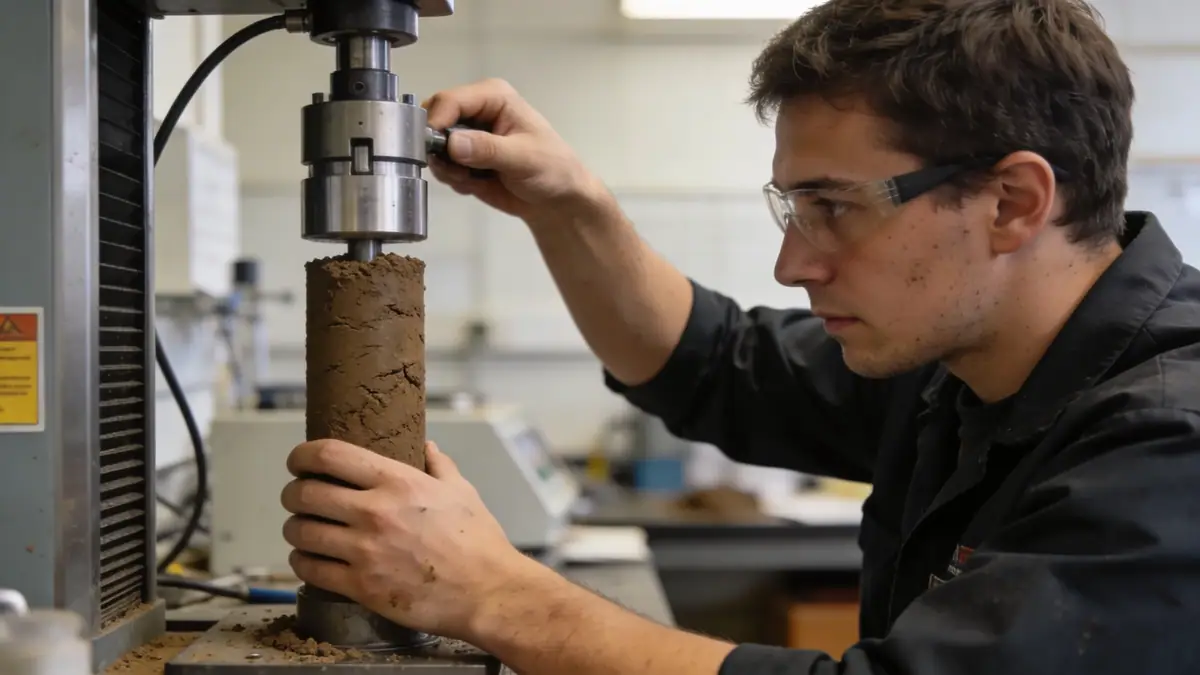
Our methodology for standard penetration test (SPT) in Austin follows ASTM D1586, employing a 63.5 kg hammer dropped 760 mm to drive a split-spoon sampler. We perform SPT at 1.5 m intervals to depths of 15-30 m, depending on project requirements. Soil samples are retrieved for laboratory testing, including moisture content, grain size distribution, and Atterberg limits. Our team also integrates standard penetration test (spt) data with local geological maps to refine stratigraphic interpretations. All drilling equipment is calibrated annually, and field procedures are documented per ASTM standards.
Reference Technical Parameters
| Parameter | Reference Value |
|---|---|
| Predominant Soil Type | Clay and claystone (Taylor Group) with interbedded sand and gravel |
| Maximum Seismic Acceleration (PGA) | 0.1g to 0.2g (ASCE 7-16, Site Class C/D) |
| Typical Groundwater Level | 5 to 15 m depth, variable with season and location |
| Bedrock Depth | 10 to 30 m (Austin Chalk and Eagle Ford Shale) |
| Typical N60 Range | 4 to 15 in clay; 20 to 50 in sand/gravel layers |
Local Considerations — Austin
Austin's geology is dominated by Cretaceous sedimentary formations, including the Taylor Group (claystone) and Austin Chalk (limestone), which influence SPT results. Expansive clays are prevalent in the eastern part of the city, posing risks for foundation movement. Groundwater levels vary, with shallow water tables near the Colorado River. Seismic hazard is moderate, with peak ground accelerations up to 0.2g per ASCE 7-16. Our team has extensive experience in both downtown high-rises and suburban residential projects. For projects requiring regional coordination, we also provide servicios de standard penetration test desde Houston.
Request a Quote
Our team reviews your project and issues an initial report at no cost.
Or write us directly at [email protected]
Services in Austin
Applicable Standards
- ASTM D1586
- ASCE 7-16
- International Building Code (IBC)
- City of Austin Land Development Code
Frequently Asked Questions
What soil types are commonly encountered in Austin during SPT?
Austin's subsurface typically consists of clay and claystone from the Taylor Group, underlain by Austin Chalk limestone. Interbedded sand and gravel layers are also present, especially near the Colorado River. SPT N-values vary widely, with clays showing N60 of 4-15 and sands 20-50.
Is seismic analysis required for standard penetration test in Austin?
Yes, per ASCE 7-16, Austin is in Seismic Design Category B or C, with PGA up to 0.2g. SPT data is used to determine site class and assess liquefaction potential, especially in areas with loose sands or high groundwater.
Are geotechnical investigations mandatory for new construction in Austin?
The City of Austin requires geotechnical reports for most building permits, particularly for structures with foundations on expansive soils or in floodplains. SPT is a standard method to characterize soil strength and compressibility for compliance with IBC and local codes.