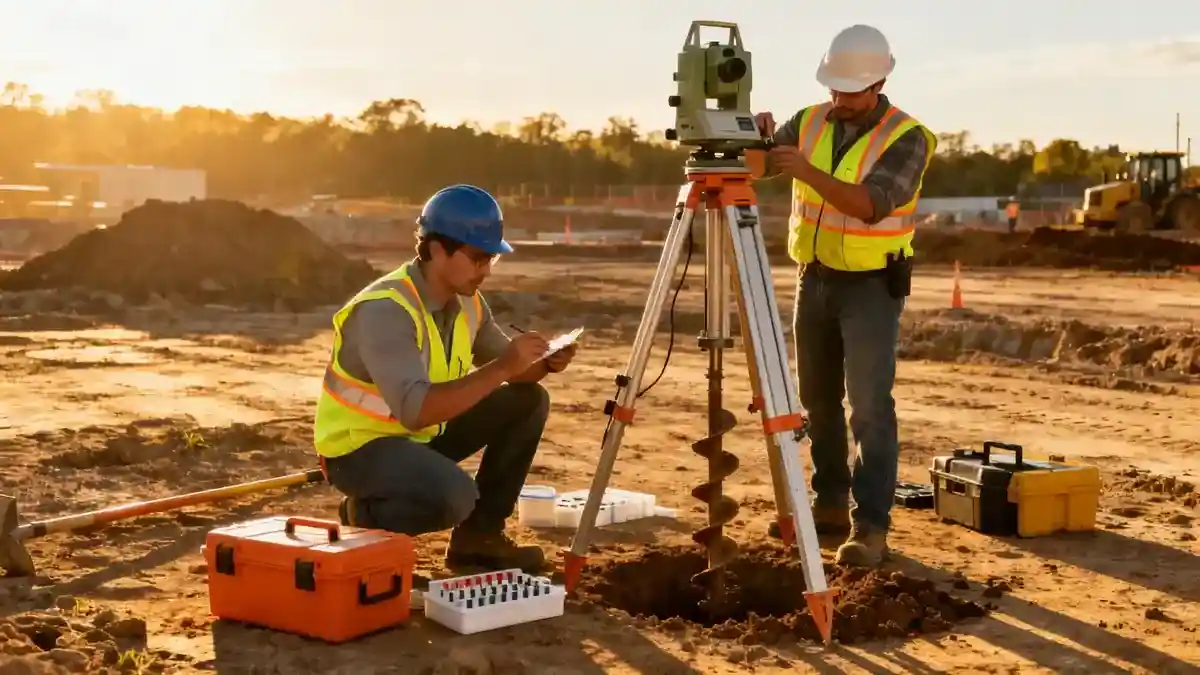
Methodology
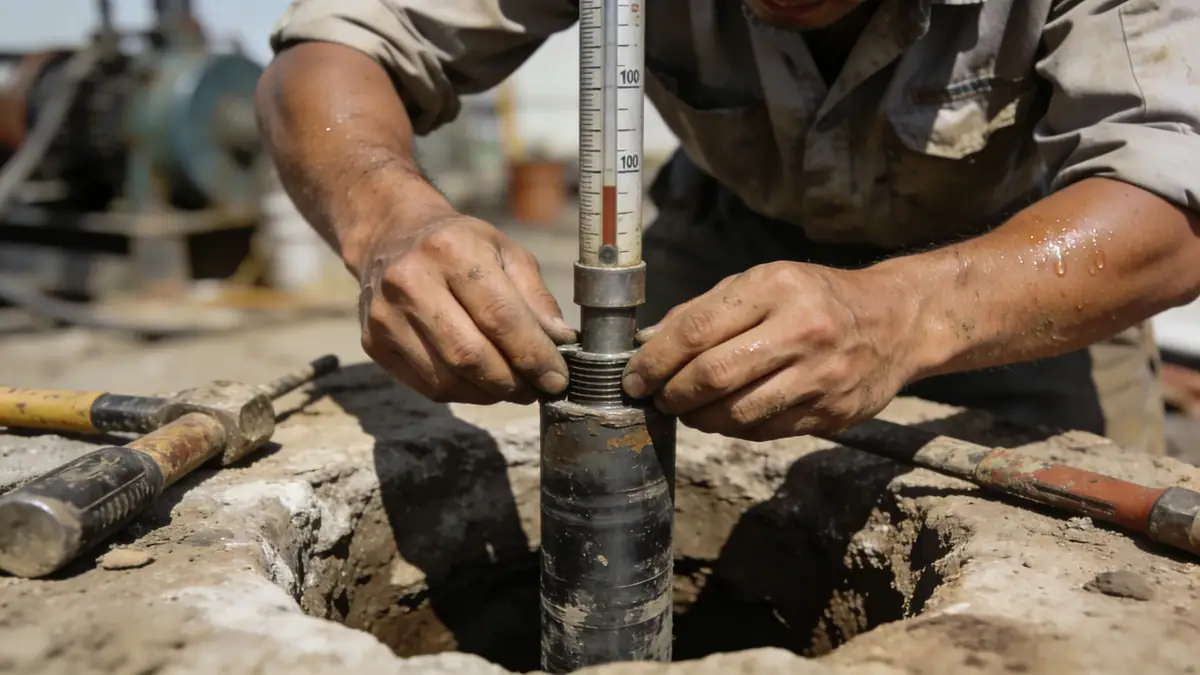
Our methodology for standard penetration test in Aurora follows ASTM D1586, with SPT performed at 1.5 m intervals to obtain N-values. We correlate N60 values to soil strength and liquefaction potential, essential for seismic design. For soft soils, we deploy cone penetration test (CPT) to complement SPT data. Our reporting includes blow counts, soil classification, and groundwater observations, adhering to local building codes. We integrate results with geophysical surveys to refine stratigraphic models, ensuring cost-effective recommendations for foundations and earthworks.
Reference Technical Parameters
| Parameter | Reference Value |
|---|---|
| Predominant soil type | Glacial till (silty clay/clayey silt) and lacustrine deposits |
| Maximum seismic acceleration (PGA) | 0.15–0.20 g (ASCE 7 Seismic Design Category C) |
| Typical groundwater level | 3–6 m below ground surface |
| Bedrock depth | 30–60 m (shallow in western Aurora) |
| Typical N60 range (till) | 15–35 blows/0.3 m |
Local Considerations — Aurora
Aurora’s geology is dominated by Wadsworth Till, with interbedded sands and gravels from glacial outwash. Liquefaction potential is low but should be evaluated near the Fox River. Seismic site class per ASCE 7 is typically D or C, depending on till thickness. Our team has executed standard penetration test programs for residential subdivisions and commercial developments in areas like Fox Valley and downtown Aurora. For large infrastructure projects, we recommend combining SPT with cone penetration test (cpt) for continuous profiling. Coordination with city permitting ensures compliance with local amendments to the International Building Code.
Request a Quote
Our team reviews your project and issues an initial report at no cost.
Or write us directly at [email protected]
Services in Aurora
Applicable Standards
- ASTM D1586 (Standard Test Method for SPT)
- ASCE 7 (Minimum Design Loads for Buildings, including seismic)
- International Building Code (IBC) with Illinois amendments
- ASTM D2487 (Unified Soil Classification System)
Frequently Asked Questions
What are the typical soil conditions in Aurora for foundation design?
Aurora’s subsurface consists primarily of glacial till—stiff silty clay with occasional sand lenses. Groundwater is generally 3–6 m deep. SPT N60 values in till range from 15 to 35, indicating medium to very stiff consistency. Local variability requires site-specific SPT borings to confirm bearing capacity.
Which seismic design category applies to Aurora?
Per ASCE 7, Aurora falls under Seismic Design Category C with a mapped spectral acceleration (S1) of 0.15–0.20 g. A site-specific study using standard penetration test data is recommended to determine site class (typically D or C) and refine seismic coefficients for structural design.
Is a geotechnical investigation mandatory for building permits in Aurora?
Yes, for most commercial and multi-family residential projects. Aurora’s building department typically requires a geotechnical report including SPT borings to establish soil bearing capacity, groundwater conditions, and seismic site classification. Single-family homes on shallow foundations may be exempt if soils are proven adequate.